

Blood sugar is the amount of glucose moving through your bloodstream at any given moment. It rises and falls all day based on what you eat, how you move, how you sleep, and how your body releases hormones. For most adults without diabetes, fasting blood sugar stays between 70 and 99 mg/dL, and it rarely climbs above 140 mg/dL even after a full meal. Those ranges matter because blood sugar that runs too high or too low for long stretches can damage nerves, blood vessels, and organs over time.
What Is Blood Sugar Levels Ranges And Effects?
Blood sugar, also called blood glucose, is your body’s main fuel. Every cell uses it for energy, and your brain depends on it heavily. The problem is not glucose itself. The problem is when it drifts outside the range your body can handle well.
Your body keeps blood sugar steady using two hormones from the pancreas. Insulin moves glucose out of the blood and into cells. Glucagon signals the liver to release stored glucose when levels drop. In a healthy system, these two work together so smoothly that you rarely notice anything.
When that system breaks down, blood sugar can stay high. Over years, high glucose damages small blood vessels in the eyes, kidneys, and nerves, and larger vessels that feed the heart and brain. Low blood sugar, which is far more common in people taking insulin or certain diabetes medications, can cause confusion, shakiness, and in serious cases loss of consciousness.
Here are the standard ranges used in clinical practice for adults:
| Category | Fasting glucose | 2 hours after eating (oral glucose tolerance test) |
|---|---|---|
| Normal | 70–99 mg/dL | Less than 140 mg/dL |
| Prediabetes | 100–125 mg/dL | 140–199 mg/dL |
| Diabetes | 126 mg/dL or higher | 200 mg/dL or higher |
These thresholds come from widely used diagnostic criteria. A single out-of-range reading is not a diagnosis. Doctors usually confirm with a repeat test, because stress, illness, and even a poor night’s sleep can push a number up temporarily.
What Does A1C Measure That Daily Readings Do Not?
A1C is a different kind of test. Instead of catching one moment, it reflects your average blood sugar over roughly the past two to three months. It works because glucose sticks to hemoglobin in red blood cells, and those cells live about that long.
The results are reported as a percentage:
- Below 5.7% is considered normal
- 5.7% to 6.4% falls in the prediabetes range
- 6.5% or higher is consistent with diabetes
A1C and daily finger-stick readings can tell different stories. Someone whose sugar spikes hard after meals but runs low overnight might have a normal-ish A1C while still spending hours each day outside a healthy range. That is one reason continuous glucose monitors have become more common. They capture the swings that a single daily test misses.
This is a useful distinction. A1C answers “what is your average?” It does not answer “how stable are you?” Both questions matter, and the second one is easy to overlook.
What Causes Blood Sugar To Rise Or Fall?
Food is the obvious driver, but it is not the only one. Carbohydrates raise blood sugar the most because the body breaks them down into glucose. Protein and fat affect it more slowly and to a smaller degree. That is established physiology, not a diet claim.
Other factors that move the needle:
- Physical activity — muscles pull in glucose during and after movement, which usually lowers readings
- Stress — cortisol and other stress hormones raise blood sugar, even if you have not eaten
- Illness and infection — the body releases hormones that push glucose up
- Sleep — poor or short sleep is linked to higher fasting glucose the next morning
- Medications — steroids, some blood pressure drugs, and certain psychiatric medications can raise glucose
- Hormones — pregnancy, puberty, and menopause can shift how well insulin works
In type 1 diabetes, the body stops making insulin. In type 2, the body still makes insulin but cells respond to it poorly, and the pancreas eventually cannot keep up. These are different problems with overlapping symptoms.

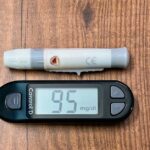

What Are The Symptoms Of High And Low Blood Sugar?
High blood sugar often develops slowly and quietly. Early on, many people feel nothing at all. When symptoms do appear, they tend to include increased thirst, frequent urination, blurred vision, fatigue, and slow-healing wounds. These symptoms can build over weeks or months, which is why type 2 diabetes is sometimes found on a routine blood test rather than because someone felt sick.
Low blood sugar behaves differently. It comes on fast. Common signs include shakiness, sweating, hunger, irritability, confusion, and a racing heartbeat. It is most often tied to insulin or to medications in the sulfonylurea class, and it can happen in people with diabetes who skip meals or exercise more than usual.
One clarification worth making: feeling shaky or tired does not automatically mean your blood sugar is off. Many conditions produce similar symptoms. Only a test can confirm what is actually happening.
When Should You Get Your Blood Sugar Checked?
Routine screening is generally recommended for adults starting around age 35, with repeat testing at intervals based on results and risk factors. People with risk factors may be screened earlier. Those risk factors include a family history of diabetes, excess weight, high blood pressure, abnormal cholesterol, a history of gestational diabetes, and certain ethnic backgrounds with higher rates of type 2 diabetes.
Testing is straightforward. A fasting glucose test requires nothing to eat or drink except water for at least eight hours beforehand. A1C needs no fasting at all, which is part of why it is often used for screening. An oral glucose tolerance test measures your blood sugar before and two hours after drinking a sugary solution.
If you already have diabetes, monitoring frequency is a clinical decision. It depends on your medications, your A1C target, and how stable your readings tend to be. There is no single schedule that fits everyone.
Can Blood Sugar Ranges Be Managed Without Medication?
For prediabetes and mild type 2 diabetes, lifestyle changes can meaningfully lower blood sugar. This is one of the better-supported findings in preventive medicine. The strongest evidence points to three things: losing a modest amount of weight if you carry extra, getting regular physical activity, and improving the quality of what you eat.
What the evidence does not support is any single food, supplement, or tea that “reverses” diabetes. No study has confirmed that. Claims like that are marketing, not medicine.
For type 1 diabetes, insulin is not optional. No lifestyle approach replaces it. For type 2 diabetes that has progressed, medication is often necessary alongside lifestyle changes, and needing it is not a personal failure. It reflects how far the underlying disease has advanced.
If you take insulin or a sulfonylurea, any change in diet or activity can shift your readings enough to matter. Those changes are worth discussing with your clinician rather than adjusting on your own.
Frequently Asked Questions
What is a normal blood sugar level?
For most adults without diabetes, a fasting blood sugar between 70 and 99 mg/dL is considered normal, and levels usually stay under 140 mg/dL two hours after eating. An A1C below 5.7% is also considered normal.
What blood sugar level is considered diabetic?
A fasting glucose of 126 mg/dL or higher, a two-hour glucose tolerance reading of 200 mg/dL or higher, or an A1C of 6.5% or above is consistent with diabetes. Doctors typically confirm with a repeat test before making the diagnosis.
What are the effects of high blood sugar over time?
Persistently high blood sugar can damage small blood vessels in the eyes, kidneys, and nerves, and larger vessels that supply the heart and brain. These changes usually develop over years, which is why early detection matters.
Can you have high blood sugar without symptoms?
Yes. Many people with prediabetes and early type 2 diabetes feel completely normal, which is why routine screening is recommended. Symptoms often appear only after glucose has been elevated for some time.
