
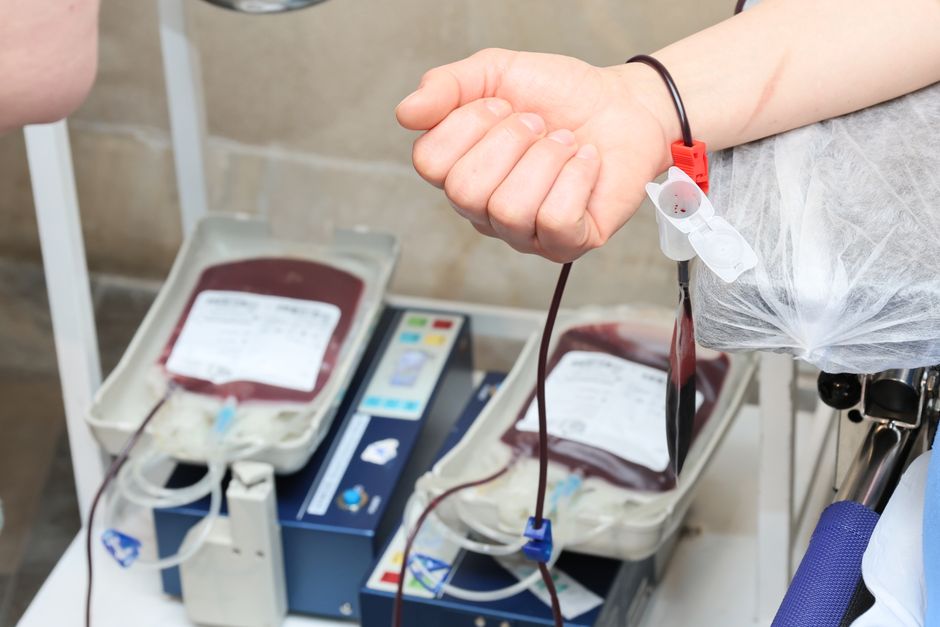
A blood transfusion is the process of giving blood, or a component of blood, from a donor into a person’s bloodstream through an intravenous line. It is a standard medical treatment used to replace blood lost through surgery, injury, or illness, or to correct blood that is not working properly. Transfusions can involve whole blood, but in modern practice they usually involve specific parts of blood, such as red cells, plasma, or platelets.
What Is a Transfusion of Blood and How Does It Work?
Blood is made up of several parts, and a transfusion can deliver one part or several. Red blood cells carry oxygen. Platelets help blood clot. Plasma is the liquid portion that carries proteins and clotting factors. Doctors choose which component to give based on what the patient is missing or losing.
The process itself is straightforward. A healthcare worker matches the donor blood to the patient’s blood type, then delivers it through a thin tube placed in a vein. The transfusion typically runs over one to four hours, depending on the component and the patient’s needs. Vital signs are checked before, during, and after the transfusion to catch any reactions early.
One detail that surprises many people: donated blood is almost never given as whole blood anymore. Separating blood into components means one donation can help multiple patients, and each patient receives only what they actually need. This approach reduces strain on the heart and lungs compared to giving a full unit of whole blood.
Why Would Someone Need a Blood Transfusion?
Transfusions are given when the body either has lost blood or cannot make enough of a needed component. The reasons fall into a few broad categories.
- Major blood loss from surgery, trauma, childbirth, or a bleeding ulcer
- Severe anemia from kidney disease, cancer treatment, or chronic illness that reduces red cell production
- Clotting problems that require platelets or plasma, such as liver failure or certain bleeding disorders
- Blood diseases like sickle cell disease or thalassemia, which may require regular transfusions
Cancer treatment is a common reason. Chemotherapy and radiation can suppress the bone marrow’s ability to produce blood cells, leading to low red cell counts or low platelets. In these cases, transfusions act as a bridge until the marrow recovers.
Not every low blood count needs a transfusion. Doctors weigh symptoms, the underlying cause, and how quickly the count is dropping. A person with a stable but low red cell count may be monitored rather than transfused. Fatigue alone is rarely the deciding factor.
What Are the Different Types of Blood Transfusions?
Each component treats a different problem. The table below shows the main types and what they are used for.
| Component | What It Contains | Common Use |
|---|---|---|
| Red blood cells | Oxygen-carrying cells | Anemia, blood loss |
| Platelets | Clotting cells | Low platelet count, bleeding |
| Plasma | Clotting proteins | Liver disease, severe bleeding |
| Cryoprecipitate | Concentrated clotting factors | Specific clotting factor deficiencies |
Red cell transfusions are by far the most common. Plasma and platelet transfusions are more often used in hospital settings where bleeding or clotting problems are active.




How Is Blood Matched for a Transfusion?
Blood type matching prevents the immune system from attacking donated cells. The two main systems are ABO and Rh. ABO refers to the A and B markers on red blood cells; Rh refers to the presence or absence of the Rh factor. A person who is A positive, for example, has A markers and the Rh factor.
Giving the wrong type can trigger a serious reaction. That is why blood banks test both donor and recipient blood before every transfusion. The matching process also includes a crossmatch, where a small sample of the patient’s plasma is mixed with the donor cells to confirm compatibility.
Plasma and platelets do not follow the same matching rules as red cells. Plasma compatibility is essentially reversed from red cell compatibility, and platelets are matched more loosely because they carry fewer of the markers that trigger reactions. This is a detail many people do not realize, and it explains why a patient might receive plasma from a donor whose red cells would not be compatible.
What Are the Risks and Side Effects of a Blood Transfusion?
Transfusions are common and generally well tolerated, but they are not risk-free. Most reactions are mild and treatable. Serious reactions are rare.
Mild reactions include fever, chills, itching, or a rash. These often happen within minutes to hours of starting the transfusion and usually stop when the transfusion is paused and the patient is treated with medication.
More serious reactions include allergic reactions, fluid overload, and a condition called TRALI, or transfusion-related acute lung injury. Fluid overload is a particular concern for people with heart or kidney disease, because the added volume can strain the heart and lungs. Doctors may give a diuretic or slow the transfusion rate in these patients.
Infectious risk is very low in countries with modern blood screening. Donated blood is tested for HIV, hepatitis B and C, syphilis, and other pathogens. The window between infection and detection has narrowed greatly, but no test is perfect, and a very small residual risk remains.
Immune reactions can develop over time, especially in people who receive many transfusions. The body may form antibodies against certain blood markers, making future matching harder. This is a known issue in patients with sickle cell disease who receive regular transfusions.
How Long Does a Blood Transfusion Take and What Happens After?
A single unit of red blood cells typically takes one to two hours to infuse. Platelets and plasma may run faster, often in 30 to 60 minutes. The total visit can be longer once you account for matching, setup, and monitoring.
After the transfusion, a nurse will check vital signs again and watch for delayed reactions. Some reactions, like a delayed immune response, can appear days or even weeks later. Patients are usually advised to report fever, chills, dark urine, or unusual fatigue after leaving.
How long the benefits last depends on the component. Red cells circulate for about 120 days in the body, but the effect of a transfusion on symptoms may last only days to weeks if the underlying cause is ongoing. Platelets have a much shorter lifespan, often just a few days, so some patients need repeated transfusions.
Are There Alternatives to Blood Transfusion?
For some patients, alternatives exist. Iron supplements or intravenous iron can help rebuild red blood cells in cases of iron deficiency anemia. Erythropoietin, a hormone that stimulates red cell production, is sometimes used in kidney disease or cancer care. These options work slowly and are not suitable for acute blood loss.
Some people decline transfusions for religious or personal reasons. In those cases, doctors may use blood salvage techniques during surgery, where the patient’s own lost blood is collected, cleaned, and returned. Medications that reduce bleeding, such as tranexamic acid, are also used in some surgical and trauma settings.
These alternatives have limits. They are not a substitute for transfusion in an emergency, and their effectiveness varies by situation. The evidence is strongest for iron therapy in iron deficiency and for blood salvage in certain elective surgeries. For massive bleeding, transfusion remains the standard of care.
Frequently Asked Questions
How long does a blood transfusion take?
A single unit of red blood cells usually takes one to two hours. Platelets and plasma often infuse faster, in about 30 to 60 minutes.
Can you get a disease from a blood transfusion?
The risk is very low because donated blood is screened for HIV, hepatitis, and other infections. No screening is perfect, so a small residual risk remains.
What happens if you get the wrong blood type?
The immune system can attack the donated cells, causing a serious reaction that may include fever, kidney damage, or shock. Blood banks crossmatch donor and recipient blood before every transfusion to prevent this.
How often can you have a blood transfusion?
There is no fixed limit, but frequency depends on the underlying condition and the patient’s response. Some people need transfusions only once, while others with chronic conditions may need them regularly.
