
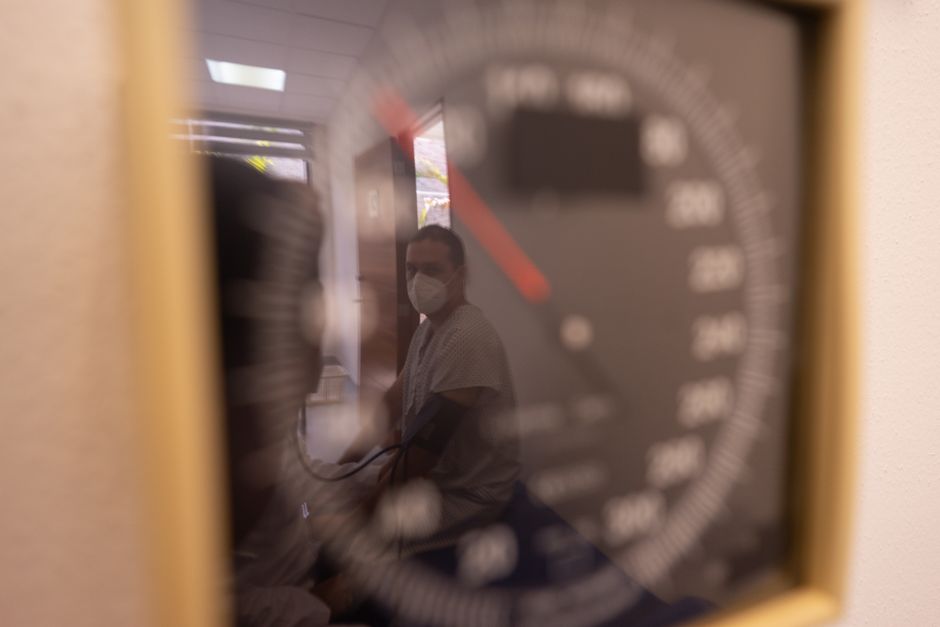
A stress echo test shows how your heart works when it is pushed to beat harder. The test combines an ultrasound of the heart with either exercise or a medication that makes the heart beat faster. It helps doctors see whether blood flow to the heart muscle drops under stress — something a resting heart test can miss.
If your doctor ordered one, you likely want to know what happens, how long it takes, and what the results mean. This guide walks through the purpose, the procedure, and what the findings can and cannot tell you.
What Is A Stress Echo Test Purpose And Procedure?
A stress echo test checks how well your heart muscle pumps under physical stress. It pairs two things: an echocardiogram (an ultrasound that creates moving pictures of your heart) and a stressor that raises your heart rate.
The core purpose is to find coronary artery disease — narrowed arteries that limit blood flow. At rest, a narrowed artery may still deliver enough blood. During stress, the heart muscle needs more oxygen, and a blocked artery cannot keep up. That shortfall shows up as a section of heart muscle that stops squeezing normally.
The test is also used to:
- Check symptoms like chest pain or shortness of breath during exertion
- Assess how well the heart pumps after a heart attack or heart failure
- Evaluate heart valve problems under stress
- Judge risk before certain non-heart surgeries
- Track a known heart condition over time
A resting echocardiogram only shows the heart at rest. The stress echo adds the missing piece: how the heart behaves when it has to work.
How Does A Stress Echo Test Work?
The test works by comparing two sets of images — one taken at rest and one taken right after your heart is stressed. The difference between them is the key finding.
During stress, a healthy heart muscle squeezes harder and stronger. If part of the muscle does not, that region is likely not getting enough blood. This is called ischemia.
There are two ways to stress the heart:
- Exercise stress echo — you walk on a treadmill or pedal a stationary bike. The treadmill is more common.
- Dobutamine stress echo — if you cannot exercise, a drug called dobutamine is given through an IV. It makes the heart beat harder and faster, mimicking exercise.
The drug approach is used for people with mobility problems, arthritis, or other conditions that make exercise hard. Both methods produce useful images, though exercise is generally preferred when a person can do it.
What Happens During The Procedure?
The whole test usually takes about 45 to 60 minutes, sometimes a bit longer. You can usually eat lightly beforehand and are often told to skip caffeine for about 24 hours, since caffeine can affect heart rate.
Here is the general flow:
- You change into a gown and lie on an exam table.
- A technician places sticky electrodes on your chest to track your heart rhythm.
- You lie on your left side. A small ultrasound probe is placed on your chest with gel.
- The technician records resting images of your heart.
- Then the stress begins — either you exercise, or the IV drug is started.
- When your heart reaches a target rate, more images are captured quickly.
- Your heart rate, blood pressure, and rhythm are watched the entire time.
The ultrasound probe does not hurt. The gel may feel cool. If you exercise, you may feel the normal effects of exertion — faster breathing, sweating, and a pounding heart. Some people feel a bit of chest pressure or leg fatigue.
Afterward, you rest until your heart rate returns to normal. Most people go home the same day and can drive themselves if they did not receive sedation. No sedation is typically used for this test.




Exercise Or Drug: Which Stress Method Is Used?
Exercise is the preferred method when you are able to do it. It stresses the heart the way daily life does and gives the doctor extra information, such as your exercise capacity and blood pressure response.
The drug method is used when exercise is not safe or not possible. Conditions that may lead to the drug method include:
- Severe arthritis or joint problems
- Poor mobility or balance issues
- Lung conditions that limit breathing
- Certain heart rhythm problems
- Recent surgery or injury
Both methods carry small risks, and both can be stopped at any time if you feel unwell. The medical team watches you closely throughout.
What Do The Results Mean?
Results fall into a few broad categories. Your doctor interprets them alongside your symptoms, history, and other tests.
- Normal — the heart muscle squeezes normally at rest and under stress. This makes significant coronary artery disease less likely, though it does not rule out every heart problem.
- Abnormal — one or more areas of the heart muscle do not squeeze properly under stress. This suggests reduced blood flow and may point to coronary artery disease.
- Inconclusive — the images were not clear enough, or you could not reach a high enough heart rate. A repeat test or a different test may be needed.
A normal result is reassuring but not a guarantee. A stress echo can miss some blockages, and it does not detect all forms of heart disease. It is one tool among several, not a final answer on its own.
Stress Echo Vs. Other Heart Tests
Several tests can evaluate the heart under stress. Each has strengths and limits, and the best choice depends on your situation.
| Test | What it shows | Notes |
|---|---|---|
| Stress echo | Heart muscle motion under stress | No radiation; widely available |
| Exercise ECG (treadmill test) | Heart rhythm and electrical changes | No imaging of the muscle itself |
| Nuclear stress test | Blood flow to the heart muscle | Uses a small amount of radiation |
| Stress MRI | Detailed heart structure and flow | Less available; not for everyone |
| CT coronary angiography | Pictures of the arteries themselves | Uses contrast dye and radiation |
Stress echo is often chosen because it uses no radiation, is widely available, and gives real-time images of how the muscle moves. Its main weakness is that image quality depends on your body — a thick chest wall or lung disease can make pictures harder to read.
Who Should Have A Stress Echo Test?
Doctors order this test for specific reasons, not as a routine screening for everyone. Common situations include:
- Chest pain or shortness of breath that appears with activity
- Evaluation after a heart attack
- Known coronary artery disease being monitored
- Heart valve disease being assessed under stress
- Before certain surgeries, to gauge heart risk
It is generally not recommended as a screening test for people with no symptoms and low risk. If you have no symptoms and no major risk factors, the value of the test is limited. Talk with your doctor about whether it fits your situation.
Are There Risks Or Limitations?
The test is generally considered low risk, but it is not risk-free. Because it deliberately stresses the heart, there is a small chance of triggering a heart rhythm problem, a drop in blood pressure, or, rarely, a heart attack.
These events are uncommon, and the test is done under supervision with equipment and staff ready to respond. That supervision is exactly why the test is performed in a controlled setting.
Limitations to keep in mind:
- Poor image quality can make results hard to interpret.
- Not reaching a high enough heart rate can make the test inconclusive.
- A normal result does not fully rule out coronary artery disease.
- Certain heart rhythms or conditions may make the test unsuitable.
Your doctor weighs these factors before ordering the test. If you have concerns, ask what the test is expected to add to your care.
How Should You Prepare?
Preparation is simple but matters for accurate results. Follow the specific instructions your clinic gives you, since they can vary.
- Avoid caffeine for about 24 hours before the test.
- Eat only a light meal in the hours beforehand.
- Ask whether to take your usual medications — some heart drugs may need to be held.
- Wear comfortable clothing and shoes if you will exercise.
- Bring a list of your medications and any prior heart test results.
Do not stop or change any medication on your own. Only adjust your meds if your doctor tells you to.
Frequently Asked Questions
How long does a stress echo test take?
The full appointment usually runs about 45 to 60 minutes, including setup, resting images, the stress portion, and recovery. The active stress part itself is often just a few minutes.
Is a stress echo test painful?
The ultrasound probe and gel do not cause pain, though the gel may feel cold. If you exercise, you may feel the normal strain of exertion, such as faster breathing and tired legs.
Can I eat before a stress echo test?
Most clinics ask you to eat only a light meal in the hours before the test and to avoid caffeine for about 24 hours. Follow the exact instructions your clinic provides.
Does a normal stress echo mean my heart is fine?
A normal result makes significant coronary artery disease less likely, but it does not rule out every heart condition. Your doctor interprets it alongside your symptoms and other tests.
