
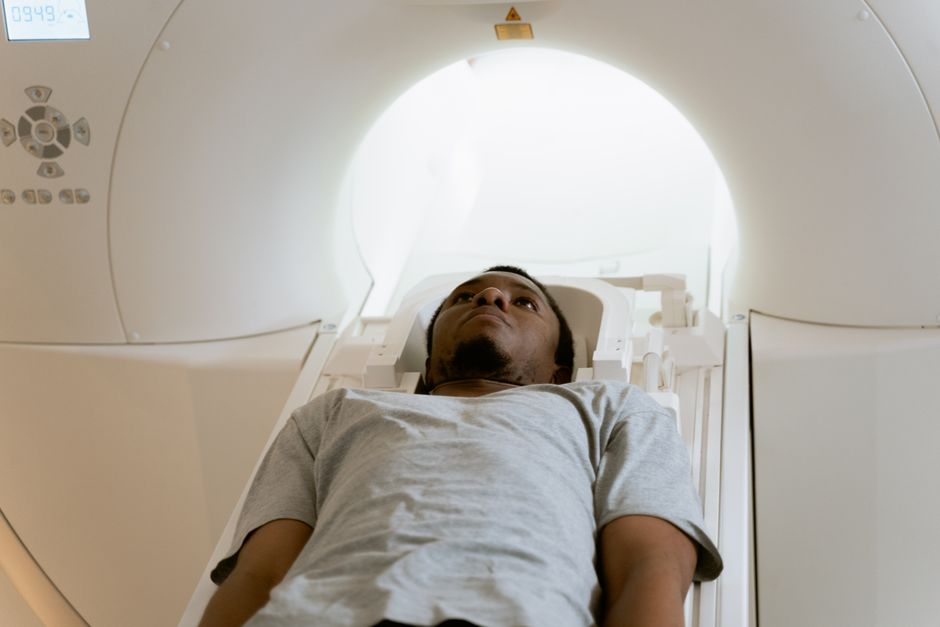
A CT scan, which stands for computerized tomography, is a medical imaging test that combines X-rays with computer technology. It creates detailed, cross-sectional pictures of the inside of your body, often described as looking at slices of bread. Unlike a standard X-ray that flattens structures into one image, a CT scan provides clear views of bones, blood vessels, and soft tissues like organs and muscles, helping doctors diagnose a wide range of conditions.
How Does a Computerized Tomography CT Scan Work?
The process is precise and happens quickly. You lie on a motorized table that slides through a large, donut-shaped machine called a gantry. Inside the gantry, an X-ray tube rotates around your body, emitting a narrow beam of radiation.
Detectors on the opposite side of the ring capture the X-rays after they pass through your body. Different tissues absorb X-rays at different rates. Bone appears white because it absorbs a lot, while air appears black. The computer takes this data from hundreds of angles and processes it into a single, highly detailed cross-sectional image.
The entire scan usually takes only a few minutes. The most common reason a CT scan takes longer is the preparation, which often involves drinking a contrast agent or having one injected through an IV.
Why Is a CT Scan Performed?
Doctors order CT scans for many reasons. They are often used in emergency settings to quickly identify internal injuries after trauma, such as bleeding in the brain or damage to internal organs. They are also a primary tool for detecting and monitoring cancer, as they can show the size, shape, and location of tumors.
Beyond emergencies and oncology, CT scans help diagnose and evaluate:
- Blood clots in the lungs (pulmonary embolism) or legs
- Heart disease and blockages in coronary arteries
- Bone fractures, especially complex ones in the spine or pelvis
- Infections or abscesses in the chest, abdomen, or pelvis
- Chronic conditions like liver disease or kidney stones
- Guidance for surgical procedures or biopsies
Because a CT scan shows such clear detail of bone, blood vessels, and soft tissues simultaneously, it often provides more diagnostic information than a standard X-ray and can reduce the need for exploratory surgery.
What Is the Difference Between a CT Scan and an MRI?
This is one of the most common questions in medical imaging. The two tests are fundamentally different in how they create pictures. A CT scan uses ionizing radiation (X-rays) and is excellent at showing bone, acute bleeding, and lung tissue. An MRI, or magnetic resonance imaging, uses a strong magnetic field and radio waves to create images. It does not use radiation.
MRI is generally better at showing soft tissue detail, such as the brain, spinal cord, ligaments, and cartilage. For example, a torn knee ligament is far easier to see on an MRI. A CT scan is faster, often taking minutes, while an MRI can take 30 to 60 minutes. For a suspected stroke, a CT scan is usually performed first because it is fast and can quickly rule out bleeding in the brain.
Neither test is universally “better.” The choice depends on what part of the body needs examining and what condition the doctor suspects. In some cases, a doctor may order both to get a complete picture.


What Are the Risks of a CT Scan?
The primary risk of a CT scan is exposure to ionizing radiation. This radiation has the potential to damage DNA, and high cumulative doses over a lifetime are linked to a small increase in the risk of developing cancer. The risk from a single scan is very low, and for most people, the medical benefit of an accurate diagnosis far outweighs this small risk.
Radiation exposure is measured in millisieverts (mSv). A single CT scan of the abdomen delivers a radiation dose of roughly 10 mSv. For context, a standard chest X-ray delivers about 0.1 mSv, and the average person receives about 3 mSv per year from natural background radiation in the environment. The exact dose varies depending on the body part scanned and the machine used.
Another risk involves the contrast material, often called “dye.” Most contrast agents contain iodine. While generally safe, some people have an allergic reaction, ranging from mild hives to, rarely, a severe anaphylactic reaction. If you have a known iodine allergy or a history of allergic reactions to contrast, tell your doctor before the scan. The contrast agent can also be hard on the kidneys, so doctors check kidney function before giving it to patients with known kidney disease or diabetes.
For pregnant women, CT scans are generally avoided unless absolutely necessary, as the developing fetus is more sensitive to radiation. If you are pregnant or think you might be, inform your doctor and the radiology technologist before the scan begins.
How Should You Prepare for a CT Scan?
Preparation depends on whether your scan uses contrast material. If your scan does not use contrast, you typically need no special preparation. You can eat, drink, and take your regular medications as usual.
If your scan does use contrast, your doctor will give you specific instructions. Common instructions include:
- Not eating or drinking for a few hours before the scan
- Informing your doctor about all medications, especially metformin for diabetes
- Telling your doctor about any allergies, particularly to iodine or shellfish
- Informing the staff if you are pregnant or breastfeeding
Wear comfortable, loose-fitting clothing without metal zippers or buttons. You will likely be asked to change into a hospital gown. You must remove all jewelry, eyeglasses, hearing aids, and dentures, as metal interferes with the imaging.
What Happens During the Scan?
You will lie on the scanning table, and the technologist will position you. If you are having contrast, it may be given as an injection into a vein in your arm or hand, or you may be asked to drink a liquid contrast agent to highlight your digestive tract. You may feel a warm flush or a metallic taste in your mouth when contrast is injected. This is normal and passes quickly.
The table will move slowly through the scanner. The machine will make buzzing, clicking, and whirring sounds. It is essential to stay very still during the scan to ensure clear images. In some cases, the technologist will instruct you to hold your breath for a few seconds.
The technologist watches the entire procedure from an adjacent room and can communicate with you through an intercom. The scan itself is painless. Afterward, you can typically resume your normal activities immediately unless your doctor tells you otherwise.
What Do the Results Show?
A radiologist, a doctor specially trained in interpreting medical images, will analyze the scans. They will write a detailed report of their findings and send it to the doctor who ordered the scan. You will not usually get results directly from the technologist who performs the scan.
The report may describe findings as normal, abnormal, or indeterminate. If something is abnormal, the report will describe its size, location, and appearance. Your doctor will discuss what these findings mean for your specific situation and recommend the next steps, which might include more imaging, a biopsy, or a treatment plan.
It is important to remember that a CT scan is a tool. It provides a picture of what is happening inside your body, but your doctor interprets that picture in the context of your symptoms, medical history, and other test results.
Frequently Asked Questions
Is a CT scan painful?
No, a CT scan itself is completely painless. You may feel a brief pinch or sting when the IV for contrast is inserted, but the scanning process causes no discomfort.
How long does a CT scan take?
The actual scan usually takes only a few minutes. The entire appointment, including preparation and positioning, typically takes between 30 and 60 minutes.
Can I eat before a CT scan?
It depends on whether you are receiving contrast material. If no contrast is used, you can usually eat normally. If contrast is used, your doctor will likely instruct you to fast for a few hours beforehand.
Is a CT scan safe?
Yes, for most people, a CT scan is considered safe and the benefits outweigh the small radiation risk. However, the radiation exposure is not zero, so doctors only order CT scans when they are medically necessary.
