
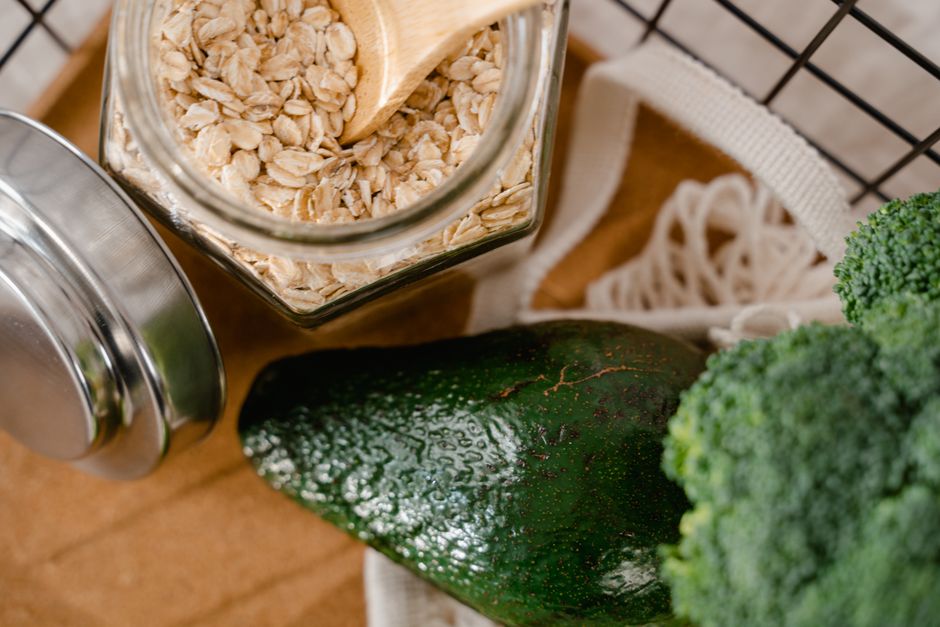
If you want the single highest-fiber food per serving, it is legumes and seeds — specifically chia seeds, split peas, lentils, and black beans, all of which deliver roughly 10 to 16 grams of fiber in a single cooked cup or one ounce of seeds. Right behind them come high-fiber cereals like 100% bran, then avocado, raspberries, and artichokes. The foods most people think of as “high fiber” — oatmeal, brown rice, whole wheat bread — are actually in the middle of the pack, not the top.
Fiber is the part of plant food your body cannot digest. It passes through largely intact, and that is exactly why it matters. It slows how fast sugar enters your blood, feeds the bacteria in your gut, adds bulk to stool, and helps you feel full. Most adults in the US get far less than the recommended amount, which is why knowing where the real fiber actually lives is worth the five minutes.
What Has The Highest Fiber Top Foods Ranked?
Legumes and seeds win by a wide margin. Here is how the top tier compares, using standard USDA nutrient data per cooked cup unless noted.
| Food | Serving | Fiber (grams) |
|---|---|---|
| Chia seeds | 1 ounce (about 2 tbsp) | ~10 |
| Split peas, cooked | 1 cup | ~16 |
| Lentils, cooked | 1 cup | ~15–16 |
| Black beans, cooked | 1 cup | ~15 |
| Navy beans, cooked | 1 cup | ~15 |
| Kidney beans, cooked | 1 cup | ~11–13 |
| 100% bran cereal | 1/2 cup | ~14 |
| Artichoke, cooked | 1 medium | ~7–10 |
| Avocado | 1 medium | ~10 |
| Raspberries | 1 cup | ~8 |
| Blackberries | 1 cup | ~8 |
| Green peas, cooked | 1 cup | ~8–9 |
Notice what is not on this list. Oatmeal, brown rice, and whole wheat bread are all good sources of fiber, but each lands closer to 3 to 4 grams per serving. They are worth eating. They are just not the top of the mountain.
One clarification worth making: fiber content varies by variety, growing conditions, and how the food is prepared. The numbers above come from standard USDA reference values, which are averages — your specific bag of lentils may differ slightly. That is normal and not a reason to distrust the ranking.
Why Do Legumes Have So Much More Fiber Than Grains?
The difference comes down to plant structure. Legumes — beans, lentils, peas — are seeds designed to store energy for a whole new plant. Their cell walls are packed with complex carbohydrates that humans cannot break down, and their seed coats are especially tough. Grains have a similar architecture but far less of it once the fibrous outer layers are milled away.
This is why processing matters so much. A whole oat groat has more fiber than rolled oats, which have more than instant oats. A whole wheat berry has more than whole wheat flour. The fiber lives mostly in the bran and the outer layers, and the more you grind, mill, or refine a food, the more of that structure you lose.
Legumes also contain a mix of fiber types — both soluble and insoluble — which is part of why they show up so consistently in research on blood sugar, cholesterol, and gut health. That combination is hard to find in a single food.
Is Soluble Or Insoluble Fiber More Important?
Both matter, and they do different jobs. Soluble fiber dissolves in water and forms a gel. It slows digestion, which helps blunt blood sugar spikes and can help lower LDL cholesterol. Oats, barley, beans, apples, and citrus are good sources. Insoluble fiber does not dissolve. It adds bulk and helps move things through your digestive tract. Wheat bran, whole grains, nuts, and many vegetables are rich in it.
Most high-fiber whole foods contain both types in varying proportions. Chia seeds, for example, are unusually high in soluble fiber — that is why they form a gel in liquid. Wheat bran is mostly insoluble. You do not need to track the ratio. Eating a variety of plant foods naturally covers both.
One point that gets oversimplified online: the claim that one type is “better” than the other. The evidence does not support that. They serve different functions, and the health benefits associated with fiber come from the overall pattern of eating, not from optimizing one subtype.



How Much Fiber Do You Actually Need?
The general recommendation for adults is about 25 grams per day for women and 38 grams per day for men, based on dietary reference intake values. After age 50, those numbers drop slightly — to around 21 grams for women and 30 grams for men — because calorie needs decline with age.
Most adults in the US get roughly 15 grams per day. That gap is significant, and it is one of the more consistent findings in nutrition surveys.
If you are trying to close it, the practical move is to add one high-fiber food at a time rather than overhauling everything at once. A half cup of black beans on a salad adds about 7 grams. A tablespoon of chia stirred into yogurt adds about 5. Those two changes alone get most people a third of the way there.
Does A High-Fiber Food Ranking Tell You What To Eat?
Not on its own. A food can be the highest in fiber and still not fit your diet, your budget, or your gut. Ranking is a starting point, not a prescription.
Here is what the ranking does tell you: if your goal is to increase fiber with the fewest changes, legumes and seeds give you the most per bite. If you are looking for fiber plus other nutrients — potassium, healthy fats, antioxidants — avocado and berries bring more to the table than their fiber number alone suggests.
It also tells you something about food marketing. Products labeled “high fiber” or “made with whole grains” often contain added isolated fibers like inulin or chicory root. These are not necessarily bad, but the evidence on whether isolated fibers deliver the same benefits as fiber from whole foods is mixed. Some studies suggest certain isolated fibers support gut bacteria; others do not. Whole food sources remain the better-supported choice.
Can You Eat Too Much Fiber Too Fast?
Yes, and it is common. Jumping from 15 grams to 35 grams overnight typically causes bloating, gas, cramping, and sometimes constipation — the opposite of what you wanted. Your gut bacteria need time to adjust to the change in fuel.
The standard approach is to increase fiber gradually over several weeks and drink enough water alongside it. Fiber without adequate fluid can actually make constipation worse, because soluble fiber needs water to form the gel that keeps things moving.
People with certain digestive conditions — irritable bowel syndrome, inflammatory bowel disease, or a history of bowel obstruction — should talk to a clinician before making large fiber changes. Some fiber types help with these conditions and others make symptoms worse, and the right choice depends on the specific condition.
Do High-Fiber Foods Help With Weight, Blood Sugar, And Cholesterol?
The evidence is strongest for cholesterol and blood sugar. Soluble fiber binds to bile acids and cholesterol in the gut, which is one mechanism by which it can lower LDL cholesterol. Research consistently shows that diets high in soluble fiber are associated with modest reductions in LDL. For blood sugar, fiber slows the absorption of glucose, which reduces post-meal spikes — a well-established effect.
For weight, the picture is more complicated. High-fiber foods do tend to increase fullness, and people who eat more fiber tend to weigh less in observational studies. But whether fiber itself causes weight loss, independent of everything else in the diet, is harder to prove. The honest position: fiber likely helps, but it is not a weight-loss strategy on its own.
What is not in question is that most people would benefit from eating more fiber-rich whole foods. The specific mechanism matters less than the pattern.
Frequently Asked Questions
What food has the highest fiber per serving?
Split peas, lentils, and black beans each provide roughly 15 to 16 grams of fiber per cooked cup, making them among the highest-fiber foods by serving size. Chia seeds deliver about 10 grams in just one ounce, which is the highest per small serving.
Are beans or oats higher in fiber?
Beans are substantially higher — about 15 grams per cooked cup compared to roughly 4 grams in a cup of cooked oatmeal. Oats are a good source of soluble fiber, but they do not match legumes for total fiber content.
What fruit is highest in fiber?
Raspberries and blackberries lead among common fruits at about 8 grams per cup, followed by avocado at roughly 10 grams per medium fruit. Pears and apples with the skin on provide about 5 to 6 grams each.
How much fiber should I eat per day?
General guidance is about 25 grams daily for adult women and 38 grams for adult men, with slightly lower targets after age 50. Most US adults currently get around 15 grams per day.
