
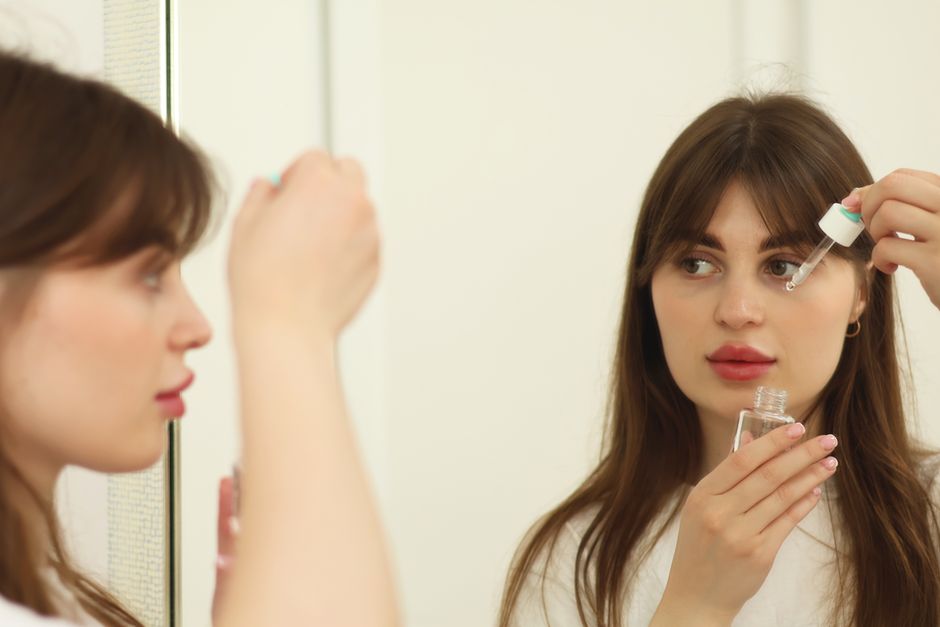
Squalane is a lightweight, plant-derived oil that mimics a lipid your skin already makes. It works mainly as an emollient and occlusive — it softens the surface of the skin and slows water loss through it. That is a real, measurable effect. What it does not do is remodel collagen, erase wrinkles, or “feed” your skin nutrients it lacks.
What Does Squalane Do For Skin?
Squalane works by sitting on the outermost layer of skin and holding water in. That layer, the stratum corneum, is built like a brick wall — skin cells are the bricks, and a mix of fats called lipids is the mortar. When the mortar thins out, water escapes and skin feels tight and rough. Squalane slots into that lipid space and helps slow the escape.
This is why people often describe it as softening without feeling greasy. It is not adding water to your skin. It is helping your skin keep the water it already has.
The name causes a lot of confusion. Squalane and squalene are different molecules. Squalene is the unsaturated form your body produces naturally, and it is unstable — it oxidizes and goes rancid. Squalane is the hydrogenated version, which means the double bonds have been saturated. That makes it far more stable and shelf-stable. Almost everything sold in skincare today is squalane, even when the label spells it the other way.
Where Does Skin Squalene Come From?
Your sebaceous glands make squalene. These are the oil glands attached to hair follicles, and they are most active on your face, scalp, chest, and back. Squalene is one of the main fats in sebum, the oil your skin produces.
Production is highest in your teens and early twenties. It declines steadily after that. By the time most people reach their forties and fifties, sebum output is noticeably lower than it was decades earlier. That decline is one reason skin gets drier with age — though it is only one factor among many, including hormone changes, sun exposure, and how well the skin barrier is functioning.
This is the logic behind squalane in skincare: if your skin makes less of a lipid it used to make, adding a similar lipid back to the surface might help. The logic is reasonable. The direct evidence that replacing it produces meaningful anti-aging results is thin. What is well established is the emollient and water-loss-reducing effect, not a restoration of youthful skin biology.
How Is Squalane Made?
Most squalane on the market today is plant-derived. The two main sources are olive oil and sugarcane. Some is also made from other plant oils. A smaller amount comes from shark liver oil — this was the original commercial source, and it is why some buyers look for plant-based certification.
All of these end up as the same molecule after processing. The source affects sustainability and cost, not how the finished ingredient behaves on your skin. Squalane from sugarcane and squalane from olive oil are chemically identical once purified.
There is also a synthetic version made through fermentation, sometimes called bio-squalane. Again, the end molecule is the same.





What Squalane Actually Does — And Does Not Do
The established effects are about moisture and texture. Squalane is an emollient, which means it fills in the tiny gaps between skin cells and makes the surface feel smoother. It is also mildly occlusive, which means it forms a light film that reduces water loss. Both of these are well understood and not controversial.
Here is where marketing tends to run ahead of evidence:
- Antioxidant claims. Squalane itself has little antioxidant activity. The unstable squalene can oxidize, but the stabilized squalane is not a meaningful antioxidant. Some products combine it with vitamin E or other antioxidants — the antioxidant benefit comes from those ingredients, not the squalane.
- Anti-aging claims. No clinical evidence shows squalane reduces wrinkles, increases collagen, or reverses sun damage. It can make skin look plumper and smoother in the short term because hydrated skin reflects light differently. That is a cosmetic effect, not a structural change.
- Acne treatment. Squalane does not treat acne. It is often well tolerated by people with acne-prone skin because it is non-comedogenic for many people, but “does not clog pores” is not the same as “clears acne.”
- Wound healing. Some research has looked at squalane in wound care, but the evidence is not strong enough to call it a treatment.
The honest summary: squalane is a good moisturizing ingredient. It is not a treatment for any skin condition.
Who Benefits Most From Squalane?
People with dry or dehydrated skin tend to notice the most difference. So do people with mature skin, whose natural oil production has dropped. It is also popular with people who find heavier oils or thick creams uncomfortable.
Squalane is generally well tolerated across skin types. It is lightweight enough that many people with oily or combination skin can use it without feeling greasy. For acne-prone skin, it is often a reasonable choice because it is less likely to clog pores than heavier oils — though individual reactions vary, and no ingredient is universally safe for every person.
If you have very oily skin, you may not need it. Your skin is already producing plenty of its own lipids.
How Do You Use Squalane?
There is no standard dose or frequency from clinical guidelines, because squalane is a cosmetic ingredient, not a medication. How you use it depends on your skin and your routine.
Common approaches:
- Apply a few drops to clean skin as a light moisturizer.
- Mix a drop into a thicker cream if the cream feels too heavy.
- Use it as the last step in your routine to help seal in other products.
- Add a drop to foundation if makeup looks dry or patchy.
Order matters less than most people think. Oils go on after water-based products, because oil can block water-based ingredients from absorbing. If you use a serum, apply it first, then squalane.
One practical note: squalane is stable, so it does not need refrigeration and has a long shelf life. That is one of its advantages over unstable oils like rosehip or evening primrose.
How Does Squalane Compare to Other Oils?
Squalane is often compared to jojoba, argan, and marula oil. The differences are mostly about texture and fatty acid composition.
| Oil | Main characteristic | Best for |
|---|---|---|
| Squalane | Lightweight, stable, low comedogenic risk | Most skin types, especially dry or mature |
| Jojoba | Waxy, similar to human sebum | Balancing oily or combination skin |
| Argan | Richer, contains vitamin E | Dry skin, adds antioxidant content |
| Marula | Light, absorbs quickly | Normal to dry skin |
None of these is objectively “better.” Squalane’s main advantage is that it is very stable and very unlikely to irritate. Its main disadvantage is that it offers no antioxidant or active benefit on its own.
What Should You Look For on a Label?
Look for “squalane” — spelled with an “a” at the end. If a product lists “squalene,” it may be the unstable form, though many brands use the terms loosely and the ingredient is usually squalane regardless.
Check whether the product says plant-derived or olive-derived if the source matters to you. Purity matters more than source. A well-formulated product with a small amount of squalane combined with other beneficial ingredients may serve you better than a bottle of pure squalane.
Be skeptical of products that claim squalane “replenishes what aging skin loses” as if it restores skin function. It replenishes surface lipids, which helps with moisture. That is a real but limited benefit.
Frequently Asked Questions
Is squalane good for your skin?
Yes, as a moisturizer. It softens the skin surface and helps reduce water loss, which is well established.
It is not a treatment for wrinkles, acne, or any skin condition.
Can squalane clog pores?
Squalane has a low comedogenic rating, meaning it is unlikely to clog pores for most people.
Individual reactions vary, so patch test if you are acne-prone.
Is squalane the same as squalene?
No. Squalene is the unstable, unsaturated form; squalane is the stable, hydrogenated version used in skincare.
Most products labeled “squalene” actually contain squalane.
Should I use squalane in the morning or at night?
Either works. There is no evidence that timing changes its effect.
Many people use it at night as a final moisturizing step and in the morning under sunscreen.
