
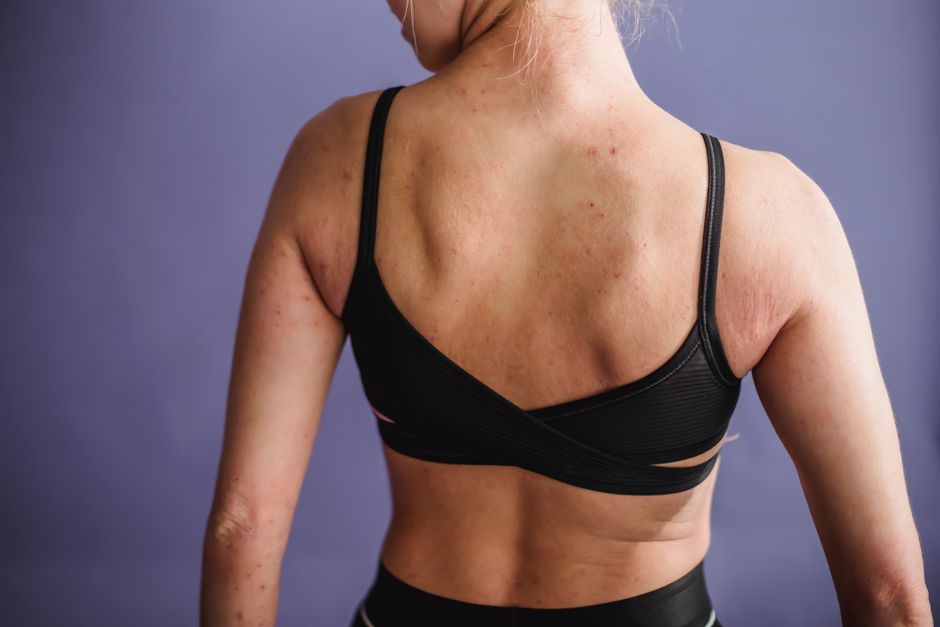
Pregnancy brings many changes to your skin, and some of them itch. One of the most intensely itchy conditions is PUPPP, which stands for pruritic urticarial papules and plaques of pregnancy. In plain terms, it is a bumpy, red, and very itchy rash that appears during pregnancy. It typically starts on the belly, often within stretch marks, and can spread to the thighs, buttocks, and arms. The rash looks like small, red bumps that can merge into larger, raised patches of skin. It is uncomfortable and frustrating, but it is not dangerous to you or your baby.
What Does PUPPP Rash Look Like In Pregnancy?
PUPPP usually begins in the third trimester, most often during the last few weeks of pregnancy. The first sign is typically small, red, pimple-like bumps appearing within the stretch marks on your abdomen. These bumps can be intensely itchy from the start.
As the condition progresses, these small bumps often merge together to form larger, raised, red patches called plaques. These plaques can look like hives, but they do not come and go the way hives do. The skin around the bumps may also appear red and inflamed. The rash rarely appears on the belly button itself, which is a helpful clue for doctors when making a diagnosis.
The rash can spread beyond the abdomen. It commonly moves to the thighs, buttocks, and sometimes the arms. It almost never appears on the face, palms of the hands, or soles of the feet. If the rash is on your face or inside your mouth, it is likely not PUPPP.
What Causes PUPPP and Who Gets It?
The exact cause of PUPPP is not fully understood. Research points to a few contributing factors. One leading theory involves the rapid stretching of the skin in the third trimester. This stretching may damage the connective tissue in the skin, triggering an inflammatory response that results in the rash.
Another theory involves fetal cells. Some studies suggest that fetal DNA can enter the mother’s bloodstream and cause an immune reaction in the skin. This is more likely to happen when the baby is larger or when the mother gains a significant amount of weight, as both increase skin stretching.
PUPPP is more common in first pregnancies. It is also more common in women carrying twins or other multiples. Some research suggests a higher risk for women who gain more weight during pregnancy than the recommended range. It is not caused by an allergy to anything specific, and it is not contagious.
How Is PUPPP Different From Other Pregnancy Rashes?
Several skin conditions can cause itching during pregnancy, and they are not all the same. Knowing the differences matters because some require immediate medical attention.
PUPPP is the most common pregnancy rash, but it is still relatively rare, affecting about 1 in 160 pregnancies. It is intensely itchy but poses no risk to the baby.
Intrahepatic cholestasis of pregnancy (ICP) is a liver condition that causes severe itching without a rash. The itching often starts on the palms and soles. This condition requires medical monitoring because it can affect the baby. The key difference is that ICP has no visible rash, while PUPPP is defined by its appearance.
Pemphigoid gestationis is a rare autoimmune blistering disease. It usually starts around the belly button and can spread widely. It often involves blisters, which PUPPP does not. This condition also requires medical monitoring.
Atopic eruption of pregnancy is a term used for eczema-like rashes that appear during pregnancy. These rashes can look similar to PUPPP but often appear earlier in pregnancy and may involve the face, neck, and chest.
If you are unsure what your rash is, a doctor or dermatologist can usually tell by looking at it. In rare cases, a skin biopsy may be needed for confirmation.



What Are the Treatment Options for PUPPP?
PUPPP resolves on its own after delivery, usually within a week or two. Until then, the goal of treatment is to control the itching and prevent skin damage from scratching.
Several options are available, and many women need to combine them. The most common first step is a mild over-the-counter hydrocortisone cream. This can reduce inflammation and itching for some women, though it may not be strong enough for severe cases.
Oral antihistamines like diphenhydramine (Benadryl) or cetirizine (Zyrtec) can help reduce itching and may also help you sleep if the itching keeps you awake at night. Always check with your obstetrician before taking any medication during pregnancy, including over-the-counter products.
For severe cases, a doctor may prescribe a stronger topical steroid cream. These require a prescription and should be used under medical supervision. Some research supports the use of topical steroids as the most effective treatment for PUPPP.
Cool compresses and lukewarm baths can provide temporary relief. Some women find that oatmeal bath products soothe the skin. Wearing loose, soft clothing can reduce friction and irritation.
There is no evidence that dietary changes or herbal supplements cure PUPPP. Some online sources suggest these, but no clinical trials support them. Be cautious about any product that promises a quick cure.
Can You Prevent PUPPP?
There is no proven way to prevent PUPPP. Because the exact cause is not fully understood, there is no reliable preventive measure.
Some research suggests that gaining weight within the recommended range for your pre-pregnancy body mass index may reduce the risk. This is a reasonable goal for overall pregnancy health, but it is not a guarantee that you will avoid PUPPP.
Moisturizing your belly does not prevent PUPPP. It can help with itching from skin stretching, but it does not stop the inflammatory process that causes this rash. If a product claims to prevent PUPPP, it is not supported by evidence.
When Should You See a Doctor About a Pregnancy Rash?
Any new rash during pregnancy deserves a conversation with your healthcare provider. This is especially true if the rash is intensely itchy, spreading, or accompanied by other symptoms.
Seek medical attention promptly if you have itching without a rash, especially on your palms or soles. This could be a sign of cholestasis of pregnancy, which needs medical evaluation. Also seek care if you see blisters, as this may indicate pemphigoid gestationis.
If you have a rash that looks like PUPPP, contact your obstetrician or midwife. They can confirm the diagnosis and recommend safe treatment options. They can also rule out less common conditions that need closer monitoring.
PUPPP is not an emergency, but it is a quality-of-life issue. Severe itching can interfere with sleep and daily activities. There is no reason to suffer without help when effective treatments are available.
Frequently Asked Questions
Can PUPPP rash spread to the baby?
No, PUPPP does not spread to or affect the baby. The rash is confined to the mother’s skin and poses no risk to the infant.
Does PUPPP go away after birth?
Yes, PUPPP typically resolves within one to two weeks after delivery. The itching usually improves within a few days of giving birth.
Is it safe to use hydrocortisone cream for PUPPP while pregnant?
Mild over-the-counter hydrocortisone cream is generally considered safe for short-term use during pregnancy, but you should confirm with your doctor first. Stronger prescription steroids should only be used under medical supervision.
Can PUPPP appear before the third trimester?
PUPPP most commonly appears in the third trimester, but it can occasionally develop earlier. If you develop a rash at any point in pregnancy, it is worth having it checked by a healthcare provider.
