
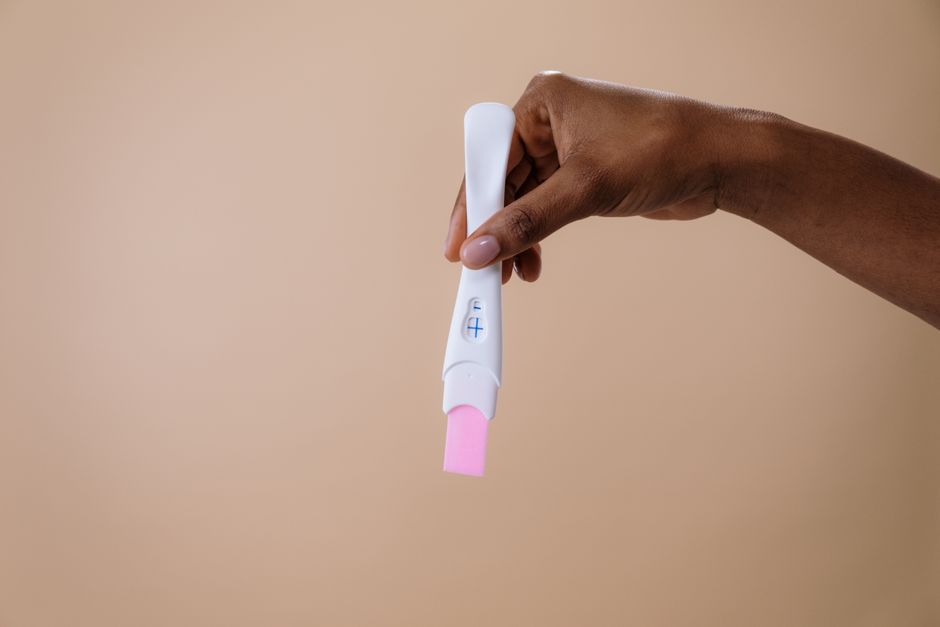
Most home pregnancy tests can detect pregnancy about 12 to 14 days after conception, which is roughly the time of a missed period. Some highly sensitive tests claim to work up to 6 days before your missed period, but accuracy improves significantly the closer you are to that expected period date. The hormone these tests detect, hCG, only appears after a fertilized egg implants in the uterus, and that process takes time.
How Do Home Pregnancy Tests Actually Work?
Home pregnancy tests measure human chorionic gonadotropin, or hCG. This hormone is produced by cells that form the placenta after implantation. The test strip uses antibodies that bind to hCG in your urine, producing a visible line or digital readout.
Your body does not produce hCG before implantation. Implantation typically happens 6 to 10 days after ovulation. Only after that point does hCG begin entering your bloodstream and, eventually, your urine.
Urine hCG levels rise quickly in early pregnancy. They roughly double every 48 to 72 hours during the first several weeks. This rapid rise is why testing a day or two later can change a negative result to a positive one.
What Is the Earliest Possible Positive Result?
The earliest any home test can turn positive is about 8 to 10 days after ovulation. That timing assumes implantation occurred on the early side and the test is highly sensitive. Most women will not get a positive result this early.
For most pregnancies, hCG becomes detectable in urine around 12 to 14 days after ovulation. This is the same time frame as a missed period for a typical 28-day cycle. Testing before this window risks a false negative simply because the hormone level is still too low to measure.
Some tests on the market claim sensitivity of 10 mIU/mL, meaning they can detect very low hCG levels. These tests may detect pregnancy a few days earlier than standard tests with 25 mIU/mL sensitivity. However, even the most sensitive test cannot detect a pregnancy before implantation occurs.
How Many Days Before a Missed Period Can You Test?
Standard pregnancy tests are designed to be used on the day of your missed period. At that point, about 95% of pregnancies will produce a positive result. Testing earlier increases the chance of a false negative.
Tests labeled as “early detection” can be used up to 6 days before your missed period. That sounds helpful, but the math matters. Testing 6 days early means you are only about 8 days past ovulation. At that point, fewer than half of pregnancies will have produced enough hCG to register on even a sensitive test.
If you test early and get a negative result, that does not mean you are not pregnant. It may simply mean your hCG levels have not risen enough yet. The most reliable approach is to wait until the day of your missed period or later.


Why Do Early Tests Give False Negatives?
A false negative means the test says not pregnant when you actually are. This happens most often when testing too early. The hCG level in your urine is simply below the test’s detection threshold.
Urine concentration also matters. Testing with more diluted urine, such as a sample taken after drinking large amounts of water, can lower hCG concentration below the detection limit. First-morning urine is generally the most concentrated and gives the most reliable result.
Some women also ovulate later than they think. If your ovulation date is off by a few days, your “missed period” date may also be off. A test taken based on an inaccurate cycle date may be earlier in the pregnancy than you realize, producing a negative result.
Blood Tests vs. Urine Tests: What Is the Difference?
Blood tests performed in a doctor’s office can detect pregnancy earlier than urine tests. A qualitative blood test simply confirms whether hCG is present. A quantitative blood test measures the exact level of hCG.
Blood tests can detect hCG approximately 6 to 8 days after ovulation, which is a few days before most urine tests. However, blood tests are not usually necessary for confirming a typical pregnancy. Doctors generally order them when there are concerns about miscarriage, ectopic pregnancy, or other complications.
Home urine tests remain the standard first step for most women. They are accurate, private, and inexpensive. The trade-off is that they cannot detect pregnancy as early as a blood test.
When Should You Test for the Most Reliable Result?
The single most reliable time to test is the first day of your missed period. If your cycle is irregular, wait at least 14 days after you think ovulation occurred. This timing gives hCG the maximum chance to reach detectable levels.
If you get a negative result but your period does not arrive, wait 3 to 5 days and test again. hCG levels rise quickly in early pregnancy, so a test taken just a few days later may be positive. This is a common scenario and does not indicate a problem with the test or your body.
Testing in the morning with first urine is the best practice. If you must test later in the day, try to hold your urine for at least 4 hours beforehand and avoid excessive fluid intake before testing.
How Accurate Are Home Pregnancy Tests?
Home pregnancy tests are highly accurate when used correctly. Studies consistently show that modern tests detect hCG at the levels found on the day of a missed period in the vast majority of pregnancies. When used exactly as directed on the day of a missed period, accuracy rates typically exceed 95%.
False positives are rare. They can occur with certain medical conditions, medications containing hCG, or a very early miscarriage shortly after implantation. A positive result on a home test is generally reliable, but a doctor’s visit can confirm the pregnancy with a blood test.
Accuracy depends heavily on following the instructions. Checking the result within the specified time window matters. Reading a test too early or too late can lead to incorrect interpretation.
What Can Change Your hCG Levels?
Every pregnancy produces hCG at its own rate. Some women have high levels early, while others have levels that rise more slowly. This natural variation explains why one woman gets a positive result days before her missed period while another does not until several days after.
Certain fertility medications contain hCG and can cause false positives if testing too soon after injection. These medications are typically given to trigger ovulation. If you are using fertility treatments, ask your doctor when it is safe to take a home pregnancy test.
Molar pregnancy and some rare tumors can also produce hCG. These conditions are uncommon, and a positive home test should not be assumed to indicate them without further medical evaluation.
Frequently Asked Questions
Can a pregnancy test be positive before implantation?
No. Pregnancy tests detect hCG, and your body only produces this hormone after implantation occurs.
How many days past ovulation can a test detect pregnancy?
Some sensitive tests can detect pregnancy at 8 to 10 days past ovulation, but most pregnancies are not detected until 12 to 14 days past ovulation.
Is a negative test 5 days before a missed period reliable?
A negative result at that point does not rule out pregnancy because hCG levels may still be too low to detect.
Does testing in the morning make a difference?
Yes, first-morning urine is more concentrated and contains higher hCG levels, making a positive result more likely when testing early.
