
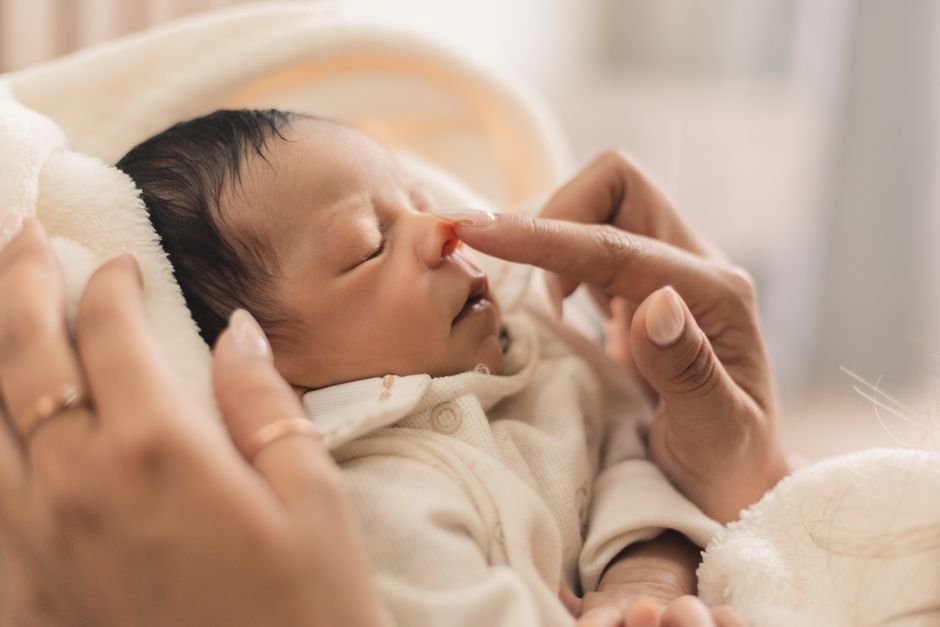
A cleft lip is one of the most common birth differences that can be seen before birth. Most cases are found during the standard mid-pregnancy ultrasound, which typically happens between 18 and 22 weeks of pregnancy. Modern ultrasound technology can often show a cleft lip clearly at this scan, though the exact timing depends on the baby’s position and the type of equipment used.
What Is a Cleft Lip and How Does It Form?
A cleft lip happens when the tissue that forms the upper lip does not join completely before birth. This leaves an opening, or gap, in the upper lip. The gap can be small — a tiny notch in the red part of the lip — or it can extend up into the nose.
The lip forms early in pregnancy. The parts of the face come together between the fourth and seventh weeks after conception. Most mothers do not even know they are pregnant at this stage. If the tissue does not fuse completely during this window, the cleft is already present.
A cleft lip is different from a cleft palate. A cleft palate is an opening in the roof of the mouth. The palate forms a bit later than the lip, between the sixth and ninth weeks of pregnancy. Some babies have only a cleft lip. Others have both a cleft lip and a cleft palate.
When Can A Cleft Lip Be Detected During Pregnancy?
A cleft lip can often be detected at the routine anatomy scan, also called the mid-pregnancy ultrasound. This scan is usually scheduled between 18 and 22 weeks of pregnancy. At this point, the baby’s face has formed clearly enough that a skilled sonographer can see the upper lip in detail.
Some centers can identify a cleft lip earlier. A specialized ultrasound called a first-trimester scan, done around 11 to 14 weeks, may show signs of a cleft in some cases. However, this earlier detection is not standard everywhere. It depends on the equipment, the training of the person performing the scan, and the position of the baby.
The baby must be facing the ultrasound probe for the lip to be visible. If the baby is facing your spine or has a hand covering the face, the sonographer may not get a clear view. In that case, you may be asked to come back for another scan later in the pregnancy.
How Accurate Is Ultrasound for Detecting Cleft Lip?
Ultrasound is quite good at finding cleft lip, but it is not perfect. Research consistently shows that most cases of cleft lip are identified during the second-trimester scan when the exam is done by an experienced professional.
Detection rates vary between medical centers. Some studies report detection rates above 90 percent for cleft lip when the lip is involved. Isolated cleft palate — a cleft that involves only the roof of the mouth — is much harder to see on ultrasound. The palate is behind the lip and often hidden by shadows or the baby’s tongue.
A few factors affect whether a cleft lip is seen:
- Baby’s position — the face must be visible
- Amount of amniotic fluid — low fluid can make the image less clear
- Maternal body habitus — extra tissue can reduce image quality
- Severity of the cleft — a complete cleft is easier to see than a small notch
- Equipment quality and operator skill — both matter significantly
If a cleft lip is suspected but not clearly confirmed, your doctor may recommend a follow-up scan or a referral to a center with specialized experience in fetal imaging.





What Happens After a Cleft Lip Is Found on Ultrasound?
Finding a cleft lip on ultrasound leads to a series of next steps. The first is a more detailed examination of the baby. A cleft lip can occur on its own, but it can also be part of a genetic condition or appear alongside other structural differences.
Your doctor may recommend a specialized ultrasound to look at the rest of the baby’s body in detail. The heart, spine, kidneys, and limbs are all checked carefully. Some genetic conditions that involve a cleft lip also affect these other structures.
Amniocentesis may be offered. This test samples the fluid around the baby to check the chromosomes. It can identify conditions such as trisomy 13 or trisomy 18, which are sometimes associated with cleft lip. This test is optional. Your doctor will explain the risks and benefits so you can decide what is right for you.
Some research suggests that a detailed ultrasound is the most valuable next step. If the ultrasound shows no other structural problems, the chance of a chromosome abnormality is lower. But ultrasound cannot rule out every genetic condition.
Can 3D or 4D Ultrasound Show a Cleft Lip Better?
Three-dimensional (3D) ultrasound creates a more lifelike image of the baby’s face. Many parents find this image easier to understand than the flat, two-dimensional (2D) view. For detecting a cleft lip, however, 3D is not necessarily more accurate than a high-quality 2D scan.
Some studies suggest that 3D ultrasound can help confirm a suspected cleft and give a clearer picture of its extent. It can be especially useful for showing the family what the baby’s face looks like. But the initial detection is usually made on a standard 2D scan.
4D ultrasound is simply 3D imaging in motion — a live video of the 3D image. It does not add diagnostic information beyond what 3D provides. The decision to use 3D or 4D imaging depends on the medical center and the specific situation.
Keep in mind that commercial “keepsake” ultrasound centers are not medical facilities. They do not perform diagnostic scans. If you have concerns about cleft lip, discuss them with your obstetrician rather than visiting a non-medical imaging center.
What Causes Cleft Lip?
The exact cause of cleft lip is not fully understood in most cases. It appears to result from a combination of genetic and environmental factors. Most babies with a cleft lip have no family history of the condition.
Some factors are associated with a higher chance of cleft lip. These include a family history of clefts, certain genetic syndromes, and some medications taken in early pregnancy. Smoking during pregnancy and poorly controlled diabetes have also been linked to an increased risk.
Folic acid taken before pregnancy and in the first trimester is known to reduce the risk of neural tube defects. Some research also suggests it may lower the risk of cleft lip, though the evidence is not as strong as it is for neural tube defects. Most prenatal vitamins include folic acid for this reason.
It is important to understand that most cases of cleft lip happen without any known cause. Parents should not blame themselves. Nothing you did or did not do during pregnancy is likely to have caused a cleft lip.
What Are the Treatment Options After Birth?
A cleft lip is treatable. Surgery to repair the lip is usually performed when the baby is between 3 and 6 months old. The exact timing depends on the baby’s overall health, weight, and the recommendations of the surgical team.
Before surgery, most babies with a cleft lip feed well with some support. Babies with both a cleft lip and a cleft palate may need special bottles or feeding techniques. A lactation consultant or feeding specialist can help you find what works.
If the cleft extends into the palate, a second surgery is typically needed later. Palate repair is usually done between 9 and 18 months of age. Some children need additional surgeries as they grow, including procedures to improve speech, hearing, or the appearance of the scar.
Children with a cleft lip often need care from a team of specialists. This team may include a surgeon, dentist, orthodontist, speech therapist, audiologist, and genetic counselor. Many children with an isolated cleft lip grow up healthy with no other medical issues.
Does a Cleft Lip Diagnosis Change Pregnancy Care?
A prenatal diagnosis of cleft lip gives you time to learn and prepare. It does not change the basic course of the pregnancy in most cases. Babies with an isolated cleft lip are usually born at full term without complications.
Your doctor may refer you to a fetal medicine specialist or a cleft team before birth. This allows you to meet the professionals who will care for your baby after delivery. You can ask questions about feeding, surgery, and long-term outcomes.
Some families choose to deliver at a hospital that has a cleft team on site. This is not medically necessary for most babies with an isolated cleft lip, but it can make coordination of care easier. Your doctor can help you decide whether this is the right choice for your situation.
Knowing before birth does not change the outcome, but it does change the experience. Many parents find that having time to process the diagnosis and gather information reduces anxiety after the baby is born.
Can a Cleft Lip Be Missed on Ultrasound?
Yes. Even with a perfect scan, some cleft lips are not seen before birth. A small cleft that involves only a tiny part of the lip can be very difficult to spot. The baby’s position is the most common reason a cleft is missed.
Isolated cleft palate is missed more often than cleft lip. The palate is hard to see because it is inside the mouth and surrounded by bone. Even the best ultrasound technology cannot always show this area clearly.
If your baby is born with a cleft that was not seen on ultrasound, you are not alone. This happens in a small number of cases even at the best medical centers. The diagnosis after birth is straightforward — the cleft is visible on examination — and the treatment plan is the same as it would have been with a prenatal diagnosis.
Frequently Asked Questions
Can a cleft lip be detected at 12 weeks?
Some cleft lips can be seen at 12 weeks during a specialized first-trimester ultrasound, but this is not routine or guaranteed. The standard detection window remains the 18-to-22-week anatomy scan.
Is a cleft lip more likely if there is a family history?
Yes, a family history of cleft lip increases the chance, but most babies with a cleft lip are born to parents with no family history. The overall risk for a second child when one parent has a cleft is low, typically around 4 percent.
Will my baby need surgery right after birth?
No, cleft lip repair is usually scheduled when the baby is 3 to 6 months old. Your baby will feed and grow normally in the meantime with appropriate feeding support.
Can 3D ultrasound definitively confirm a cleft lip?
3D ultrasound can provide clearer images and help confirm a suspected cleft, but it is not more accurate than a high-quality 2D scan performed by an experienced sonographer. The diagnosis is confirmed after birth by physical examination.
