
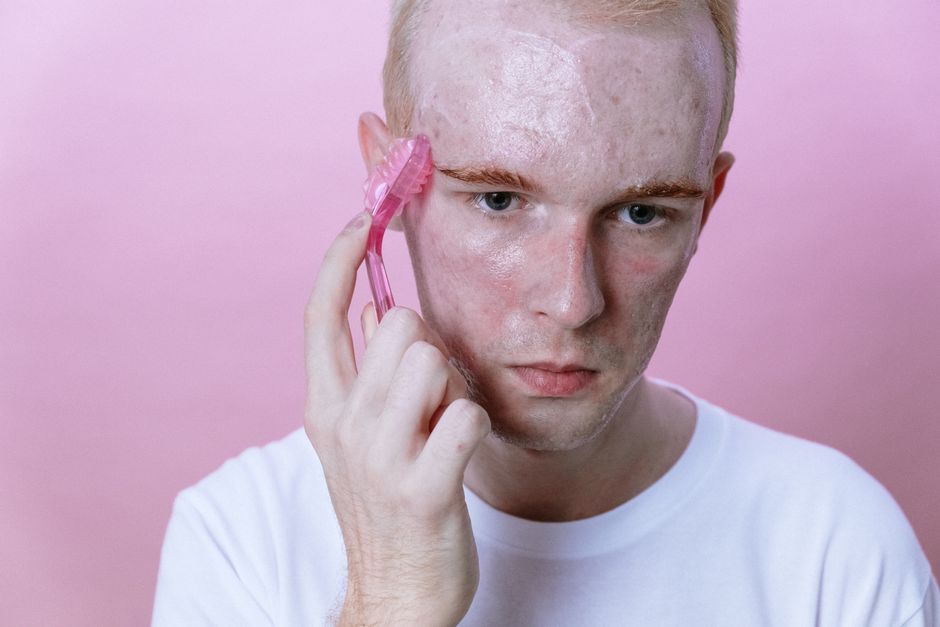
Acne on your chin is most often driven by hormones, specifically the androgens that influence oil production in your skin. While it shares the same underlying causes as acne elsewhere on your face, the chin is a hotspot because it has a high density of oil glands that are particularly sensitive to hormonal fluctuations. For most people, chin breakouts are not a sign of poor hygiene or a separate medical condition, but rather a predictable response to changes in hormone levels that occur naturally throughout life.
Why Does Acne Appear Specifically on the Chin?
The chin, along with the jawline, is part of what dermatologists call the “U-zone” of the face. This area has more androgen receptors in its sebaceous glands than other parts of the face. Androgens are hormones like testosterone that signal your oil glands to produce more sebum. When sebum mixes with dead skin cells, it can clog pores and lead to breakouts.
This is why chin acne is so common during times when hormone levels shift. These shifts include the days before a menstrual period, during pregnancy, and in perimenopause. The connection is strong enough that many clinicians use the location of acne as one clue when assessing whether a hormonal cause is likely.
It is not true that chin acne means your body is “toxic” or that you need to detox. No clinical evidence supports that idea. The skin is not a detox organ in that sense. The cause is internal physiology, not external dirt or lifestyle failure.
What Hormonal Changes Trigger Chin Breakouts?
In people assigned female at birth, the menstrual cycle is the most common trigger. Estrogen and progesterone levels fall right before menstruation. That drop leaves androgens relatively more influential, which can increase oil production and cause breakouts in the week before your period starts.
Pregnancy causes major hormonal shifts, and many women experience acne in the first trimester even if they never had acne before. Polycystic ovary syndrome (PCOS) is another condition where higher androgen levels are the norm, and chin acne is a frequent symptom. In PCOS, the acne is often accompanied by irregular periods, excess facial hair, and sometimes thinning scalp hair.
For men, chin acne is usually related to the natural androgen activity that continues through the teenage years and into the twenties. Adult-onset acne in men is less common but can be tied to stress, certain medications, or the use of anabolic steroids.
Is Chin Acne Different From Other Types of Acne?
The types of lesions are the same as elsewhere. You can get blackheads, whiteheads, papules, pustules, or deeper nodules on the chin. What differs is the trigger and the persistence.
Hormonal acne often presents as tender, deep bumps that are not just surface whiteheads. These are called nodules or cysts, and they form deeper in the skin. They are more likely to leave marks or scars because they involve more inflammation. Over-the-counter spot treatments that work for surface pimples often do little for these deeper lesions.
Another difference is the pattern. Hormonal chin acne tends to be cyclical. If you notice a clear pattern where breakouts appear in the same phase of your menstrual cycle month after month, that is a strong signal that hormones are the driver.


What Can You Do About Chin Acne?
Start with the basics that have the strongest evidence behind them. A gentle cleanser twice a day is enough for hygiene. Do not scrub aggressively, as that irritates the skin and can worsen inflammation.
For treatment, the options depend on severity. For mild to moderate acne, topical retinoids are the most effective single category. Adapalene is available over the counter in the United States at a 0.1% strength. It works by normalizing how skin cells shed, which keeps pores from clogging. It takes time, usually 8 to 12 weeks, before you see the full benefit.
Benzoyl peroxide kills the bacteria involved in acne, Cutibacterium acnes, and helps reduce inflammation. It is available in many strengths and formulations. It can be drying, so start with a lower concentration like 2.5%.
Salicylic acid helps exfoliate the skin surface and can be useful for blackheads and whiteheads. It is less effective for deep, inflamed nodules.
For hormonal acne specifically, some options target the hormone pathway directly. Combined oral contraceptives are FDA-approved for the treatment of acne in women who also want birth control. They work by reducing ovarian androgen production. Spironolactone is a medication that blocks androgen receptors in the skin. It is widely used by dermatologists for hormonal acne in women, though it is not FDA-approved specifically for acne. This is a common practice with good clinical evidence behind it, but it requires a prescription and monitoring.
No topical treatment will change your hormone levels. If your chin acne is clearly hormonal and does not respond to over-the-counter options, a dermatologist can help you decide whether a prescription approach is right for you.
Should You Pop a Pimple on Your Chin?
No. Popping a pimple, especially on the chin, increases the risk of deeper inflammation and scarring. The chin has thick skin, and deep lesions here can take weeks to heal. When you squeeze a nodule, you can push the contents of the pore deeper into the skin, making things worse.
If a pimple has a visible white head, some dermatologists say it is acceptable to gently extract it at home with clean tools. But the risk of doing more harm than good is high. For deep, painful bumps, leave them alone. A dermatologist can inject a diluted corticosteroid into a large, inflamed nodule to reduce it quickly, but that is an in-office procedure.
When Should You See a Doctor for Chin Acne?
See a dermatologist if over-the-counter treatments have not improved your skin after 12 weeks of consistent use. Also consider an appointment if your acne is painful, deep, or leaving dark marks or scars.
For women, chin acne combined with irregular periods, thinning hair, or excess facial hair warrants a medical evaluation. These symptoms together can point to PCOS or another hormonal condition that deserves proper diagnosis. A primary care doctor or gynecologist can run the appropriate blood tests.
Sudden, severe acne in an adult who previously had clear skin is also worth a medical visit. This is especially true if it comes with other symptoms like fatigue, weight changes, or new hair growth in unusual places. These could indicate a hormonal issue that needs investigation, not just a skin problem.
Does Diet Affect Chin Acne?
The link between diet and acne is real but modest. Research consistently shows that high-glycemic diets, meaning foods that spike blood sugar quickly, are associated with more acne. This includes sugary drinks, white bread, and processed snacks. The mechanism involves insulin and insulin-like growth factor, which can increase oil production.
Dairy, particularly skim milk, has been linked to acne in several observational studies. The evidence is not strong enough to say dairy causes acne in everyone. But if you have persistent chin acne and consume a lot of dairy, a trial of reducing it for a few months is reasonable. Do not eliminate entire food groups without talking to a professional.
Chocolate has been blamed for acne for decades. The evidence is mixed, and it is likely that high-sugar chocolate bars are the problem more than cocoa itself. There is no solid reason to avoid chocolate entirely.
Can Stress Cause Chin Acne?
Stress does not directly cause acne, but it can worsen existing acne. When you are stressed, your body releases cortisol and other hormones that can increase oil production. This is not a myth, but it is also not the root cause. If you have no acne, stress alone will not typically give you chin acne. If you are already prone to it, stress can make breakouts more frequent or more severe.
Managing stress is good for your overall health, and it may help your skin. But do not expect stress reduction alone to clear up hormonal acne. It is a supporting factor, not a cure.
Frequently Asked Questions
Does chin acne always mean a hormonal problem?
No, but hormones are the most common driver for chin acne, especially in adults. Other factors like pore-clogging products, medications, and stress can also contribute, but hormonal activity is the dominant cause in this specific location.
What is the fastest way to get rid of a chin pimple?
A spot treatment with benzoyl peroxide can reduce inflammation quickly, but it will not work overnight. For a large, painful bump, a dermatologist can inject it with a corticosteroid to shrink it within 24 to 48 hours.
Can toothpaste clear up chin acne?
No. Toothpaste is not a treatment for acne and can irritate the skin, making the bump worse. Use an over-the-counter acne product with benzoyl peroxide or salicylic acid instead.
Is chin acne a sign of PCOS?
It can be, but chin acne alone is not enough to diagnose PCOS. If you also have irregular periods, excess facial hair, or difficulty with weight management, see a doctor for evaluation.
