
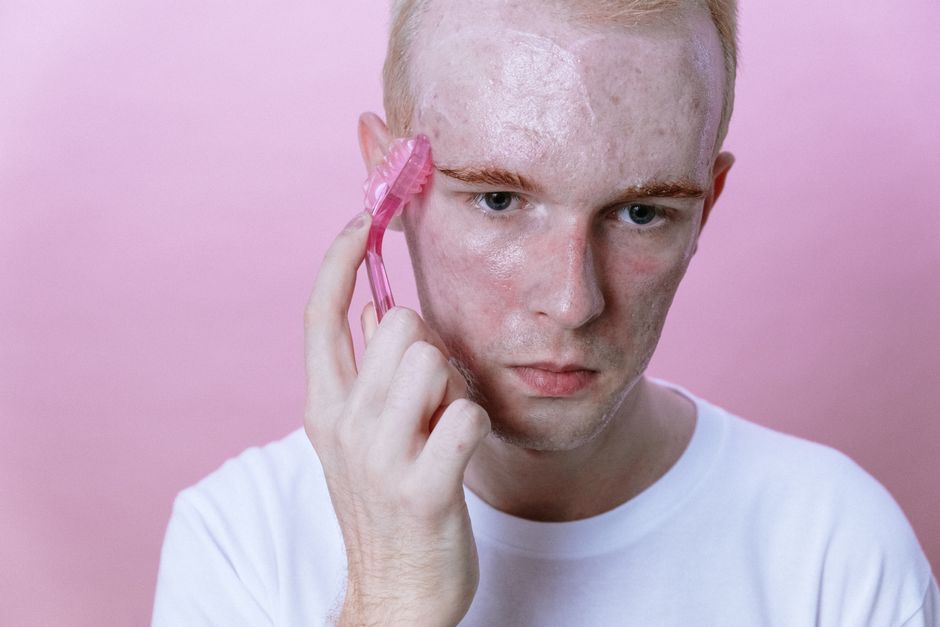
Acne is not a random skin problem or a sign that your skin is dirty. It is a biological process that happens when pores become blocked by oil, dead skin cells, and bacteria, leading to inflammation. Your face, chest, and back have more oil glands than other areas, which is why breakouts appear there most often. The location of a pimple does not reliably point to a specific internal organ problem, but certain patterns can give clues about hormonal or external triggers.
What causes acne at the biological level?
Acne starts inside a pore. A pore is a tiny opening in your skin that contains a hair follicle and an oil gland called the sebaceous gland. The gland produces sebum, an oily substance that keeps skin moist. Normally, dead skin cells rise to the surface and flake off. In people prone to acne, these cells shed irregularly and stick together with excess sebum, forming a plug inside the pore.
This plug blocks the follicle opening. When the plug stays below the surface and the top is closed, it is a whitehead. If the top opens and darkens from exposure to air, it becomes a blackhead. The dark color is oxidized oil and skin debris, not dirt. Once the follicle is blocked, a bacteria called Cutibacterium acnes that normally lives on skin can multiply inside, triggering an immune response. That immune reaction causes redness, swelling, and pus — the inflamed pimple.
What Does My Acne Mean The Science Behind Breakouts?
When people ask what their acne means, they often want a simple answer tied to a specific cause. The science says that breakouts are driven by four main factors: oil production, clogged follicles, bacterial growth, and inflammation. These four factors interact differently from person to person. For some, hormones are the main driver. For others, genetics or skin care habits play a bigger role. No single food, stress level, or skin care product causes acne in everyone. The “meaning” of your acne is the specific combination of these biological processes happening in your skin.
Location can offer some clues, but not the kind you see on face maps found online. Acne on the chin and jawline is strongly linked to hormone fluctuations in both men and women. Breakouts along the hairline or cheeks may be related to hair products, phone screens, or pillowcases. But no reliable evidence connects forehead acne to digestion or cheek acne to lung problems. The most accurate interpretation of your acne is an honest look at your personal triggers: your skin type, your family history, your stress levels, and your skin care routine.
What role do hormones play?
Androgens, such as testosterone, signal the sebaceous glands to produce more sebum. This surge in oil production is the main reason acne flares during puberty. But hormones continue to influence breakouts in adults. In women, menstrual cycles, pregnancy, and conditions like polycystic ovary syndrome can cause acne because of changes in estrogen and progesterone relative to androgens. Stress also raises cortisol levels, which may increase oil production and worsen inflammation.
Hormonal acne typically appears along the lower face — the jawline, chin, and around the mouth. The pimples are often deep, tender, and cyst-like rather than superficial whiteheads. This pattern is common in women in their 20s, 30s, and 40s. Men may also experience hormonal breakouts, though it is less common after adolescence unless there is a medical condition or use of anabolic steroids.





Can diet really cause breakouts?
The link between diet and acne is real but more limited than many claims suggest. High-glycemic foods — those that raise blood sugar quickly, like white bread, sugary drinks, and candy — can trigger hormonal changes that increase sebum production. Some research suggests that dairy, particularly skim milk, may also be associated with higher acne rates in certain people, possibly due to hormones or growth factors in milk. But the evidence is not strong enough to recommend avoiding dairy for everyone with acne.
Chocolate has a mixed reputation. High-quality studies have not confirmed that chocolate directly causes breakouts. The effect may depend on the sugar and dairy content in the chocolate bar rather than the cacao itself. Overall, diet appears to be a secondary factor for most people. If you notice consistent breakouts a few days after eating a specific food, it may be worth testing elimination under the guidance of a dermatologist. But for many, cutting out entire food groups without strong evidence does not clear acne and can lead to unnecessary restriction.
What treatments target the root causes?
Effective acne treatments work on one or more of the four main causes. Over-the-counter products with benzoyl peroxide kill bacteria and help clear pores. Salicylic acid helps shed dead skin cells and reduce plugging. Adapalene, a retinoid now available without a prescription, normalizes cell turnover and prevents new comedones from forming.
Prescription treatments offer more targeted options. Topical retinoids like tretinoin work on cell turnover and inflammation. Topical antibiotics such as clindamycin reduce bacterial overgrowth. Oral antibiotics lower inflammation and bacterial levels but are typically used short-term. Spironolactone, a medication that blocks androgen receptors, is effective for hormonal acne in women. Isotretinoin, a powerful oral retinoid, dramatically reduces sebum production and can lead to long-term remission in severe cases.
It is important to recognize that treatments take time. Most topical medications need at least 8 to 12 weeks before you see significant improvement. Using multiple products incorrectly can irritate the skin and make acne worse. The safest approach is to start with one product, use it consistently, and add treatments only if needed and under supervision.
When should you see a dermatologist?
You should see a dermatologist if over-the-counter products have not helped after three months, if your acne is moderate to severe with deep cysts, or if it leaves scars or dark spots. Acne that appears suddenly in adulthood, especially in women, may signal an underlying condition such as polycystic ovary syndrome that needs medical evaluation. A dermatologist can prescribe stronger medications, perform in-office procedures like extraction or corticosteroid injections, and help you build a routine based on your skin type and breakout pattern.
Ignoring acne does not make it go away. Early treatment reduces the risk of permanent scarring and can prevent the emotional distress that often accompanies persistent breakouts. If acne significantly affects your daily life, that alone is a good reason to seek professional help.
Frequently Asked Questions
Does acne mean my skin is dirty?
No. Acne is caused by internal factors like oil production, hormone changes, and bacteria, not by surface dirt. Scrubbing hard can actually worsen breakouts by irritating the skin.
Can stress really cause acne?
Yes. Stress raises cortisol levels, which can increase oil production and inflammation, making existing acne worse or triggering new breakouts in people already prone to it.
Should I pop my pimples?
No. Popping pushes bacteria and debris deeper into the skin, which increases inflammation and can lead to scarring. Let a pimple resolve on its own or see a professional for safe extraction.
Does sunscreen help prevent acne?
Yes, if you choose a non-comedogenic formula. Sun exposure can darken acne marks and some acne medications make skin more sensitive to UV damage, so daily sunscreen protects both skin and the healing process.
