
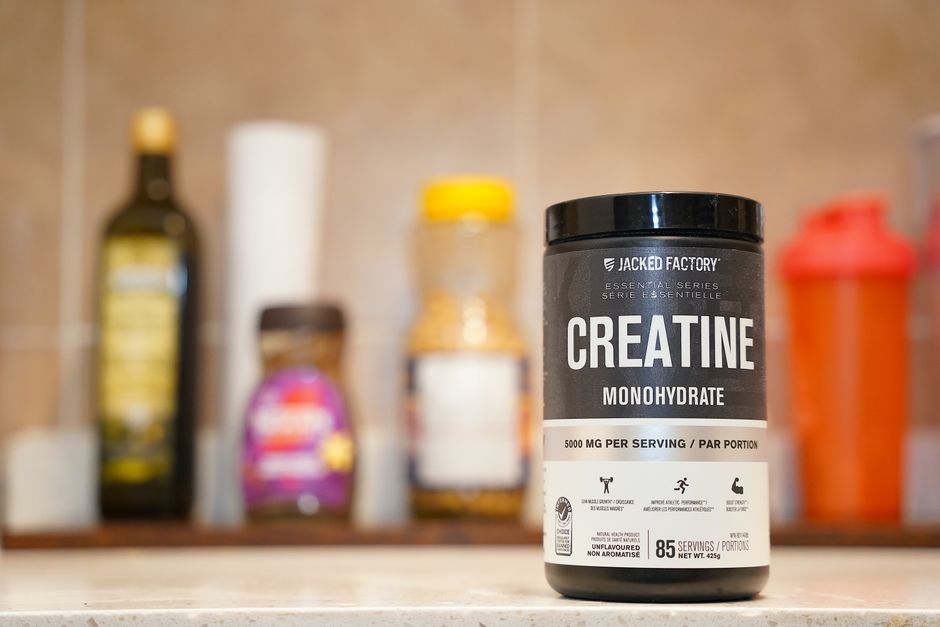
Creatine is one of the most studied supplements in sports nutrition, and the evidence for its benefits is strong. It is primarily good for improving high-intensity exercise performance and increasing muscle mass when combined with resistance training. Beyond athletic performance, research has explored its potential for cognitive health and certain medical conditions, though the evidence for these uses is less established.
How Does Creatine Work in the Body?
Your body makes creatine naturally from amino acids, and it also gets it from foods like red meat and seafood. About 95% of the body’s creatine is stored in skeletal muscle, where it plays a key role in producing quick energy.
During short bursts of intense activity — like sprinting or heavy lifting — your muscles rely on a molecule called ATP for fuel. ATP gets used up fast. Creatine phosphate helps regenerate ATP quickly, so you can keep going at high intensity for a few extra seconds or complete another rep.
This mechanism is well established. It is why creatine has consistently been shown to improve performance in activities that require short, explosive efforts.
What Is Creatine Good For Specifically?
Creatine monohydrate is the form used in most research. Studies have found it improves strength, power, and lean muscle mass in people who do resistance training. It works by allowing you to train harder and recover between sets more quickly, which over time leads to greater muscle growth.
It is also effective for high-intensity interval training and repeated sprint efforts. Sports like soccer, basketball, and hockey involve repeated short bursts, and creatine can help with performance in these settings.
Some research suggests creatine may help preserve muscle mass as you age. This is relevant because age-related muscle loss, known as sarcopenia, affects many adults over 60. Creatine combined with resistance training appears to be more effective than training alone for older adults.
Does Creatine Help the Brain?
Your brain also uses creatine for energy, though at lower levels than muscle. Some research has explored whether creatine supplementation could support cognitive function, especially in situations of mental stress or sleep deprivation.
The evidence here is more preliminary than the muscle data. Some small studies suggest creatine may slightly improve memory and reasoning in healthy people under stress. Other studies show little or no effect in well-rested individuals.
There is also ongoing research into creatine for conditions like traumatic brain injury and depression. Some results are promising, but no large human trials have confirmed these uses. The evidence is genuinely limited, and clinicians do not currently prescribe creatine for brain conditions as standard care.


Which Type of Creatine Is Best?
Creatine monohydrate is the gold standard. It is the most studied form, it is effective, and it is inexpensive. Other forms like creatine ethyl ester, creatine hydrochloride, and buffered creatine are marketed as better absorbed or with fewer side effects.
These marketing claims are not supported by evidence. Studies have not shown that these forms are more effective than monohydrate. Some may actually be less effective because they break down into creatinine, an inactive waste product, during digestion.
Stick with creatine monohydrate. It has decades of research behind it, and it works.
How Much Creatine Should You Take?
The standard protocol used in most research is a loading phase of 20 grams per day for 5 to 7 days, divided into 4 doses of 5 grams. This is followed by a maintenance dose of 3 to 5 grams per day.
Loading is optional. Taking 3 to 5 grams daily without a loading phase will saturate your muscles, but it takes about 3 to 4 weeks instead of 1 week. Both approaches are safe and effective.
Some people take creatine on non-training days too. This is fine. Daily supplementation keeps muscle creatine levels saturated, which is the goal.
No clinical guidelines exist for creatine use in children, adolescents, or pregnant women. Studies in these populations are limited, and the long-term effects are not fully known. If you are considering creatine for a teenager, discuss it with a pediatrician first.
Is Creatine Safe?
Creatine is one of the safest supplements studied. Research consistently shows no harmful effects on the kidneys or liver in healthy people at recommended doses. It has been studied for decades, and serious side effects are rare.
The most common side effect is water retention. Creatine pulls water into your muscle cells, which can cause slight weight gain. This is not fat gain, and it is generally harmless.
Some people report stomach cramping or digestive discomfort. This is more common with the loading phase or when creatine is taken without enough water. Taking it with food or splitting the dose can reduce these symptoms.
People with pre-existing kidney disease should talk to their doctor before taking creatine. The kidneys filter creatine, and while no evidence shows it harms healthy kidneys, the safety data in people with kidney disease is limited.
What Creatine Is Not Good For
Creatine is not a weight loss supplement. It does not burn fat or boost metabolism. The initial weight gain from water retention can actually make the scale go up, which confuses some people.
It does not improve endurance performance. Activities like long-distance running or cycling rely on aerobic energy systems, not the creatine phosphate system. Studies have not found meaningful benefits for endurance athletes.
Creatine will not build muscle on its own. It works by helping you train harder. If you take creatine but do not lift weights, you will not see significant muscle growth. The muscle-building effect depends on resistance training.
It is also not a cure for any medical condition. Despite claims on social media, creatine does not treat heart disease, diabetes, or neurological disorders. Research is exploring some of these areas, but no clinical evidence currently confirms these uses.
What Are the Realistic Expectations?
Creatine is not a dramatic supplement. The effects are real but modest. In resistance training studies, creatine typically adds a small amount of extra strength and muscle mass compared to training alone.
You will not notice a difference after one dose. Muscle creatine levels need time to build up. Most people notice performance changes within 1 to 3 weeks of daily supplementation.
If you stop taking creatine, the benefits fade over several weeks as muscle levels return to normal. There is no withdrawal or permanent effect. You simply return to your baseline.
Frequently Asked Questions
Does creatine make you gain weight?
Creatine causes water retention in muscles, which can add 1 to 2 kilograms of water weight in the first week. This is not fat gain and is generally harmless.
Can you take creatine every day?
Yes, taking 3 to 5 grams daily keeps muscle creatine stores saturated and is the recommended approach. Daily use is safe for healthy adults.
Is creatine safe for your kidneys?
Research shows creatine does not harm healthy kidneys at recommended doses. People with existing kidney disease should consult a doctor before using it.
Does creatine cause hair loss?
One small study suggested a link between creatine and a hormone related to hair loss, but no clinical evidence confirms creatine causes balding. This claim is not supported by the broader research.
