
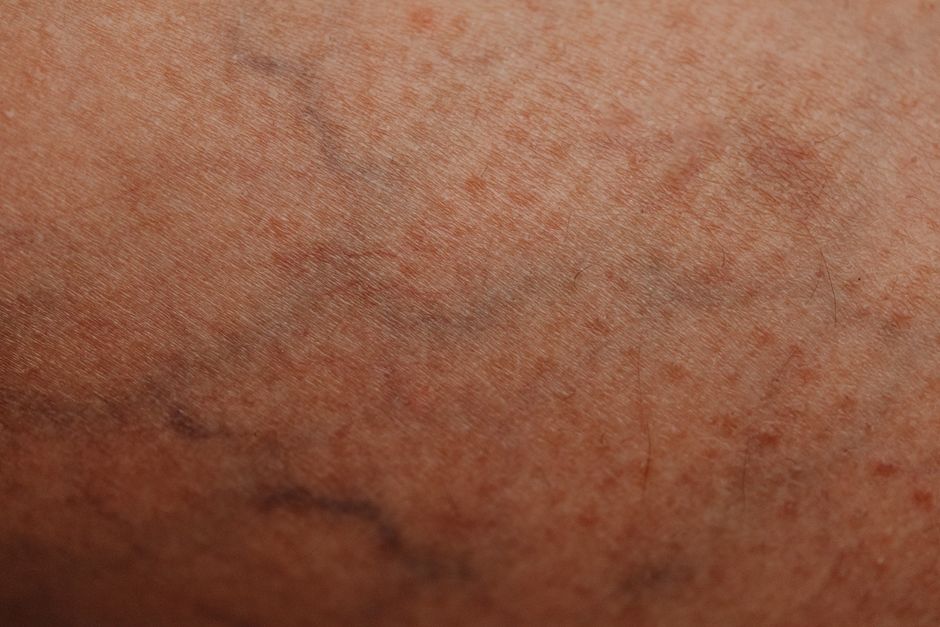
Varicose veins in the thighs happen when the one-way valves inside those veins stop closing properly, letting blood flow backward and pool instead of traveling up toward the heart. That backward pressure stretches the vein wall, which is why the vein becomes twisted, bulging, and visible under the skin. It is the same valve failure that causes varicose veins in the calves, but thigh veins sit deeper and carry more blood, so the mechanics differ in some important ways.
What Causes Varicose Veins In Thighs?
The direct cause is venous valve failure combined with higher pressure inside the vein. Veins in the legs are built to push blood upward against gravity. Small flaps of tissue inside them act as one-way doors, closing after each pulse of blood moves up so it cannot slide back down.
When those flaps weaken or separate, blood falls backward and collects. The pooling raises pressure in the vein. Over time that pressure stretches the wall and the vein loses its shape. This is called venous insufficiency, and it is the underlying problem in nearly every case of varicose veins.
Two large veins run through the thigh: the great saphenous vein on the inner side and the small saphenous vein behind the leg. The great saphenous vein is the one most often involved in thigh varicose veins. It is long, sits close to the surface, and connects to the deep system near the groin. A failing valve at that junction is a common starting point for backward flow down the whole length of the thigh.
Why the thigh is different from the calf
Thigh veins sit under more muscle and fat than calf veins, so early problems may not be visible. Some people have significant backward flow in a thigh vein with no bulging at all. Instead they notice aching, heaviness, or swelling after standing. That difference matters because a visible bulge is a late sign, not the first one.
Thigh veins also drain a larger volume of blood. When a valve fails there, the volume of backward flow is greater, which is one reason thigh symptoms can be more noticeable than calf symptoms even when the visible veins look similar.
Who Is More Likely to Get Them?
Several factors raise the odds, and most of them act by increasing pressure on vein walls or weakening the vein tissue itself.
- Genetics. Varicose veins run in families. If a parent has them, risk goes up. Some people inherit vein walls and valves that are structurally weaker from birth.
- Sex. Women are more likely to develop them than men, largely due to hormonal effects on vein walls.
- Pregnancy. Blood volume rises during pregnancy, and the growing uterus puts pressure on veins returning blood from the legs. Hormonal changes also relax vein walls. Varicose veins often improve after delivery, but not always.
- Age. Valve tissue loses elasticity over time. Risk climbs steadily with age.
- Prolonged standing or sitting. Standing still for long stretches keeps blood pooling in the legs. Sitting with legs bent for hours does the same thing.
- Higher body weight. Extra weight increases pressure on the veins of the pelvis and legs.
These factors stack. A person with a family history who stands all day and has had two pregnancies is working against more pressure than someone with none of those factors.
Is It Just a Cosmetic Problem?
No. Varicose veins are a sign of a circulation problem, not only a cosmetic one. For many people the symptoms are the bigger issue: aching, heaviness, burning, throbbing, or swelling that gets worse through the day and eases when legs are raised.
In more advanced cases, skin changes can appear near the ankle, including discoloration, dryness, and thickening. These are signs of long-standing venous insufficiency and are worth a medical evaluation.
A small number of people develop superficial vein thrombosis, a clot in a surface vein. This causes a hard, tender, red cord along the vein. It is different from a deep vein clot, but it should still be checked by a clinician.
Deep vein thrombosis is a separate and more serious condition. It usually causes swelling, pain, and warmth in one leg, often the calf, and can occur with or without visible varicose veins. A clot that travels to the lungs is a medical emergency. Sudden swelling in one leg, chest pain, or shortness of breath needs urgent care, not a wait-and-see approach.




Do Hormones Play a Role?
Yes, and this is one of the clearer findings in vein research. Estrogen and related hormones affect the smooth muscle and connective tissue in vein walls. They can make veins relax and lose tone, which makes valve failure more likely.
This helps explain why varicose veins are more common in women, why they often first appear or worsen during pregnancy, and why some women notice changes around menopause or while using hormonal contraception. The effect is real but modest on its own. Hormones usually work alongside genetics and pressure factors rather than causing veins to fail by themselves.
Can Standing or Sitting All Day Cause Them?
Long periods of standing or sitting do not create varicose veins from nothing, but they make existing valve problems worse and can bring symptoms on faster. The reason is mechanical.
Leg veins rely on two pumps to move blood upward: the calf muscles squeezing during walking, and one-way valves preventing backflow. When you stand still, the calf pump stops working. Blood sits in the lower legs under full gravitational pressure. When you sit with knees bent, the veins behind the knee can be partly compressed, which adds resistance.
This is why symptoms often build through a workday and ease overnight. Lying flat removes most of the gravitational load, so blood drains and the vein pressure drops.
How Are Thigh Varicose Veins Evaluated?
A physical exam is the starting point, but the key test is a venous ultrasound. This uses sound waves to map blood flow, show which valves are failing, and measure the direction and duration of backward flow.
Ultrasound matters because the vein causing symptoms is not always the one you can see. A bulging vein on the surface may be fed by a deeper problem higher up. Treating only the visible vein without addressing the source is a common reason symptoms return.
Some clinicians also measure ankle and calf circumference, check skin changes, and ask about how symptoms change with position and time of day. A scoring tool called the CEAP classification is sometimes used to describe how advanced the disease is, from mild surface veins to skin changes and ulcers.
What Actually Helps, and What Does Not
Compression stockings are the most widely used non-procedural option. They apply graded pressure that is highest at the ankle and lower higher up, which helps blood move upward and reduces pooling. Evidence shows they can reduce symptoms like aching and swelling. Their effect on preventing varicose veins from getting worse over the long term is less clear.
Leg elevation and walking both work by using gravity and the calf pump to move blood. Neither reverses existing valve damage, but both reduce the pressure that drives symptoms.
Procedures such as endovenous laser or radiofrequency ablation, sclerotherapy, and vein stripping are used to close or remove problem veins. These are established treatments, and outcomes vary by which vein is involved and how advanced the disease is. A vascular specialist is the right person to discuss whether a procedure is appropriate.
What does not work: creams, supplements, and massagers marketed to “fix” varicose veins. No clinical evidence confirms these reverse valve failure or remove varicose veins. Some may feel soothing, but they do not address the underlying cause.
Can You Prevent Them?
If valve weakness is inherited, you cannot prevent the underlying tendency. What you can do is reduce the pressure that makes it worse.
- Move regularly. Walking activates the calf pump.
- Avoid standing still for long stretches. Shift weight, flex ankles, or take short walks.
- Raise your legs above heart level when resting.
- Avoid crossing your legs for long periods.
- Stay hydrated and maintain a weight that is healthy for you.
These steps are reasonable and low-risk, but no study has shown they prevent varicose veins in someone with a strong genetic tendency. They reduce symptoms and slow progression more reliably than they prevent onset.
Frequently Asked Questions
What causes varicose veins in thighs?
They are caused by failing one-way valves inside the vein that let blood flow backward and pool, raising pressure until the vein stretches and bulges. Genetics, hormones, pregnancy, age, and long periods of standing all increase the odds.
Are thigh varicose veins dangerous?
Most are not dangerous on their own, but they signal a circulation problem that can lead to skin changes and, in some cases, superficial clots. Sudden swelling in one leg, chest pain, or shortness of breath needs urgent medical care.
Can varicose veins in thighs go away without treatment?
They rarely go away on their own, though symptoms often improve with leg elevation, compression, and movement. Pregnancy-related veins sometimes improve after delivery, but the underlying valve problem usually remains.
Do compression stockings fix varicose veins?
No, they do not repair valves or remove veins. Evidence shows they can reduce aching and swelling, but their role in preventing long-term progression is not firmly established.
