
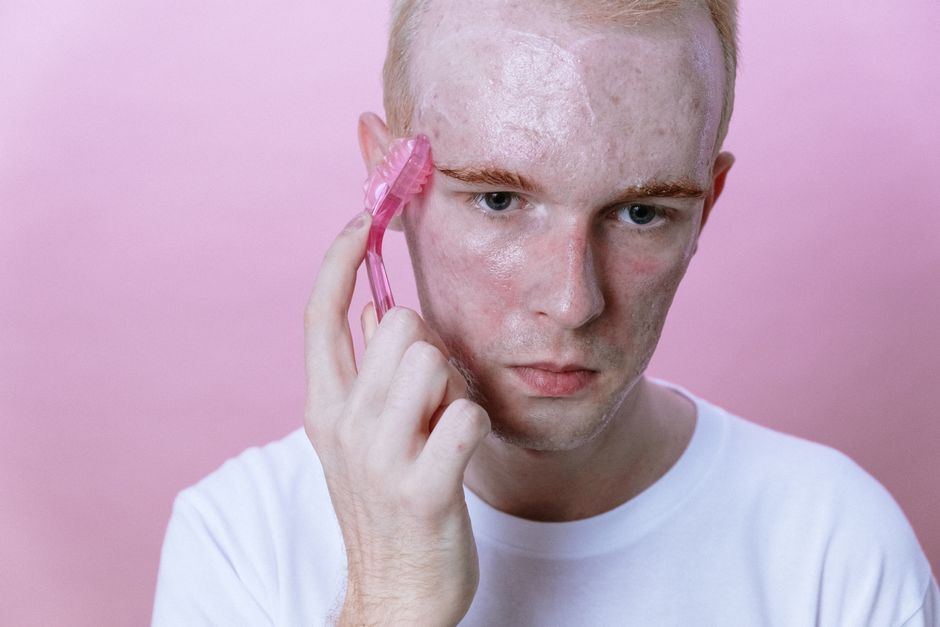
Hormonal acne in men happens when your body produces too much of certain androgens, especially testosterone and dihydrotestosterone (DHT). These hormones trigger your sebaceous glands to pump out excess oil, which clogs pores and feeds bacteria that cause inflammation. It is not a teenage problem that goes away. Many men in their 30s, 40s, and 50s deal with it because hormone levels shift throughout adult life, not just during puberty.
What Causes Hormonal Acne In Men?
The direct cause is an imbalance in your androgen hormones. Testosterone and DHT are the main drivers. They bind to receptors in your skin’s oil glands and tell them to produce more sebum. Sebum is the waxy oil that normally protects your skin. When too much is made, it mixes with dead skin cells and clogs hair follicles.
This creates the perfect environment for Cutibacterium acnes, a bacteria that lives on everyone’s skin, to multiply. Your immune system attacks the bacteria, which causes red, swollen pimples. The whole process is driven by hormones, not by dirty skin or poor hygiene. The American Academy of Dermatology states that adult acne in men is strongly linked to hormonal activity, not lifestyle factors alone.
Why Do Men Get Hormonal Acne In Their 30s and 40s?
Many people assume acne ends after high school. It does not. Research published in the Journal of the American Academy of Dermatology found that adult male acne is more common than once thought. About 40% of men report having acne in their 20s, and the number stays significant into the 30s and 40s.
Testosterone levels naturally decline with age, but the ratio between testosterone and other hormones shifts. Estrogen levels in men also drop. When estrogen goes down, the effects of testosterone become more noticeable on the skin. Stress is another factor. Chronic stress raises cortisol, which can increase androgen production and worsen acne. It is not the stress itself causing pimples — it is the hormonal chain reaction stress triggers.
Some men also experience a condition called late-onset hypogonadism, where testosterone production becomes erratic. This can lead to sudden breakouts in men who never had acne before. If acne appears suddenly in your late 30s or 40s, it is worth asking a doctor to check your hormone levels.
Does Testosterone Therapy Cause Acne?
Yes, it can. Testosterone replacement therapy (TRT) is prescribed for men with low testosterone. One of the most common side effects is acne. A study in JAMA Dermatology reported that up to 50% of men on TRT develop some form of acne within the first year. The skin reacts to the sudden increase in available testosterone, converting it to DHT, which overstimulates oil glands.
This is not a sign the therapy is failing. It is a sign your skin is responding to the hormone change. Many men on TRT manage this with topical treatments or adjusting their dose under medical supervision. If you are on TRT and struggling with breakouts, do not stop treatment on your own. Talk to your doctor about options like lowering the dose, changing the delivery method (gel vs. injection), or adding a topical retinoid.



What Actually Works for Hormonal Acne in Men?
Treatment is different from teenage acne. Products that dry out the skin often make adult acne worse because they strip natural oils and cause the glands to overcompensate. Here is what the evidence supports:
- Topical retinoids like tretinoin or adapalene. These are vitamin A derivatives that normalize how skin cells shed and reduce clogged pores. Prescription strength works better than over-the-counter versions.
- Benzoyl peroxide kills bacteria directly. It works well for inflammatory acne — the red, tender bumps. Use a 2.5% or 5% gel. Higher concentrations irritate skin without working better.
- Oral medications are reserved for severe cases. Spironolactone, which blocks androgen receptors, is used off-label in men but can cause side effects like breast tenderness. Isotretinoin (Accutane) is highly effective but requires monitoring for mood changes and liver issues.
- Diet changes have mixed evidence. Some studies suggest high-glycemic foods and dairy may worsen acne in some people. The link is not strong enough to recommend cutting them out for everyone. If you notice a pattern with certain foods, try eliminating them for a month and see what happens.
One non-obvious insight: shaving can both help and hurt. Shaving removes dead skin cells and can prevent clogged pores. But dull razors or shaving against the grain irritate follicles and cause more breakouts. Use a sharp, clean razor and shave in the direction of hair growth.
How Is Hormonal Acne Different from Other Types of Acne?
Hormonal acne in men has a specific pattern. It shows up along the jawline, chin, and lower cheeks. It also appears on the back and shoulders more often than teenage acne does. The pimples are usually deep, cystic, and tender — not the small whiteheads you see in younger people.
Regular acne from clogged pores or bacteria responds faster to over-the-counter treatments. Hormonal acne is stubborn because the root cause is internal. You can wash your face three times a day and still break out if your hormones are out of balance. This is why prescription treatments often work better than drugstore products for adult men.
Another difference: hormonal acne tends to flare in cycles. Some men notice breakouts after a stressful week, after starting a new medication, or after a change in sleep patterns. Tracking these patterns can help you and your doctor identify triggers.
| Treatment | How It Works | Best For |
|---|---|---|
| Topical retinoids | Normalizes skin cell turnover | Clogged pores, blackheads, whiteheads |
| Benzoyl peroxide | Kills bacteria | Red, inflamed pimples |
| Oral antibiotics | Reduces inflammation and bacteria | Severe, widespread breakouts |
| Spironolactone (off-label) | Blocks androgen receptors | Hormonal acne in men with high DHT |
| Isotretinoin | Shrinks oil glands permanently | Treatment-resistant cystic acne |
What to Avoid When You Have Hormonal Acne
Harsh scrubs and alcohol-based toners are common mistakes. They damage the skin barrier, which increases irritation and makes acne look worse. The skin tries to repair itself by producing even more oil, creating a vicious cycle.
Popping pimples is another problem. Hormonal acne is deep in the skin. Squeezing pushes bacteria and oil further down, causing more inflammation and often leaving a scar. A dermatologist can drain large cysts safely if needed.
Do not assume that going vegan or cutting all sugar will cure acne. While some people see improvement, the evidence is not strong enough to recommend extreme diets. The CDC notes that no single food causes acne in everyone. Focus on a balanced diet with plenty of vegetables, lean protein, and whole grains. If you suspect a specific food triggers your breakouts, test it by removing it for a month and reintroducing it.
One more thing to avoid: relying on facial washes alone. Most face washes contain active ingredients that are rinsed off too quickly to work. Leave-on treatments like gels or creams are more effective because they stay on the skin longer.
Common Misconceptions About Hormonal Acne in Men
A common myth is that acne means your skin is dirty. This is false. Hormonal acne starts beneath the skin, not on the surface. Washing more often will not fix it and can make it worse by stripping the skin’s protective barrier.
Another misconception is that only teenagers get acne from hormones. Adult male acne is well-documented. The British Journal of Dermatology published a study showing that men over 25 account for a significant portion of acne cases seen by dermatologists. It is not rare or unusual.
Some men believe that acne will go away on its own if they wait long enough. It might, but it might not. Hormonal changes can persist for years. Treating it early prevents scarring and reduces the emotional toll that breakouts can cause. There is no shame in seeing a dermatologist for adult acne. It is a medical condition, not a cosmetic flaw.
Frequently Asked Questions
Can low testosterone cause acne in men?
Low testosterone itself does not cause acne. But erratic hormone levels or the use of testosterone replacement therapy can trigger breakouts.
Does shaving make hormonal acne worse?
Shaving can help by exfoliating dead skin, but using a dull razor or shaving against the grain can irritate follicles and worsen acne.
Is hormonal acne in men permanent?
No, it is not permanent. It can be managed with proper treatment, and some men see it resolve as their hormone levels stabilize with age.
What is the fastest way to get rid of hormonal acne?
Seeing a dermatologist for a prescription retinoid or oral medication is the fastest route. Over-the-counter products work slowly for hormonal acne.
