
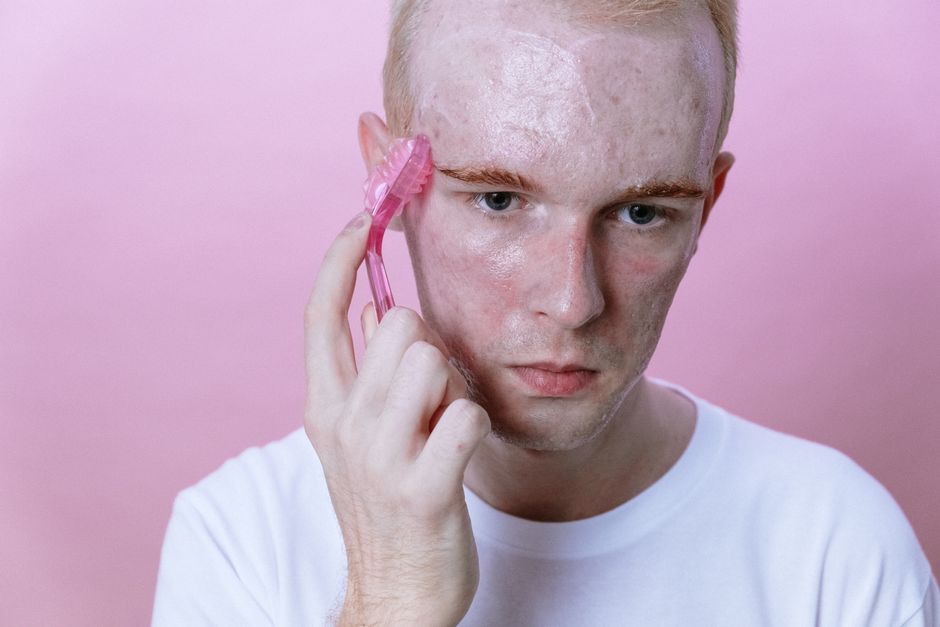
Hormonal acne is not the same as the pimples you got as a teenager. It follows a pattern tied to your menstrual cycle, often appearing along the jawline and chin. To stop it, you need to target the root cause: hormone fluctuations that trigger excess oil production and clogged pores. The most effective approaches combine specific skincare ingredients, prescription treatments when needed, and consistent daily habits.
What Actually Causes Hormonal Acne in Adults?
Hormonal acne happens when androgens, a group of hormones that includes testosterone, stimulate your sebaceous glands to produce more oil. This extra oil mixes with dead skin cells and blocks pores. Bacteria then multiply inside those blocked pores, causing inflammation.
The key trigger is not high hormone levels overall. It is the sensitivity of your oil glands to normal hormone fluctuations. In the week before your period, estrogen and progesterone drop while testosterone stays steady. This shift makes your glands more active. The result is those deep, tender cysts that show up like clockwork.
Stress plays a real role here. When you are stressed, your body releases cortisol. Cortisol can increase androgen production, which then boosts oil. A 2020 study in the Journal of Clinical Medicine found that women with moderate to severe acne reported higher stress levels than those with clear skin. The connection is not imaginary.
Polycystic ovary syndrome is another cause. PCOS affects about 1 in 10 women of childbearing age. It causes higher androgen levels, irregular periods, and persistent acne. If your acne is severe, comes with hair thinning or excess facial hair, and does not respond to typical treatments, PCOS may be worth discussing with your doctor.
Which Skincare Ingredients Actually Stop Hormonal Breakouts?
Not all acne treatments work the same on hormonal acne. Teenage acne often responds well to benzoyl peroxide alone because it kills bacteria. Adult hormonal acne needs ingredients that address oil production and cell turnover.
Salicylic acid is a beta hydroxy acid that penetrates oil-filled pores and exfoliates from inside. Research shows it reduces comedones and inflammation when used consistently. Look for concentrations between 0.5% and 2% in a leave-on product, not just a wash-off cleanser.
Retinoids are the most evidence-backed option. Prescription tretinoin and over-the-counter adapalene both work by normalizing skin cell turnover so pores do not get clogged. The American Academy of Dermatology recommends topical retinoids as first-line treatment for acne. Adapalene 0.1% gel is available without a prescription and has strong data behind it.
Azelaic acid is less famous but effective. It reduces inflammation, kills bacteria, and helps fade the dark spots that hormonal acne leaves behind. A 2017 review in the Journal of Drugs in Dermatology found azelaic acid 15% gel worked as well as benzoyl peroxide but caused less irritation.
Niacinamide helps regulate oil production and calms redness. While individual studies show mixed results, dermatologists commonly recommend it because it is gentle and supports the skin barrier.
How Do I Stop Hormonal Acne with My Diet?
This is where health content often makes big promises with weak evidence. Let me be direct: no single food causes or cures hormonal acne. But research does show patterns worth paying attention to.
High glycemic foods are the most consistent dietary trigger. Foods that spike your blood sugar quickly, like white bread, sugary drinks, and processed snacks, cause your body to release more insulin. Higher insulin levels can increase androgen activity and oil production. A 2012 study in the Journal of the Academy of Nutrition and Dietetics found that people who followed a low-glycemic diet for 12 weeks had fewer acne lesions than those who ate their usual diet.
Dairy is more controversial. Some studies suggest skim milk has a stronger link to acne than whole milk. The proposed reason is that milk contains hormones and growth factors that may influence your own hormone activity. But the evidence is not strong enough to say everyone with hormonal acne should cut dairy. If you suspect dairy is a trigger for you, try eliminating it for three weeks and track your skin. If nothing changes, it probably is not the cause.
Omega-3 fatty acids may help reduce inflammation. A small 2020 study in Lipids in Health and Disease found that people who took omega-3 supplements for 10 weeks had significant improvement in acne severity. Fatty fish, walnuts, and flaxseeds are good sources.

What Prescription Treatments Work When Skincare Is Not Enough?
If over-the-counter products have not stopped your breakouts after three months, prescription options are worth considering. Do not feel like a failure for needing them. Hormonal acne is a medical condition, not a sign of poor skincare.
Oral contraceptives are a direct treatment for hormonal acne. Birth control pills that contain both estrogen and progestin work by suppressing ovarian androgen production. The FDA has approved several specific pills for acne treatment, including those with norgestimate, drospirenone, or norethindrone. A 2014 Cochrane review of 31 trials found that combined oral contraceptives reduced acne lesion counts by about 50% compared to placebo.
Spironolactone is a medication originally developed as a diuretic. It works by blocking androgen receptors in the skin, reducing oil production at the source. Dermatologists have used it off-label for acne for decades. A 2017 study in JAMA Dermatology found that 86% of women taking spironolactone reported improvement in their acne. Side effects include breast tenderness, irregular periods, and increased urination. Your doctor will monitor your potassium levels while you take it.
For severe cases that do not respond to other treatments, isotretinoin remains the most powerful option. It shrinks oil glands and stops acne at the deepest level. But it has significant side effects including dry skin, sun sensitivity, and serious birth defects if taken during pregnancy. It requires monthly blood tests and strict contraception.
| Treatment | How It Works | Prescription Needed | Typical Results Timeline |
|---|---|---|---|
| Topical retinoids | Normalizes skin cell turnover | Adapalene is OTC; tretinoin requires Rx | 8-12 weeks |
| Oral contraceptives | Suppresses ovarian androgen production | Yes | 3-6 months |
| Spironolactone | Blocks androgen receptors in skin | Yes | 3 months |
| Isotretinoin | Shrinks oil glands permanently | Yes | 4-6 months |
What Skincare Habits Make Hormonal Acne Worse?
Some common habits people try to fight acne actually backfire. Over-washing is one. Washing your face more than twice a day strips the skin barrier. This triggers rebound oil production and more breakouts.
Harsh scrubs and physical exfoliants can spread bacteria and increase inflammation. Microbeads and gritty scrubs create micro-tears in the skin that make acne worse. Stick to gentle chemical exfoliation with salicylic acid or a retinoid.
Heavy moisturizers and occlusive ingredients like coconut oil, shea butter, and petrolatum can clog pores in people prone to acne. Look for non-comedogenic labels, but know that the term is not regulated by the FDA. Water-based gel moisturizers are generally safer for acne-prone skin.
Picking and popping pimples is the most damaging habit. It pushes inflammation deeper into the skin and causes permanent scarring. A single popped pimple can take weeks longer to heal than one left alone.
Changing your routine too often is another mistake. Acne treatments take time. Retinoids can cause a temporary purge in the first month where skin looks worse before it improves. People often quit before seeing the benefit. Stick with a treatment for at least 12 weeks before deciding it does not work.
Does How Do I Stop Hormonal Acne Change as You Age?
Yes. The approach that worked for you at 25 may not work at 40. Skin becomes drier and more sensitive with age. The same retinoid you tolerated in your twenties may cause irritation later.
Perimenopause and menopause bring their own hormone shifts. Estrogen levels drop while testosterone remains more stable, creating a relative androgen excess. Many women develop acne for the first time in their forties or fifties. Low-dose spironolactone and gentle topical retinoids are often the safest options in this age group.
Pregnancy changes everything. Many standard acne treatments are not safe during pregnancy. Tretinoin, spironolactone, and isotretinoin are all contraindicated. Azelaic acid, topical niacinamide, and glycolic acid are considered safer options. Always check with your obstetrician before using any acne product while pregnant or nursing.
Common Misconceptions About Hormonal Acne
One widespread myth is that hormonal acne only happens to teenagers. In reality, about 50% of women in their twenties and 25% of women in their forties experience acne. Adult-onset acne is common and underdiagnosed.
Another myth is that washing more or using stronger products will stop it. Acne is not caused by dirt. Over-cleansing damages the barrier and worsens inflammation. Gentle consistency beats aggressive scrubbing.
Some people believe that hormonal acne means your hormones are out of balance in a dangerous way. For most women, their hormone levels are within normal range. The problem is how sensitive their skin is to normal fluctuations. Unless you have other symptoms like irregular periods or infertility, your hormones are likely fine.
There is also a belief that natural products are safer or more effective. Tea tree oil, witch hazel, and apple cider vinegar are popular online. But they can cause contact dermatitis and burns when used incorrectly. No natural product has clinical evidence matching prescription retinoids or spironolactone.
What to Avoid When Treating Hormonal Acne
- Antibiotic-only treatments for long-term use. Topical antibiotics like clindamycin kill bacteria but do not address oil production or clogged pores. Using them alone for more than three months promotes antibiotic resistance.
- Toothpaste on pimples. This old remedy contains baking soda and hydrogen peroxide that irritate the skin and can cause chemical burns. It does not treat the underlying cause.
- Drying alcohol-based toners. They strip the skin barrier and increase inflammation without providing any real acne-fighting benefit.
- Multiple active ingredients at once. Using benzoyl peroxide, salicylic acid, and a retinoid together is too harsh for most skin. It causes redness, peeling, and breakouts that look like acne but are actually irritation.
- Ignoring your cycle. Tracking when breakouts appear helps you know if a treatment is working or if you are just seeing normal monthly variation.
Frequently Asked Questions
How long does it take to stop hormonal acne?
Most treatments take 8 to 12 weeks before you see significant improvement. Prescription options like spironolactone or birth control may take three full cycles.
Can hormonal acne go away without treatment?
It can improve on its own during pregnancy or after menopause, but for most women it persists without intervention. Mild cases may respond to consistent skincare alone.
Does stress cause hormonal acne?
Stress does not directly cause acne but it makes existing acne worse by raising cortisol levels, which increases oil production. Managing stress helps but is rarely a complete solution.
Is hormonal acne the same as cystic acne?
Not exactly. Hormonal acne often includes cysts but can also include blackheads and whiteheads. Cystic acne refers to the type of lesion, not the cause.
