
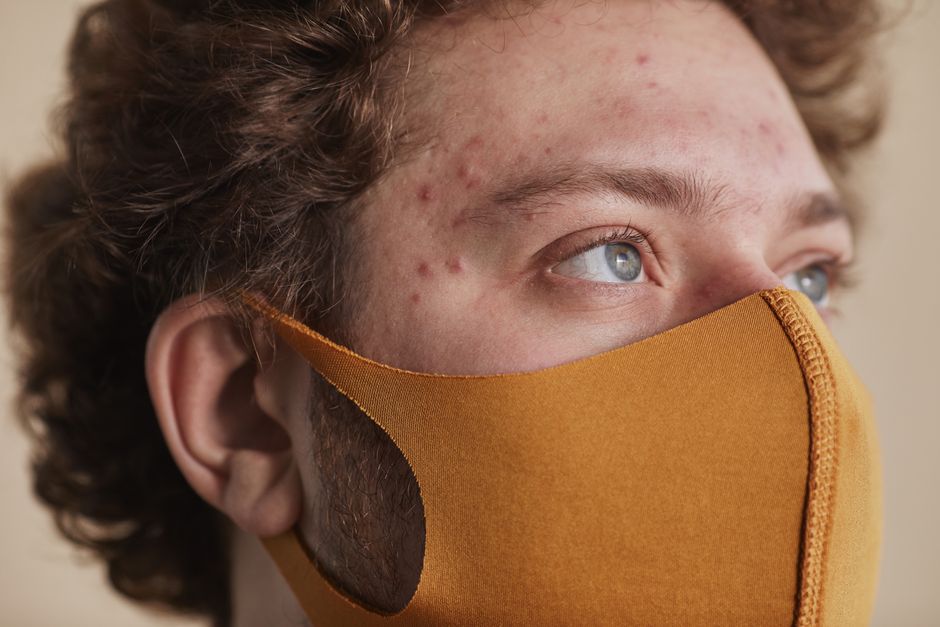
Hormonal acne does not always go away with age. Many adults in their 30s, 40s, and even 50s still struggle with breakouts. The idea that acne is only a teenage problem is one of the most persistent myths in dermatology.
What Actually Causes Hormonal Acne in Adults?
Hormonal acne happens when your sebaceous glands overreact to normal levels of androgens like testosterone. These glands produce sebum, an oily substance that can clog pores. When bacteria get trapped, inflammation follows.
In adults, the main triggers are shifts in hormone levels. This is common during menstrual cycles, pregnancy, perimenopause, and menopause. Stress also raises cortisol, which can increase androgen production. The American Academy of Dermatology notes that adult female acne is now diagnosed in women well into their 40s.
Unlike teenage acne that often appears on the forehead and nose, adult hormonal acne tends to show up along the jawline, chin, and lower cheeks. These areas have more androgen receptors, making them more sensitive to hormonal changes.
Does Hormonal Acne Go Away With Age Not Always?
No, not always. Research published in the Journal of Clinical and Aesthetic Dermatology found that about 50% of women with acne continue to have breakouts into their 20s and 30s. A smaller but significant number report acne persisting into their 40s and 50s.
For some people, acne does improve with age. Sebum production naturally declines as you get older. But this decline is gradual and unpredictable. For others, hormonal shifts during perimenopause can actually trigger new breakouts even if they had clear skin in their 20s.
The short answer is that age alone is not a cure. Hormonal acne can fade, stay the same, or even worsen depending on your individual hormone profile and other factors like stress and diet.
What Does the Research Actually Show About Adult Acne?
A study in the International Journal of Women’s Dermatology tracked over 400 women with adult acne. The researchers found that 42% had acne that started after age 25. These women had no history of teenage acne. This tells us that hormonal acne is not just a delayed version of teenage acne — it is a distinct condition.
The same study showed that adult acne tends to be more inflammatory and more resistant to standard treatments. Over-the-counter benzoyl peroxide and salicylic acid often fail. Prescription options like topical retinoids or oral spironolactone are more effective.
Another finding from the research: adult acne is strongly linked to polycystic ovary syndrome (PCOS). The CDC estimates that 6-12% of women of reproductive age have PCOS. If your hormonal acne comes with irregular periods, excess facial hair, or thinning scalp hair, PCOS could be the underlying cause.


What Treatments Actually Work for Hormonal Acne?
There is no one-size-fits-all solution. But some treatments have stronger evidence than others. Here is a breakdown of what dermatologists typically recommend based on current research.
| Treatment | How It Works | Evidence Level |
|---|---|---|
| Spironolactone | Blocks androgen receptors, reduces sebum | Strong — multiple clinical trials show 70-80% improvement |
| Oral contraceptives | Stabilizes hormone fluctuations | Strong — FDA-approved for acne |
| Topical retinoids | Speeds cell turnover, unclogs pores | Strong — first-line treatment in dermatology guidelines |
| Benzoyl peroxide | Kills bacteria, reduces inflammation | Moderate — works best combined with other treatments |
| Diet changes | Reduces insulin spikes that affect hormones | Weak to moderate — some studies suggest benefit, others do not |
Spironolactone is often the most effective option for women with hormonal acne. A 2017 study in the Journal of the American Academy of Dermatology found that 85% of women taking spironolactone saw significant improvement. It is not a quick fix — it takes 3 to 6 months to see full results.
Oral contraceptives work by suppressing ovulation and stabilizing hormone levels. The combination pill with estrogen and progestin is the most studied option. But not all birth control pills help — some progestin-only pills can actually worsen acne.
What Should You Avoid When Treating Hormonal Acne?
Some common advice for teenage acne does not work for adults. Harsh scrubs, alcohol-based toners, and over-washing can strip your skin barrier and make inflammation worse. When the barrier is damaged, your skin produces more oil to compensate, which can trigger more breakouts.
Another mistake is relying on topical treatments alone. If your acne is driven by internal hormone fluctuations, no cream will fix it. You need to address the root cause. That is why spironolactone or oral contraceptives are often necessary for hormonal acne.
Avoid the temptation to try every viral skincare trend. Many influencer-recommended products contain ingredients like essential oils or exfoliating acids that irritate adult skin. Stick to a simple routine: a gentle cleanser, a non-comedogenic moisturizer, and a treatment prescribed by a dermatologist.
When Should You See a Dermatologist for Hormonal Acne?
If over-the-counter products have not helped after 3 months, it is time to see a professional. Persistent acne that leaves scars or dark spots should not be ignored. Early treatment prevents permanent damage.
You should also see a dermatologist if your acne is painful, deep, or cystic. These types of breakouts are more likely to scar. A dermatologist can prescribe stronger medications like oral antibiotics, isotretinoin, or spironolactone.
Women with irregular periods, unexplained weight gain, or excess hair growth should ask about PCOS screening. A simple blood test can check hormone levels. Treating the underlying condition often clears the skin.
Frequently Asked Questions
Can hormonal acne go away without treatment?
It can, but it is unpredictable. Many adults see their acne improve slowly over years, while others have persistent breakouts into their 40s and 50s.
What age does hormonal acne typically stop?
There is no set age. Some people stop breaking out in their late 20s, while others continue into perimenopause around age 45 to 55.
Does pregnancy affect hormonal acne?
Yes. Some women see improvement during pregnancy due to higher estrogen levels. Others experience worsening breakouts, especially in the first trimester.
Is spironolactone safe for long-term use?
Yes, when prescribed and monitored by a doctor. Most women take it for years without serious side effects. Regular blood pressure and potassium checks are recommended.
