
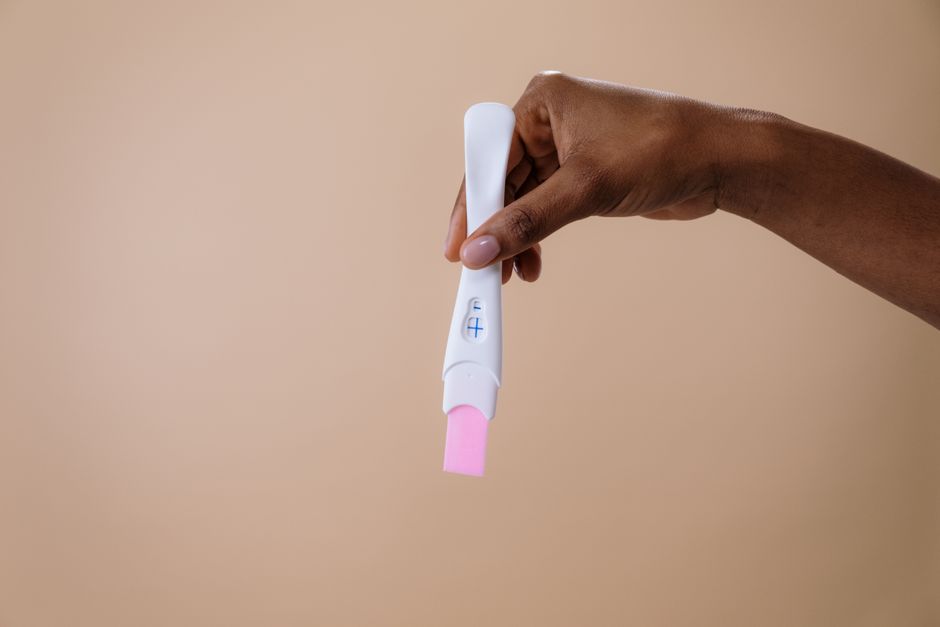
A positive pregnancy test usually means one thing: you are pregnant. The test detects a hormone called human chorionic gonadotropin (hCG), which the body produces only during pregnancy. But a positive result is not always a guarantee. Sometimes the test is right about the hormone but wrong about the reason. Other times, the test itself is faulty. Understanding what causes a positive pregnancy test besides pregnancy comes down to knowing how the test works, what can interfere with it, and when you need to see a doctor.
How Pregnancy Tests Work
Home pregnancy tests measure hCG in your urine. The placenta starts making this hormone shortly after a fertilized egg implants in the uterus. Levels rise quickly in early pregnancy, doubling roughly every two to three days.
The test strip contains antibodies that bind to hCG. When hCG is present, a colored line appears. Most tests are designed to detect hCG at very low levels, often around 20 to 25 mIU/mL. If your urine contains that amount or more, the test shows positive.
This precision is why false positives are rare. The test is not guessing. It is detecting a real substance. When a false positive happens, it usually means hCG is present but pregnancy is not.
What Causes A Positive Pregnancy Test Besides Pregnancy
The most common cause of a positive test without pregnancy is a chemical pregnancy. This happens when a fertilized egg implants but stops developing very early. The body produces hCG long enough for a positive test, but the pregnancy ends within days. Many women never know they had a chemical pregnancy. They may think the positive test was wrong or that their period came late.
Other causes fall into three categories: medications, medical conditions, and test errors. Each works differently.
Medications That Interfere With Pregnancy Tests
Only one type of medication reliably causes false positives: hCG-containing fertility drugs. These include injections like human chorionic gonadotropin itself, often sold under brand names such as Pregnyl or Novarel. These drugs are used to trigger ovulation during fertility treatment. If you take one and test too soon, the hCG from the injection is still in your system. The test picks it up and shows positive.
How long does the injection stay in your body? It depends on the dose. High doses can take up to two weeks to clear. Testing too early after an hCG trigger shot is a common cause of a false positive in fertility patients.
Other medications do not cause false positives. Antibiotics, pain relievers, antihistamines, and birth control pills do not contain hCG and do not interfere with home pregnancy tests. This is a common myth. The science is clear: these drugs do not cause positive results.
Some rare exceptions exist. Medications containing certain antibodies, such as those used in some cancer treatments, can theoretically interfere with test accuracy. But these are uncommon and usually discussed with your doctor before treatment begins.

Medical Conditions That Raise hCG Levels
Some medical conditions cause the body to produce hCG without pregnancy. These are rare but real.
Gestational trophoblastic disease is the most significant. This is a group of rare tumors that grow in the uterus from abnormal placental tissue. The most common form is a molar pregnancy. In this condition, the placenta develops abnormally and produces high levels of hCG. The uterus may contain no fetus at all. A pregnancy test will be positive, but no viable pregnancy exists.
Other conditions that can raise hCG include:
- Certain ovarian tumors
- Testicular cancer in men
- Some lung, breast, and stomach cancers
- Pituitary gland disorders
Pituitary hCG is a special case. In women near menopause, the pituitary gland can produce small amounts of hCG. This is usually a low level, often below 10 mIU/mL. Most home tests need at least 20 to 25 mIU/mL to show positive. But some highly sensitive tests can detect lower levels, leading to a faint positive line that is not from pregnancy.
These conditions are uncommon. If you have a positive test and no confirmed pregnancy, your doctor can order a blood test to measure hCG levels and an ultrasound to check for pregnancy or other causes.
Test Errors and Expired Tests
Sometimes the test itself is the problem. An expired test may give inaccurate results. Tests stored in heat or humidity can also fail. Always check the expiration date and follow storage instructions.
Reading the test too early or too late is another source of error. Most tests instruct you to read results within a specific window, usually 3 to 5 minutes. Reading after 10 minutes can show an evaporation line. This is a faint, colorless line that appears as urine dries. It can look like a positive result but is not.
An evaporation line is not a false positive in the medical sense. It is a misinterpretation of the test. The test never detected hCG. The line is just residue from dried urine.
To avoid this, read the test at the exact time specified in the instructions. Do not check it later.
What To Do After a Positive Test
If you get a positive home pregnancy test, the next step is confirmation. A blood test at a doctor’s office is the most reliable way to confirm pregnancy. Blood tests measure hCG more precisely than urine tests.
An ultrasound is the definitive way to confirm a viable pregnancy. It can show a gestational sac as early as 5 to 6 weeks and a fetal heartbeat by 6 to 7 weeks. If hCG is present but no pregnancy is visible on ultrasound, your doctor will investigate other causes.
If you took a fertility medication containing hCG, tell your doctor. They will account for this when interpreting your results.
If you have a positive test but develop symptoms like severe pelvic pain, abnormal bleeding, or dizziness, seek medical care immediately. These could be signs of an ectopic pregnancy, a condition where the embryo implants outside the uterus. Ectopic pregnancies produce hCG and cause positive tests. They are medical emergencies.
When To See a Doctor
See a doctor if you have a positive pregnancy test but:
- You have symptoms of pregnancy but no confirmed pregnancy after several weeks
- Your periods are irregular and you cannot determine when you conceived
- You have pelvic pain or unusual bleeding
- You took hCG-containing fertility medication and are unsure when to test
- You have a history of ovarian cysts, tumors, or trophoblastic disease
A doctor can run quantitative hCG blood tests. This measures the exact amount of hCG in your blood. Serial measurements taken 48 hours apart can show whether levels are rising normally. In a healthy early pregnancy, hCG should roughly double every 48 to 72 hours. Abnormal patterns may indicate an ectopic pregnancy or a failing pregnancy.
Do not ignore a positive test that does not lead to a confirmed pregnancy. It is not something to dismiss. It is a signal that something in your body is producing hCG, and that deserves medical attention.
Understanding the Limits of Home Tests
Home pregnancy tests are remarkably accurate when used correctly. They are over 99% accurate at detecting pregnancy when taken after a missed period. But they cannot tell you why hCG is present. They only detect the hormone.
The test cannot distinguish between a normal pregnancy, a chemical pregnancy, an ectopic pregnancy, or a molar pregnancy. It cannot detect test errors. It cannot tell you if your fertility medication is still in your system.
This is why a positive test is only the first step. It is not a diagnosis. It is a signal to seek confirmation from a healthcare provider.
Frequently Asked Questions
Can birth control cause a false positive pregnancy test?
No. Birth control pills, patches, rings, and injections do not contain hCG and do not cause positive pregnancy tests.
How long does a fertility shot stay in your system?
An hCG trigger shot can stay in your system for up to 10 to 14 days, depending on the dose. Testing during this window can give a false positive.
Can an expired pregnancy test give a false positive?
Yes. Expired tests may have degraded chemicals that produce inaccurate results. Always check the expiration date before use.
What is a chemical pregnancy?
A chemical pregnancy is a very early miscarriage that happens shortly after implantation. The body produces hCG, a test shows positive, but the pregnancy does not continue.
