
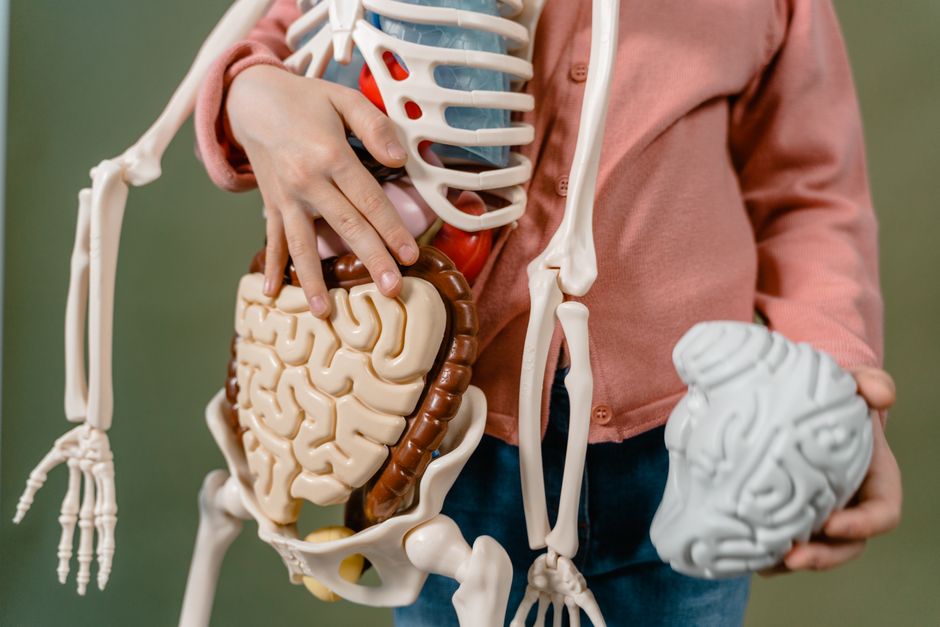
The digestive system is a long, coordinated pathway that breaks down food into nutrients your body can use. The major organs in the digestive system include the mouth, esophagus, stomach, small intestine, large intestine, liver, gallbladder, and pancreas. Each one has a specific job, and they work together in a precise sequence to turn a meal into energy and waste.
What Are the Main Organs in the Digestive Tract?
The digestive tract is a continuous tube that runs from your mouth to your anus. Food travels through this tube, and each section has a distinct role in breaking down food and absorbing nutrients.
The journey begins in the mouth. Teeth tear and grind food into smaller pieces while saliva starts breaking down carbohydrates. This is the only part of digestion you control consciously. From there, the tongue pushes food into the pharynx and then the esophagus.
The esophagus is a muscular tube roughly 25 centimeters long. It uses wave-like contractions, called peristalsis, to push food down to the stomach. A ring of muscle at the bottom, the lower esophageal sphincter, opens to let food pass and closes to keep stomach acid from flowing upward.
The stomach is a J-shaped sac that holds food and mixes it with gastric juices. Strong acids and enzymes break down proteins and kill most bacteria. Food becomes a semi-liquid mixture called chyme. The stomach empties this into the small intestine gradually, over several hours.
The small intestine is where most digestion and absorption happen. Despite its name, it is the longest section of the tract at about 6 meters. It has three parts: the duodenum, jejunum, and ileum. The inner surface is lined with tiny finger-like projections called villi, which greatly increase the surface area for absorbing nutrients into the bloodstream.
The large intestine, or colon, is about 1.5 meters long. It absorbs water and electrolytes from the remaining material. It also houses trillions of bacteria that ferment undigested fiber and produce some vitamins. The leftover material forms into stool and is stored in the rectum until it leaves through the anus.
What Do the Liver, Gallbladder, and Pancreas Do?
Three accessory organs are not part of the tube itself, but they are essential to digestion. They produce or store substances that break down food.
The liver is the largest internal organ. It produces bile, a yellow-green fluid that breaks down fats into smaller droplets so enzymes can work on them. Bile also helps the body absorb fat-soluble vitamins A, D, E, and K. The liver processes nearly everything you absorb, filtering toxins and storing nutrients.
The gallbladder is a small pear-shaped sac tucked under the liver. It stores and concentrates bile between meals. When you eat fatty food, the gallbladder contracts and releases bile into the small intestine. You can live without a gallbladder; bile then drips directly from the liver into the intestine.
The pancreas makes digestive enzymes and hormones. Its enzymes break down carbohydrates, proteins, and fats in the small intestine. It also releases bicarbonate to neutralize stomach acid so intestinal enzymes can work. As an endocrine gland, it produces insulin and glucagon to regulate blood sugar.
How Do the Organs Work Together in Sequence?
Digestion is not a random process. Each organ signals the next one to prepare for what is coming.
When you chew, your brain sends signals that trigger stomach acid production. When food reaches the stomach, its stretching walls trigger the release of digestive juices. When chyme enters the small intestine, hormones signal the gallbladder and pancreas to release bile and enzymes. This coordination ensures nutrients are broken down at the right time and place.
Nerves and hormones control this entire system. The enteric nervous system, sometimes called the “second brain,” is a network of neurons embedded in the digestive tract walls. It manages local reflexes like peristalsis. Hormones such as gastrin, secretin, and cholecystokinin coordinate activity between organs.
The process takes time. A typical meal spends about 2 to 4 hours in the stomach and 3 to 6 hours moving through the small intestine. The large intestine works on the remaining material for 12 to 48 hours. Total transit time from mouth to elimination usually ranges from 24 to 72 hours, though this varies widely between individuals.




Which Organs Are Responsible for Nutrient Absorption?
Most nutrient absorption happens in the small intestine. This is where the body takes in carbohydrates, proteins, fats, vitamins, and minerals.
Carbohydrates are absorbed as simple sugars. Proteins are absorbed as amino acids and small peptides. Fats are absorbed as fatty acids and monoglycerides after bile has emulsified them. Water-soluble vitamins like B vitamins and vitamin C are absorbed directly. Fat-soluble vitamins require bile and dietary fat for proper absorption.
The large intestine absorbs water and electrolytes, especially sodium and potassium. It also absorbs short-chain fatty acids produced when gut bacteria ferment fiber. These fatty acids provide energy for the cells lining the colon.
Some nutrients have specific absorption sites. Iron and calcium are absorbed mainly in the duodenum. Vitamin B12 is absorbed in the ileum, the last part of the small intestine. This is why damage to the ileum, such as from Crohn’s disease, can lead to B12 deficiency.
What Happens When a Digestive Organ Fails?
Each organ has a specific role, so failure of one produces distinct symptoms.
Stomach acid problems can cause heartburn, ulcers, or poor protein digestion. Gallbladder disease often causes pain after fatty meals, nausea, and sometimes jaundice. Pancreatic insufficiency leads to poor fat digestion, greasy stools, and weight loss. Liver disease affects bile production, toxin filtering, and nutrient storage.
Some conditions affect multiple organs. Celiac disease damages the small intestine’s villi, reducing absorption of nearly all nutrients. Irritable bowel syndrome affects how the large intestine moves and senses contents. Crohn’s disease can inflame any part of the digestive tract, though it most often affects the end of the small intestine and the beginning of the colon.
Many digestive problems share common symptoms like bloating, abdominal pain, and irregular bowel habits. These symptoms alone do not identify which organ is involved. A doctor uses tests such as endoscopy, imaging, and blood work to find the cause.
How Can You Support Digestive Organ Health?
Established dietary patterns support digestive health, though individual needs vary. Eating a diet rich in fiber from fruits, vegetables, legumes, and whole grains helps keep the colon functioning well. Fiber adds bulk to stool and feeds beneficial gut bacteria.
Drinking enough water is necessary for the large intestine to regulate stool consistency. Physical activity stimulates normal intestinal contractions. Managing stress matters too, because the brain and gut communicate directly through the vagus nerve.
Some habits harm digestive organs. Heavy alcohol use damages the liver and pancreas. Long-term use of nonsteroidal anti-inflammatory drugs like ibuprofen can irritate the stomach lining. Smoking increases the risk of acid reflux and several digestive cancers.
Regular screening matters for certain conditions. Colorectal cancer screening is recommended starting at age 45 for average-risk adults in the United States. People with a family history of digestive cancers or conditions may need earlier or more frequent screening. Talk to your doctor about your personal risk.
Probiotics are a popular topic, but the evidence is mixed. Some studies suggest certain probiotic strains help with antibiotic-associated diarrhea and some forms of irritable bowel syndrome. No single probiotic product has been shown to benefit everyone, and the evidence does not support using them as a general health tonic.
When Should You See a Doctor About Digestive Symptoms?
Occasional bloating, heartburn, or changes in bowel habits are common and usually not serious. Certain symptoms warrant medical evaluation.
Seek care if you have persistent abdominal pain, unexplained weight loss, blood in your stool, black tarry stools, or difficulty swallowing. Vomiting that lasts more than a day or two, especially with inability to keep fluids down, also requires medical attention. Jaundice, a yellowing of the skin or eyes, always needs evaluation.
Symptoms that come on suddenly and are severe, such as intense abdominal pain or vomiting blood, require urgent care. These can signal conditions like appendicitis, a bowel obstruction, or a bleeding ulcer.
For less urgent symptoms, keep track of when they occur and what triggers them. This information helps your doctor identify the likely cause and decide which tests are needed.
Frequently Asked Questions
What are the seven major organs of the digestive system?
The seven major organs are the mouth, esophagus, stomach, small intestine, large intestine, liver, and pancreas. The gallbladder is also a key organ, though it only stores bile rather than producing it.
What is the largest organ in the digestive system?
The liver is the largest internal organ and the largest organ in the digestive system. It produces bile, filters toxins, and stores nutrients.
Which digestive organ absorbs the most nutrients?
The small intestine absorbs the most nutrients, including carbohydrates, proteins, fats, vitamins, and minerals. Its large surface area, created by villi, makes this possible.
Can you live without your gallbladder?
Yes, you can live without your gallbladder. Bile then flows directly from the liver into the small intestine, though some people experience digestive changes after removal.
