
Fat is not the enemy your grocery store upbringing taught you to fear. The human body needs dietary fat to build cell membranes, absorb vitamins A, D, E, and K, produce hormones, and protect vital organs. The healthy fats to eat are primarily unsaturated fats — the kind found in olive oil, nuts, seeds, avocados, and fatty fish. Saturated fats can fit in a balanced diet but are best kept limited, and artificial trans fats should be avoided entirely.
That is the short answer. The longer answer involves understanding why some fats help your heart and others harm it, and how to tell the difference without a biochemistry degree.
What Makes a Fat Healthy or Unhealthy?
The difference comes down to chemical structure, and that structure determines how your body responds to it. All fats are chains of carbon and hydrogen atoms. What varies is how saturated those chains are with hydrogen — and that small difference has large consequences for your arteries.
Unsaturated fats have at least one double bond in their carbon chain, which creates a slight bend in the molecule. This bend keeps them liquid at room temperature. Olive oil, canola oil, and the fat in fish are all liquid for this reason. Your body handles these fats differently than saturated ones. They tend to lower LDL cholesterol — the kind linked to heart disease — when they replace saturated fat in the diet.
Saturated fats have no double bonds. Their molecules pack tightly together, which is why butter and coconut oil are solid at room temperature. Diets high in saturated fat tend to raise LDL cholesterol compared to diets where unsaturated fats take their place. This is one of the more consistent findings in nutrition science, though the size of the effect varies from person to person.
Trans fats are a different story. Artificial trans fats are created when liquid oils are chemically hardened into solid fats — a process called partial hydrogenation. These were once common in margarine, shortening, and packaged snacks. Research has linked them to increased risk of heart disease, and they raise LDL cholesterol while lowering HDL cholesterol at the same time. The FDA has determined that partially hydrogenated oils are no longer generally recognized as safe in food, and most US manufacturers have removed them. Small amounts can still occur naturally in meat and dairy from grazing animals, but those naturally occurring trans fats appear to behave differently and are not considered a major concern at typical intake levels.
What Are Healthy Fats To Eat? A Practical List
Here is where the science becomes something you can put on a plate. These foods are your best sources of dietary fat.
- Olive oil — especially extra virgin, which is minimally processed and retains more of its natural compounds. A staple of Mediterranean-style eating.
- Avocados — rich in monounsaturated fat and fiber. One medium avocado contains roughly 21 grams of fat, most of it unsaturated.
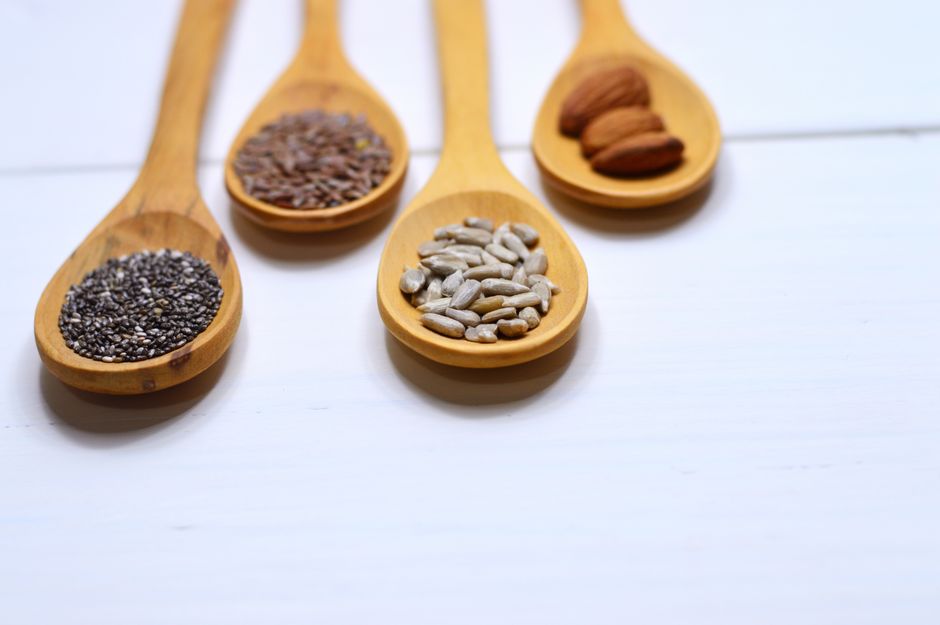
- Nuts — almonds, walnuts, pistachios, pecans, and hazelnuts. Walnuts are notable for their omega-3 content.
- Seeds — flaxseeds, chia seeds, sunflower seeds, and pumpkin seeds.
- Fatty fish — salmon, sardines, mackerel, herring, and anchovies. These are the richest dietary sources of the long-chain omega-3 fats EPA and DHA.
- Eggs — the yolk contains fat along with vitamins and choline. Most of an egg’s fat is unsaturated.
- Nut and seed butters — look for versions without added sugar or palm oil.
- Tofu and soybeans — plant sources of both protein and unsaturated fat.
Notice what is not on this list: fried foods, processed meats, and most commercially baked goods. Those tend to carry saturated fat, refined carbohydrates, or both.
Why Omega-3 Fats Get So Much Attention
Omega-3 fats are a family of polyunsaturated fats your body cannot make efficiently on its own. The three main types are ALA (found in plants like flaxseed and walnuts), EPA, and DHA (found mainly in fish and algae).
EPA and DHA are the forms most studied for heart health. The American Heart Association has long recommended eating fish at least twice a week, and that guidance is based on decades of observational research linking fish consumption to lower rates of cardiovascular death. The picture is more complicated when it comes to fish oil supplements. Large randomized trials testing omega-3 supplements have produced mixed results — some show modest benefit, others show none. The evidence for eating fish is stronger than the evidence for taking a pill.
ALA from plant sources is also beneficial, though your body converts only a small fraction of it into EPA and DHA. That conversion rate is one reason fish and algae sources are considered more direct.





How Much Fat Should You Eat Each Day?
The Dietary Guidelines for Americans recommend that fat make up between 20% and 35% of daily calories for adults. Saturated fat should be limited to less than 10% of total calories. There is no official recommended daily intake for trans fat because the target is as close to zero as practical.
To put that in perspective: on a 2,000-calorie diet, total fat would fall between about 44 and 78 grams per day, with saturated fat under roughly 22 grams. These are general guidelines for healthy adults. Individual needs vary based on activity level, body size, medical conditions, and medications.
What matters more than hitting an exact number is the pattern. Replacing saturated fat with unsaturated fat has a measurable effect on cholesterol. Simply adding more fat on top of what you already eat does not.
Do Low-Fat Diets Still Make Sense?
The low-fat era of the 1980s and 1990s was built on the idea that eating less fat would mean less heart disease and less obesity. That did not play out as expected. When food manufacturers removed fat from products, they often replaced it with sugar and refined starch. People ate more of these products because they were marketed as healthy, and obesity rates continued to climb.
Current evidence does not support very low-fat diets as superior for most people. What matters is the type of fat, not just the amount. A Mediterranean-style eating pattern — rich in olive oil, nuts, fish, vegetables, and whole grains — has been studied extensively and is associated with lower risk of heart disease. That pattern is not low-fat. It is high in unsaturated fat.
There is an exception worth noting. Some people with specific medical conditions, such as certain gallbladder disorders or rare genetic lipid disorders, may need to restrict fat under medical supervision. That is a clinical decision, not a general recommendation.
What About Coconut Oil and Butter?
Both are high in saturated fat. Coconut oil is roughly 80% to 90% saturated fat, which is higher than butter. Butter is about 63% saturated fat. Despite widespread marketing claims about coconut oil’s health benefits, the evidence does not support it as a superior choice.
Some small studies have shown that coconut oil raises HDL cholesterol, but it also raises LDL cholesterol. The net effect on heart disease risk is not clearly favorable. Major health organizations, including the American Heart Association, advise limiting coconut oil in the same way you would limit other saturated fats.
Butter is not poison. It can be part of a balanced diet. But it is not a health food, and swapping it for olive oil is a reasonable change for most people.
How to Read Fat Content on a Food Label
Food labels list total fat, saturated fat, and trans fat. They do not list unsaturated fat directly — you can estimate it by subtracting saturated and trans fat from total fat.
A few things to watch for:
- “No trans fat” does not always mean zero. The FDA allows products with less than 0.5 grams of trans fat per serving to list zero. If partially hydrogenated oil appears in the ingredient list, there is some trans fat present.
- Saturated fat can hide in unexpected places. Check the label on salad dressings, granola bars, and plant-based dairy alternatives.
- Ingredient lists tell the real story. If sugar, palm oil, or partially hydrogenated oil appears in the first few ingredients, the product is probably not a great source of healthy fat.
Are All Saturated Fats the Same?
No, and this is where nutrition science gets genuinely complicated. Saturated fats are not one substance. Stearic acid, found in beef and cocoa butter, appears to have a more neutral effect on LDL cholesterol than other saturated fats like palmitic acid, which is common in dairy and palm oil.
Some research suggests that the food source matters as much as the fat type. Saturated fat from yogurt or cheese may not carry the same risk as saturated fat from processed meat. The evidence here is still developing, and no major health organization has issued separate recommendations for different saturated fats. For now, the general advice to keep saturated fat under 10% of calories remains the standard guidance.
Can You Eat Too Much Healthy Fat?
Yes. Fat is calorie-dense — 9 calories per gram, compared to 4 calories per gram for protein or carbohydrates. Olive oil, nuts, and avocados are nutritious, but they are not low-calorie foods. A quarter cup of almonds has about 200 calories. Two tablespoons of olive oil has about 240.
Eating large amounts of healthy fats can contribute to weight gain if it pushes your total calorie intake above what your body uses. That does not make these foods unhealthy. It means portion awareness still matters.
There is also no evidence that eating more unsaturated fat than your body needs provides extra benefit. More is not better. Replacing saturated fat with unsaturated fat is the goal — not simply piling on more fat.
Frequently Asked Questions
What are the healthiest fats to eat?
The healthiest fats are unsaturated fats from olive oil, avocados, nuts, seeds, and fatty fish like salmon and sardines. These foods are linked to better heart health when they replace saturated fat in the diet.
Is butter healthier than margarine?
It depends on the margarine. Older margarines contained artificial trans fats, which are harmful. Most modern margarines have removed them, but many still contain palm oil and other saturated fats. Butter is high in saturated fat. Olive oil is a better choice than either.
How much fat should I eat per day?
The Dietary Guidelines for Americans recommend that fat make up 20% to 35% of daily calories, with saturated fat under 10%. On a 2,000-calorie diet, that means roughly 44 to 78 grams of total fat per day.
Is coconut oil a healthy fat?
Coconut oil is about 80% to 90% saturated fat, which is more than butter. It raises LDL cholesterol, and the evidence does not support it as a healthier alternative to unsaturated oils like olive oil.
