
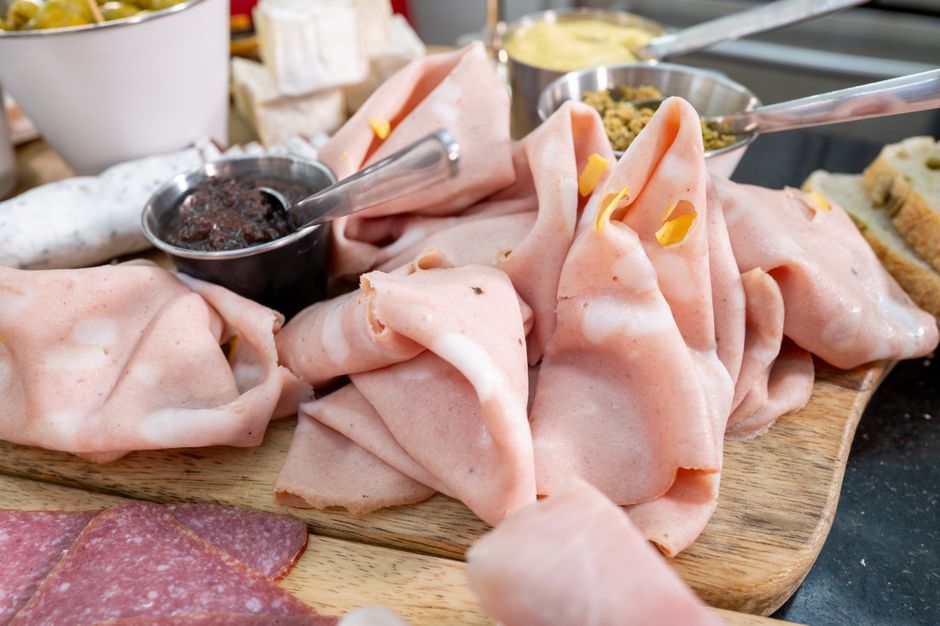
Lunch meat is a convenient source of protein, but it is not always a healthy one. While a few slices can deliver a solid protein boost, the sodium, saturated fat, and additives found in many processed meats can offset those benefits. The short answer is that lunch meat counts as protein, but it often comes with trade-offs that matter for your health.
What Counts as Lunch Meat?
Lunch meat, also called deli meat or cold cuts, includes a wide range of products. Turkey, chicken, ham, roast beef, and salami are the most common. Some are whole cuts that are roasted and sliced. Others are finely ground, mixed with seasonings, and pressed into a uniform shape.
The processing matters. A plain roasted turkey breast sliced at the deli counter is different from a packaged smoked turkey loaf that lists dozens of ingredients. Both provide protein, but they are not equal in terms of what else you are eating.
How Much Protein Is Actually in Lunch Meat?
Protein content varies by type, but most lunch meats provide roughly 10 to 15 grams of protein per 2-ounce serving. That is about the size of two or three slices depending on thickness. Turkey and chicken breast tend to be on the higher end. Salami and bologna often have less protein per serving because they contain more fat.
For comparison, a 3-ounce serving of cooked chicken breast has about 26 grams of protein. A hard-boiled egg has about 6 grams. Lunch meat can contribute meaningfully to your daily protein needs, which for most adults are about 46 to 56 grams per day depending on your size and activity level. But you can get the same protein from foods with fewer downsides.
Is Lunch Meat A Good Source Of Protein Not Always — Here Is Why
The protein in lunch meat is high quality. It contains all the essential amino acids your body needs. That part is straightforward. The problem is what comes along with that protein.
Most processed lunch meats are high in sodium. A 2-ounce serving can contain 400 to 700 milligrams of sodium. That is a significant portion of the recommended daily limit of 2,300 milligrams, and many people already consume far more sodium than that. For individuals with high blood pressure or heart disease, this matters even more.
Saturated fat is another concern. While lean turkey breast is low in fat, products like salami, bologna, and pepperoni can contain 4 to 8 grams of saturated fat per serving. The American Heart Association recommends limiting saturated fat to about 13 grams per day on a 2,000-calorie diet. A single sandwich can push you close to that limit.




What the Research Says About Processed Meat
Lunch meat falls into the category of processed meat. The World Health Organization’s International Agency for Research on Cancer classified processed meat as a Group 1 carcinogen in 2015. That classification means there is sufficient evidence that eating processed meat causes colorectal cancer. It does not mean eating lunch meat guarantees cancer. It means the evidence linking the two is strong enough to warrant caution.
Research consistently shows that higher consumption of processed meat is associated with increased risk of colorectal cancer and heart disease. Some studies also link processed meat intake to higher rates of type 2 diabetes. The risk increases with the amount consumed, so occasional sandwiches are different from daily lunch meat consumption.
It is worth noting that this research groups processed meats together. Hot dogs, bacon, and sausage are part of the same category. Not all processed meats are identical, but the evidence does not clearly show that deli turkey is safer than bacon in meaningful terms.
What about Nitrates and Nitrites?
Nitrates and nitrites are used in most cured lunch meats. They prevent bacterial growth, preserve color, and extend shelf life. They are also a reason for concern.
When nitrites are cooked at high temperatures or exposed to stomach acid, they can form compounds called nitrosamines. Nitrosamines are known carcinogens in animal studies. This is why the WHO classification of processed meat as carcinogenic specifically notes the role of these compounds.
Many brands now sell “no nitrates added” or “uncured” lunch meats. These products use celery juice or celery powder instead, which naturally contains nitrates. The labeling can be misleading. Celery-derived nitrates are chemically similar to synthetic ones, and they can form nitrosamines in the same way. If you are choosing these products to avoid nitrates entirely, you may not be getting the benefit you expect.
Are Some Lunch Meats Better Than Others?
Yes. The differences between lunch meat products are real, and choosing better options can reduce some of the risks.
- Choose whole cuts over processed loaves. Roasted turkey breast, chicken breast, or roast beef sliced from a whole muscle contains fewer additives than pressed or reformed products.
- Check the sodium content. Compare labels and pick the lowest sodium option. Some brands offer reduced-sodium versions that still taste good.
- Watch the fat content. Salami, bologna, and mortadella are high in saturated fat. Lean turkey and chicken breast are better choices.
- Read the ingredient list. Fewer ingredients generally means less processing. If the list is long and full of words you cannot pronounce, there is probably a simpler option available.
Even the best lunch meat is still a processed food. It is not the same as eating freshly cooked chicken or turkey that you roasted at home. If you eat lunch meat occasionally, choosing higher-quality options is a reasonable approach. If you eat it daily, it may be worth considering alternatives.
Healthier Alternatives That Still Give You Protein
You do not need lunch meat to get convenient protein for sandwiches and meals. Several options provide similar convenience with fewer concerns.
Leftover roasted chicken or turkey is the most direct substitute. Slice it thin and use it exactly as you would deli meat. It has the same protein content without the sodium, additives, or processing.
Canned tuna or salmon provides protein and omega-3 fatty acids. A 3-ounce serving of canned tuna has about 20 grams of protein. Be mindful of mercury levels, especially for pregnant women and young children, but for most adults a few servings per week are fine.
Hard-boiled eggs are portable and easy to prepare ahead of time. Two large eggs provide about 12 grams of protein. They are also a good source of choline and vitamin D.
Hummus and other bean spreads are lower in protein than meat but still contribute. A half-cup of hummus has about 7 grams of protein. Combined with cheese or a boiled egg, you can build a satisfying sandwich without processed meat.
Grilled chicken breast, either cooked fresh or prepared in batches, can be stored in the refrigerator for several days. It holds up well in sandwiches and provides clean protein without the additives of processed meats.
How Often Is It Safe to Eat Lunch Meat?
There is no established safe limit for processed meat consumption. Health organizations recommend reducing intake rather than specifying a maximum number of servings. The general direction of the evidence is clear: less is better.
For most people, eating lunch meat occasionally is unlikely to cause significant harm. A sandwich once a week is a different situation than a sandwich every day. If you have risk factors for colorectal cancer, heart disease, or high blood pressure, you may want to be more cautious.
Pregnant women should take extra care. The CDC recommends avoiding deli meats unless they are heated to an internal temperature of 165°F or steaming hot. This is because lunch meat can carry listeria, a bacteria that can cause serious complications during pregnancy. Heating kills the bacteria, so a hot sandwich is a safer choice.
What about Organic or Natural Lunch Meat?
Organic lunch meat comes from animals raised without antibiotics or hormones. “Natural” labels indicate minimal processing and no artificial ingredients. These labels address some concerns, but they do not change the fundamental nature of the product.
Organic deli turkey is still processed meat. It still contains sodium. It may still contain celery-derived nitrates. The organic label tells you something about how the animal was raised, not about the health effects of the final product.
If buying organic helps you feel better about the animals or the environment, that is a personal choice. But do not assume organic or natural lunch meat is meaningfully healthier than conventional options. The research on processed meat and health risks does not distinguish between organic and conventional products.
Frequently Asked Questions
Is turkey lunch meat healthy?
Plain roasted turkey breast is lower in fat and calories than most other lunch meats, but it still contains significant sodium and is classified as a processed meat. It is a better choice than salami or bologna, but it is not equivalent to freshly cooked turkey.
Can I eat lunch meat every day?
Daily consumption of processed meat is associated with higher risk of colorectal cancer and heart disease in research studies. Reducing frequency and choosing lower-sodium whole-cut options can lower that risk.
Is nitrate-free lunch meat safer?
Nitrate-free lunch meat uses celery-derived nitrates, which are chemically similar to synthetic ones and can form the same harmful compounds. The evidence does not clearly show that these products are safer.
How much protein is in a sandwich with lunch meat?
A sandwich with 2 to 3 ounces of lunch meat provides roughly 10 to 20 grams of protein. Adding cheese and using whole grain bread can increase the protein content of the total meal.
