
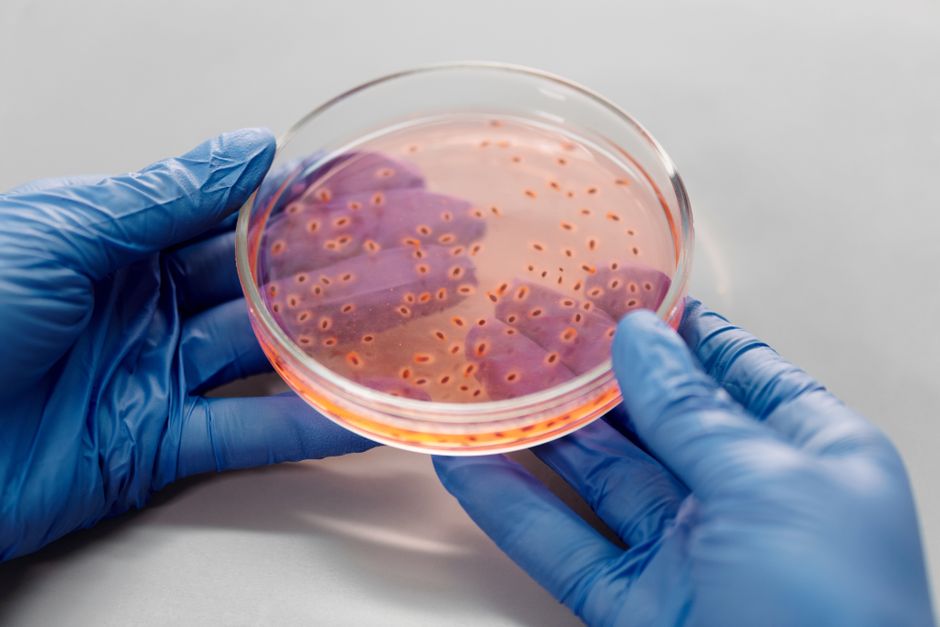
Leprosy is a bacterial infection, not a viral one. The disease is caused by Mycobacterium leprae, a slow-growing bacterium that mainly affects the skin, nerves, and lining of the nose. Because it is bacterial, leprosy can be treated and cured with a combination of antibiotics.
Mycobacterium leprae was first identified in 1873 by the Norwegian physician Gerhard Armauer Hansen, which is why the disease is also called Hansen’s disease. This makes it one of the earliest human diseases tied to a specific bacterium. A second organism, Mycobacterium lepromatosis, was identified much later and causes a similar illness.
What Kind of Bacteria Causes Leprosy?
Mycobacterium leprae belongs to the same family of bacteria as the organism that causes tuberculosis. Both are mycobacteria, and both grow slowly and have a waxy outer coating that helps them survive inside the body’s cells.
This bacterium has two features that shape everything about the disease. It divides extremely slowly — roughly once every several days, compared with hours for many other bacteria. And it prefers cooler areas of the body, which is why it tends to affect the skin, the nerves near the surface, and the upper respiratory tract rather than deep organs.
The slow growth explains the long incubation period. Symptoms often do not appear until years after exposure. In some cases, they can take much longer to show up. This delay is one reason leprosy spreads quietly in a community before anyone realizes it is present.
A second species, Mycobacterium lepromatosis, was identified in 2008 and is linked to a severe form of the disease. It behaves in similar ways and is treated with the same general approach.
How Does Leprosy Spread?
Leprosy spreads mainly through prolonged, close contact with an untreated person who has the infection. The leading route is thought to be respiratory — through droplets released when a person coughs or sneezes. It is not spread by casual contact like shaking hands, hugging, or sitting near someone.
This point matters because the historical fear around leprosy was far out of proportion to how contagious it actually is. Most people who are exposed never develop the disease. The immune system clears the infection in the large majority of cases.
Several factors affect whether someone develops leprosy after exposure:
- How long and how close the contact is — household members face the highest risk
- The infected person’s bacterial load, which is highest in untreated cases
- The exposed person’s immune response, which varies from person to person
- Genetic factors that influence susceptibility
Leprosy is not spread through sexual contact and is not passed from mother to child during pregnancy. It is also not spread by touching the skin of an infected person.
What Are the Symptoms of Leprosy?
Leprosy symptoms show up slowly and usually start on the skin or in the nerves. The most common early sign is a patch of skin that is lighter or darker than the surrounding area, often with reduced feeling.
Numbness is a key clue. When the bacteria attack the peripheral nerves, sensation fades. A person may not feel pain, heat, or cold in affected areas. This loss of sensation is what leads to many of the disease’s worst effects — burns, cuts, and infections that go unnoticed because the person cannot feel them.
Other common signs include:
- Flat or raised skin patches with loss of sensation
- Thickened or enlarged nerves, sometimes felt near the elbow or knee
- Muscle weakness in the hands and feet
- Nosebleeds or a stuffy nose in some forms of the disease
- Painless swelling or lumps
Doctors classify leprosy along a spectrum based on how the immune system responds. At one end is tuberculoid leprosy, with few skin patches and a stronger immune response. At the other end is lepromatous leprosy, with widespread patches and a weaker immune response. The form a person develops affects how the disease progresses.


Can Leprosy Be Cured?
Leprosy is curable with antibiotics. The standard treatment is multidrug therapy, a combination of drugs that the World Health Organization has recommended and distributed worldwide for decades. Using more than one drug at once helps prevent the bacteria from becoming resistant.
The main drugs in multidrug therapy are dapsone, rifampicin, and clofazimine. Treatment usually continues for months, and the exact duration depends on the form of the disease. A doctor determines the regimen and length of treatment based on the individual case.
Treatment stops the infection and prevents it from spreading to others. What it cannot do is reverse nerve damage that has already occurred. This is why early diagnosis matters so much — the sooner treatment starts, the less nerve damage builds up.
Rifampicin is powerful enough that a single dose can sharply reduce how contagious a person is. Once treatment begins, the person generally stops being a source of infection to others.
Why Is Leprosy Often Confused With a Virus?
People often assume leprosy is viral because of how it behaves. The long silent period between exposure and symptoms, the lack of a quick cure, and the way it spreads through the air all resemble patterns seen with some viral illnesses.
But the biology is clearly bacterial. The organism can be seen under a microscope, it responds to antibiotics, and it has a cell structure typical of bacteria. Viruses are far smaller, cannot be treated with antibiotics, and reproduce only inside a host’s cells. Leprosy fits none of those viral traits.
The confusion also comes from the disease’s long history. For centuries, before the bacterium was identified, the cause was unknown. That mystery fed myths and stigma that still shape how people think about the disease today.
How Common Is Leprosy Today?
Leprosy is rare in the United States but still occurs in many parts of the world. The World Health Organization reports that the majority of new cases each year are concentrated in a small number of countries, with India, Brazil, and Indonesia among the highest.
Global case numbers have fallen substantially since multidrug therapy became widely available in the 1980s. Even so, new cases continue to appear, and the disease has not been eliminated. Most new cases are diagnosed in adults, though children are also affected.
In the US, cases are uncommon and are usually linked to travel or residence in countries where the disease is more common. Some cases have appeared in people with no clear travel history, which has prompted ongoing research into how transmission works in those situations.
One detail worth noting: armadillos in parts of the southern United States can carry Mycobacterium leprae, and contact with them has been linked to some human cases. The risk is low, but it is a real and documented route of exposure.
Key Differences Between Bacterial and Viral Infections
Understanding why leprosy is bacterial rather than viral comes down to a few basic differences between the two types of germs.
| Feature | Bacteria | Viruses |
|---|---|---|
| Size | Larger, visible under a standard microscope | Much smaller, need an electron microscope |
| Reproduction | Reproduce on their own | Must use a host cell to reproduce |
| Treatment | Antibiotics | Antivirals; antibiotics do not work |
| Example | Leprosy, tuberculosis, strep throat | Common cold, flu, HIV |
Leprosy sits firmly on the bacterial side of this table. It is treated with antibiotics, and that treatment works. No antiviral drug treats leprosy because no virus causes it.
Why Early Diagnosis Matters
The biggest reason to identify leprosy early is to prevent permanent nerve damage. Once nerves are damaged, the loss of sensation and muscle function is often irreversible. Treatment can halt the infection but cannot always restore what was lost.
Early signs are easy to miss because they develop so slowly. A numb patch of skin or a slightly weakened grip may not seem urgent. But these are exactly the signs that warrant a medical evaluation, especially for anyone who has lived in or traveled to regions where leprosy is more common.
Diagnosis is based on a physical exam, skin patches, and sometimes a skin sample checked under a microscope. There is no simple blood test that confirms leprosy on its own.
The stigma around leprosy is a real barrier to early care. Many people delay seeking help because of fear or shame. That delay is costly. The disease is treatable, and the earlier it is caught, the better the outcome.
Frequently Asked Questions
Is leprosy a virus or a bacterial infection?
Leprosy is a bacterial infection caused by Mycobacterium leprae. It is not caused by a virus and is treated with antibiotics.
How is leprosy spread from person to person?
It spreads mainly through prolonged close contact with an untreated person, likely through respiratory droplets. Casual contact like shaking hands or hugging does not spread it.
Can leprosy be cured with antibiotics?
Yes, leprosy is curable with a combination of antibiotics known as multidrug therapy. Treatment stops the infection but cannot reverse nerve damage that has already occurred.
Is leprosy still a problem today?
Leprosy is rare in the United States but still occurs in many countries worldwide. The World Health Organization reports that most new cases each year are concentrated in a small number of countries.
