
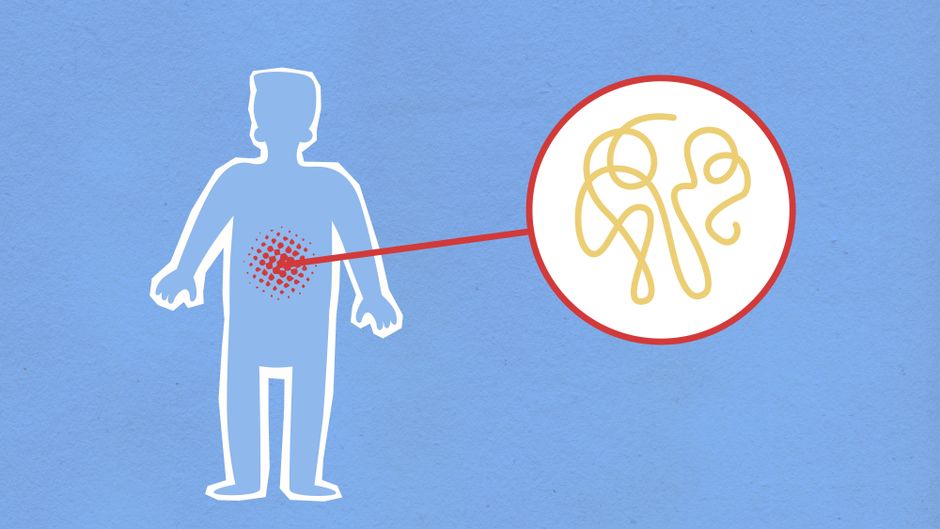
Helicobacter pylori is a bacterium that lives in the stomach and is one of the most common chronic infections in the world. It can quietly colonize the stomach for decades without causing any symptoms at all. In some people, though, it inflames the stomach lining and leads to ulcers, and it is a major contributor to stomach cancer. The good news is that H. pylori can usually be detected and cleared with antibiotics.
What Is H Pylori Infection?
H. pylori is a spiral-shaped bacterium that has evolved to survive in one of the harshest environments in the human body: the acidic stomach.
It manages this by producing an enzyme called urease, which breaks down urea into ammonia. The ammonia neutralizes acid right around the bacterium, creating a small safe zone. It also uses a corkscrew shape to burrow into the mucus layer that protects the stomach lining, where acid is weaker.
Once settled, H. pylori triggers chronic inflammation in the stomach lining. This is called gastritis. In many people the inflammation stays mild and causes no obvious problems. In others it damages the lining enough to cause sores (ulcers) or, over many years, changes that raise cancer risk.
The World Health Organization classifies H. pylori as a carcinogen. That classification reflects strong evidence linking the infection to stomach cancer, but it does not mean every infected person will develop cancer. Most will not.
What Are the Symptoms of H Pylori Infection?
Most people with H. pylori have no symptoms at all. When symptoms do appear, they usually come from the gastritis or ulcer the infection has caused, not from the bacterium itself.
Common symptoms include:
- A dull or burning pain in the upper abdomen
- Pain that may come and go, or worsen when the stomach is empty
- Bloating and a feeling of fullness after eating
- Nausea
- Unexplained weight loss
- Burping
These symptoms are not specific to H. pylori. Many other conditions, including acid reflux, gallbladder problems, and irritable bowel syndrome, can cause similar complaints. That is one reason testing matters before assuming H. pylori is the cause.
Some warning signs suggest a more serious problem and need medical attention right away:
- Vomiting blood or material that looks like coffee grounds
- Black, tarry stools
- Sudden, severe abdominal pain
- Difficulty swallowing
- Feeling faint or short of breath
These can signal bleeding or a perforated ulcer, which are emergencies.
What Causes H Pylori Infection and How Does It Spread?
H. pylori spreads from person to person, most likely through saliva, vomit, or fecal contamination. It is often acquired in childhood, and once established it usually persists for life unless treated.
The bacteria can pass through close contact, shared eating utensils, or contaminated food and water. In places with crowded living conditions or poor sanitation, infection is far more common. In the United States, infection rates are higher among older adults and among people born outside the country.
H. pylori does not spread through casual contact like a cold or flu. You cannot catch it from simply being near someone.
Once inside the stomach, the bacterium attaches to the lining and sets up long-term inflammation. Whether that inflammation stays mild or progresses to an ulcer or cancer depends on a mix of factors: the specific strain of H. pylori, the person’s genetics, lifestyle, and other health conditions.





How Is H Pylori Infection Diagnosed?
Doctors use several tests to detect H. pylori, and the right one depends on the situation.
- Urea breath test. You swallow a solution, then breathe into a collection bag. If H. pylori is present, the breath sample contains a detectable marker. This test is accurate and is often used both to diagnose and to confirm cure after treatment.
- Stool antigen test. A lab checks a stool sample for bacterial proteins. It is also useful for confirming that treatment worked.
- Blood antibody test. This detects antibodies to H. pylori. It can show that you were exposed at some point, but it cannot tell whether the infection is active or already cleared. For that reason, it is less useful for confirming a cure.
- Endoscopy with biopsy. A doctor passes a thin tube with a camera down the throat and takes a small tissue sample from the stomach lining. This is the most direct method and is often used when ulcers or other complications are suspected.
One important point: acid-suppressing medications and certain antibiotics can interfere with breath and stool tests. Doctors usually ask patients to stop these for a period before testing. If you are scheduled for a test, follow your doctor’s specific instructions.
How Is H Pylori Infection Treated?
H. pylori is treated with a combination of antibiotics and an acid-suppressing medication. Treatment usually lasts 10 to 14 days.
The standard approach pairs two or more antibiotics with a proton pump inhibitor (a drug that reduces stomach acid). Common antibiotics include amoxicillin, clarithromycin, metronidazole, and tetracycline. Which combination a doctor chooses depends on local resistance patterns, prior antibiotic use, allergies, and other factors.
Antibiotic resistance is a real and growing problem with H. pylori. When the first course of treatment fails, doctors may switch to a different combination. This is why confirming that the infection is gone matters.
Testing to confirm cure is recommended after treatment, usually with a breath or stool test. It is typically done at least four weeks after finishing antibiotics and after acid-suppressing drugs have been stopped for the recommended period, so the results are reliable. If the infection persists, a second course of treatment is often needed.
Some people turn to supplements or natural remedies they read about online. There is no strong evidence that any supplement reliably clears H. pylori on its own. Some substances, including certain probiotics, have been studied as add-ons to standard therapy, but results are mixed and they are not a substitute for antibiotics. Anyone considering complementary approaches should discuss them with a doctor.
What Complications Can H Pylori Cause?
Long-term H. pylori infection can lead to several serious conditions.
- Peptic ulcers. H. pylori is a leading cause of both stomach and duodenal ulcers. Clearing the infection greatly reduces the chance of ulcers returning.
- Chronic gastritis. Ongoing inflammation of the stomach lining is common and can persist for years.
- Stomach cancer. H. pylori is classified as a carcinogen and is a major risk factor for gastric cancer, especially a type called gastric adenocarcinoma and a lymphoma known as MALT lymphoma.
- Iron deficiency anemia. Some evidence links H. pylori to poor iron absorption, though the relationship is not fully understood.
Not everyone infected develops these problems. Many people carry H. pylori for a lifetime with no significant harm. The challenge is that it is hard to predict who will develop complications and who will not. That uncertainty is one reason doctors may recommend treatment even when symptoms are mild or absent.
Can H Pylori Infection Be Prevented?
There is no vaccine for H. pylori, and prevention is not straightforward because the infection is often acquired in childhood and spreads through routes that are hard to fully control.
General hygiene measures may lower risk:
- Wash hands thoroughly with soap and water, especially before eating and after using the bathroom
- Drink clean, safe water
- Wash fruits and vegetables before eating
- Avoid sharing eating utensils or cups with someone who has an active infection
These steps are sensible, but no single measure guarantees protection. In regions where infection is common, public health efforts focused on clean water and sanitation have the biggest impact.
If you have been treated for H. pylori and cured, reinfection is possible but uncommon in adults in developed countries. The risk is higher in areas where the infection is widespread.
Frequently Asked Questions
Can H pylori go away on its own?
H. pylori usually does not clear on its own once it establishes a chronic infection. Treatment with antibiotics is typically needed to eliminate it.
How do you know if H pylori is gone after treatment?
Doctors confirm cure with a breath or stool test, usually at least four weeks after finishing antibiotics. A blood antibody test cannot confirm cure because antibodies can remain for months or years.
Is H pylori contagious?
Yes, H. pylori can spread from person to person, mainly through saliva, vomit, or fecal contamination. It is often acquired in childhood and is more common in crowded or unsanitary conditions.
Can H pylori cause stomach cancer?
H. pylori is classified as a carcinogen and is a major risk factor for stomach cancer. Most infected people will not develop cancer, but the infection raises the risk over time.
