
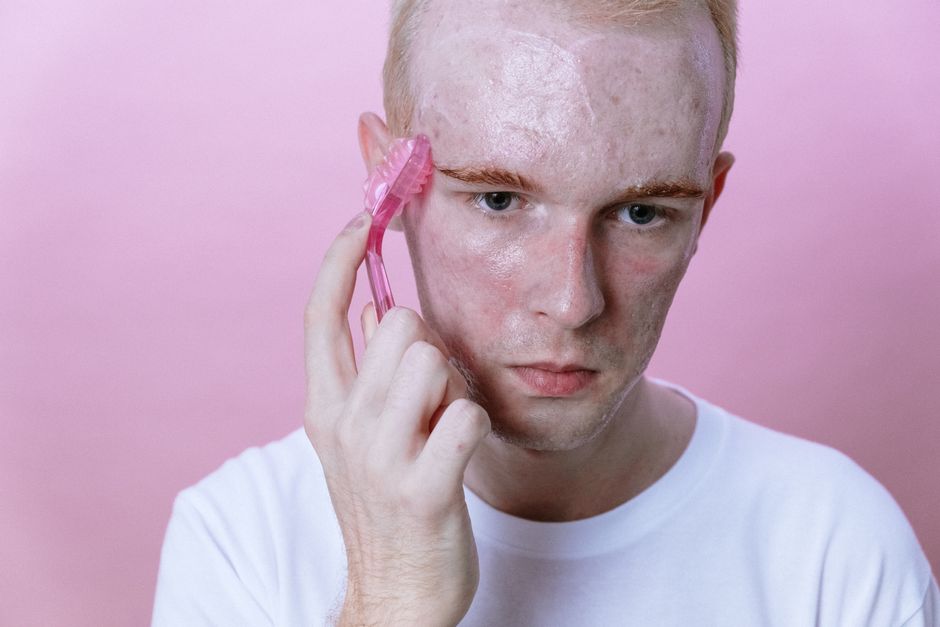
Acne is not an infection. It is a chronic inflammatory condition of the hair follicles and oil glands, and bacteria play a supporting role rather than the starring one. That distinction matters, because it explains why antibiotics alone often fail and why treatment usually targets several problems at once.
Is Acne An Infection Or Just A Bacterial Condition?
Neither label fits perfectly, but “bacterial condition” is closer to the truth than “infection.” Acne is a disorder of the pilosebaceous unit, the structure made up of a hair follicle, a sebaceous gland, and the canal that connects them to the skin surface. Four things happen together: the gland produces more oil, dead skin cells shed abnormally and clog the pore, a bacterium called Cutibacterium acnes multiplies inside that clogged pore, and the immune system responds with inflammation.
An infection means a harmful organism has invaded tissue and is causing damage it drives on its own. In acne, C. acnes is a normal resident of human skin. Nearly everyone carries it. People with clear skin carry it too. The bacterium is not an invader, and acne is not contagious.
You can also have acne with very little of that bacterium present, and you can carry plenty of it with no acne at all. That is the strongest argument against calling this an infection.
What Actually Happens Inside a Pore During Acne?
The process starts with a clog, not a germ. Cells lining the follicle normally shed and drift out through the pore opening. In acne-prone skin, those cells stick together and shed too slowly. At the same time, the sebaceous gland responds to hormones, particularly androgens, by producing more sebum. The mixture of sticky cells and thick oil forms a plug, called a microcomedone, that you cannot see yet.
Inside that blocked, low-oxygen environment, C. acnes thrives. The bacterium breaks down sebum into fatty acids and other compounds. Your immune system recognizes these compounds and responds with inflammation. That inflammation, not the bacterium itself, is what produces the redness, swelling, and tenderness.
This is why a closed pore can sit quietly for weeks before becoming a visible pimple. The plug comes first. The immune reaction follows.
What the different acne lesions mean
- Blackheads (open comedones): a plug open to the air. The dark color comes from oxidized melanin and oil, not dirt.
- Whiteheads (closed comedones): a plug sealed under the skin surface.
- Papules and pustules: inflamed bumps. Pustules contain pus, which is mostly dead immune cells, not a sign of a spreading infection.
- Nodules and cysts: deeper inflammation that can scar. These are the lesions most likely to need medical treatment.
Why Do Antibiotics Help Acne If It Is Not an Infection?
Antibiotics help because many of them are also anti-inflammatory. This is the part most people never hear, and it explains a lot of confusing acne treatment advice.
Tetracycline-class drugs such as doxycycline reduce inflammation through mechanisms separate from killing bacteria. They calm the immune response in the follicle. That effect shows up even at doses too low to work as antibiotics. So when a doctor prescribes an antibiotic for acne, part of the benefit is antibacterial and part is anti-inflammatory.
This also explains why antibiotics are not a standalone fix. They reduce C. acnes and calm inflammation, but they do not correct the abnormal shedding of skin cells or the excess oil production that started the problem. Stop the antibiotic and the underlying process continues.
There is a real concern here worth taking seriously. C. acnes resistance to antibiotics has been rising for years, and it is one reason current clinical thinking favors limiting antibiotic courses and pairing them with other treatments. Some clinicians now recommend using antibiotics alongside a topical retinoid or benzoyl peroxide rather than alone, and stopping the antibiotic once improvement is stable. This approach is widely taught, though practice varies.





What Causes Acne If Bacteria Are Not the Main Problem?
Hormones, genetics, and inflammation drive acne. Bacteria are one input among several.
Androgens are the key hormonal signal. They increase sebum production, which is why acne typically appears around puberty and why it can flare during menstrual cycles or with certain hormonal conditions. This is also why hormonal treatments can work for some people.
Genetics matter a great deal. Acne runs in families. If a parent had significant acne, a child is more likely to as well. The inherited traits include how much sebum the glands produce and how aggressively the immune system responds to the follicle environment.
Inflammation appears to be present early, possibly before a visible clog forms. Some research suggests inflammatory signals are already active in acne-prone skin before lesions develop, which has shifted how researchers think about the sequence of events.
Things often blamed for acne that the evidence does not strongly support:
- Poor hygiene. Acne is not caused by dirty skin. Overwashing can irritate skin and make things worse.
- Chocolate and greasy food. The evidence here is mixed and generally weak. Some studies suggest high-glycemic diets may be associated with acne, but this is not settled.
- Makeup. Most modern cosmetics are non-comedogenic. Heavy occlusive products can contribute for some people, but this is not a universal cause.
Stress is often reported as a trigger. The evidence linking stress to acne flares is suggestive but not definitive, and it is difficult to study well.
Is Acne Contagious?
No. You cannot catch acne from someone, and you cannot spread it to another part of your body by touching a pimple. The bacterium involved lives on essentially everyone’s skin already.
This is worth stating plainly because the word “bacterial” makes many people assume acne behaves like a skin infection such as impetigo, which is contagious. It does not. Acne is a condition of your own follicles responding to your own hormones, your own oil, and your own immune system.
Picking or squeezing does not spread acne either, but it can push inflammation deeper, increase the risk of scarring, and introduce other bacteria that can cause a genuine secondary infection. That is a reason to leave lesions alone, not a reason to fear contagion.
Does That Mean Antibacterial Products Are the Answer?
No. Killing bacteria is one useful tactic, not a complete strategy.
Benzoyl peroxide is the clearest example of an antibacterial approach that works. It reduces C. acnes and also helps loosen plugs, and it does not carry the same resistance concerns as antibiotics. It is widely used and generally well supported.
But a product that only kills bacteria leaves the clog and the oil production untouched. That is why most effective regimens combine approaches: something to normalize cell shedding, something to reduce bacteria or inflammation, and sometimes something to address hormones.
Topical retinoids address the clogging process directly. They are among the most studied acne treatments and are often recommended as a foundation. They take time to work and can cause irritation early on, which is why they are usually started slowly.
Isotretinoin is reserved for severe or treatment-resistant acne. It is effective, and it also carries significant risks that require medical supervision and monitoring. This is not a decision to make alone.
When Should You See a Doctor About Acne?
See a doctor or dermatologist if acne is causing scars, if it is deep and painful, if it is affecting your confidence or daily life, or if over-the-counter treatments have not helped after a reasonable trial. There is no benefit to waiting until acne is severe.
Scarring is the main reason not to delay. Once scar tissue forms, treating it is harder than treating the acne that caused it. Early treatment of inflammatory acne reduces that risk.
Some acne has an underlying hormonal cause, such as polycystic ovary syndrome. Signs worth mentioning to a clinician include acne that appears suddenly in adulthood, acne along the jawline with irregular periods, or acne that does not respond to standard treatment. A doctor can determine whether further evaluation is warranted.
The honest summary: acne is an inflammatory condition of the follicle in which a common skin bacterium plays a contributing role. It is not an infection, it is not contagious, and it is not caused by poor hygiene. Treating it well means addressing more than bacteria.
Frequently Asked Questions
Is acne considered an infection?
No. Acne is an inflammatory condition of the hair follicles and oil glands, not an infection. The bacterium Cutibacterium acnes contributes to inflammation but is a normal skin resident present in people with and without acne.
Can acne spread from person to person?
No. Acne is not contagious and cannot be passed to another person or spread across your own skin by touching. The bacterium involved already lives on nearly everyone’s skin.
Why do antibiotics work for acne if it is not an infection?
Many antibiotics used for acne also reduce inflammation directly, independent of their bacteria-killing effect. They are usually paired with other treatments because they do not correct the clogged pores or excess oil production that start the problem.
Does dirty skin or poor hygiene cause acne?
No. Acne is not caused by poor hygiene, and overwashing can irritate the skin and worsen irritation. The process starts with hormonal oil production and abnormal shedding of skin cells inside the follicle.
