
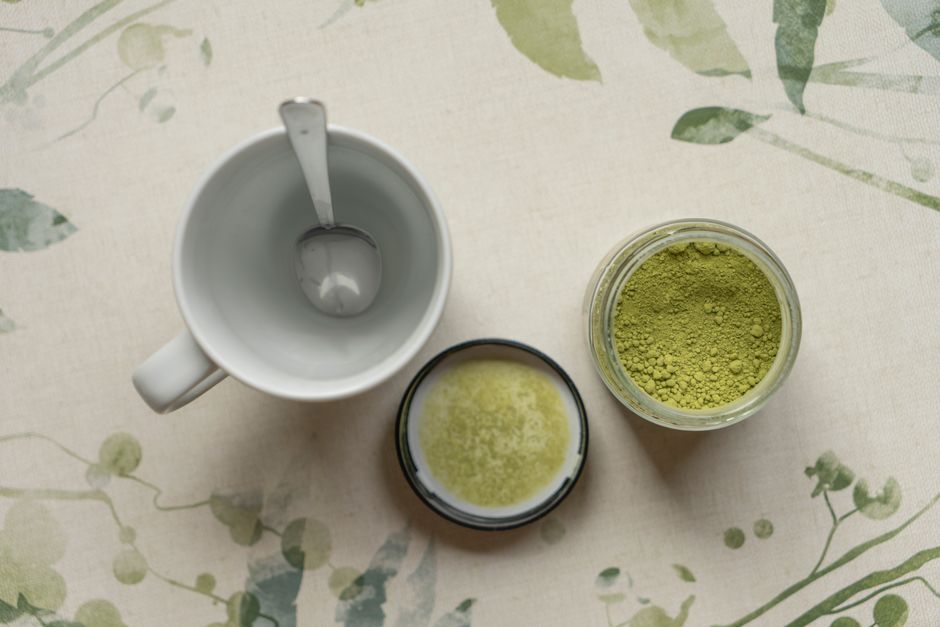
Green tea is caffeinated. A standard cup of green tea contains about 25-45 milligrams of caffeine, which is significantly less than coffee but enough to have a noticeable effect on most people. The exact amount depends on the type of tea, how long you steep it, and the water temperature.
How Much Caffeine Is In Green Tea?
A typical 8-ounce cup of green tea has roughly 25-45 milligrams of caffeine. For comparison, the same size cup of brewed coffee usually contains 90-120 milligrams. Black tea sits in the middle at about 45-60 milligrams per cup.
These numbers are averages. Some green teas naturally contain more caffeine than others. Matcha, which is powdered green tea leaves, is the exception. A single teaspoon of matcha contains about 60-70 milligrams of caffeine because you consume the entire leaf rather than just steeping it.
The way you prepare green tea changes the caffeine content too. Steeping longer or using hotter water pulls more caffeine out of the leaves. A quick 1-2 minute steep with cooler water around 160-180°F produces a milder cup with less caffeine.
Why Does Green Tea Have Caffeine?
Caffeine is a natural defense mechanism for the tea plant. The compound acts as a pesticide, protecting the leaves from insects that would otherwise eat them. When you brew tea, the caffeine dissolves into the water along with the flavor compounds.
Green tea also contains L-theanine, an amino acid that works alongside caffeine. L-theanine promotes relaxation without drowsiness. This combination is why many people describe the energy from green tea as smoother than coffee. The caffeine provides alertness while L-theanine softens the jittery edge.
Research suggests this pairing affects how the body processes caffeine. The L-theanine may slow caffeine absorption, creating a more gradual rise in energy rather than a sudden spike. This is why some people who cannot tolerate coffee can drink green tea without problems.
Does Decaffeinated Green Tea Still Have Caffeine?
Decaffeinated green tea is not caffeine-free. The decaffeination process removes most of the caffeine, but a small amount remains. Most decaf green teas contain about 2-5 milligrams per cup.
The most common decaffeination methods use either carbon dioxide or ethyl acetate to strip caffeine from the leaves. Both methods are effective, but they can also remove some of the beneficial compounds called catechins. These are the antioxidants most often associated with green tea’s health benefits.
If you are sensitive to caffeine but still want the antioxidants, decaf green tea is a reasonable option. The reduced catechin content is a tradeoff worth knowing about. If you are avoiding caffeine entirely for medical reasons, even 2-5 milligrams can matter, so consider herbal teas instead. Herbal teas like chamomile, peppermint, or rooibos contain no caffeine at all.




How Green Tea Caffeine Compares to Other Drinks
Understanding where green tea fits on the caffeine spectrum helps you make informed choices. Here is a quick comparison of average caffeine content in common drinks:
| Drink (8 oz) | Average Caffeine |
|---|---|
| Coffee, brewed | 90-120 mg |
| Matcha (1 tsp) | 60-70 mg |
| Black tea | 45-60 mg |
| Green tea | 25-45 mg |
| White tea | 15-30 mg |
| Decaf green tea | 2-5 mg |
| Herbal tea | 0 mg |
These are general ranges. Actual amounts vary by brand, leaf quality, and brewing method. Some green teas, especially those harvested early in the season, naturally contain more caffeine because young leaves produce more of the compound.
Is Green Tea Caffeine Safe For Everyone?
For most healthy adults, up to 400 milligrams of caffeine per day is considered safe by health authorities. That is roughly 8-10 cups of green tea. Most people drink far less than this and experience no issues.
Some groups should be more careful. Pregnant women are generally advised to limit caffeine to about 200 milligrams per day. That is roughly 4-5 cups of green tea. No clinical guidelines specifically address green tea during pregnancy, but the caffeine content follows the same rules as other caffeinated beverages.
People with certain heart conditions, anxiety disorders, or sleep problems may need to limit caffeine more strictly. Caffeine can increase heart rate and worsen anxiety symptoms in sensitive individuals. If you have a medical condition that requires limiting caffeine, green tea counts toward your daily total.
Caffeine sensitivity varies widely between individuals. Some people feel effects from as little as 20 milligrams. Others can drink coffee late in the evening and sleep fine. Your personal tolerance is the most reliable guide.
Does Steeping Time Really Change Caffeine Levels?
Yes, steeping time directly affects caffeine content. Caffeine is highly water-soluble, meaning it dissolves into water quickly and easily. Most of the caffeine in green tea leaves is extracted within the first minute of steeping.
Studies have shown that about 80% of the caffeine is released in the first 30-60 seconds. Steeping longer than that adds flavor and some additional caffeine, but the biggest jump happens early. This means a 1-minute steep produces a noticeably lower-caffeine cup than a 4-minute steep.
Water temperature matters too. Hotter water extracts caffeine faster. A cup steeped at boiling temperature will have more caffeine than one steeped at 170°F, even with the same steeping time. This is why traditional green tea preparation calls for cooler water — it produces a smoother, less bitter, and slightly lower-caffeine cup.
How To Reduce Caffeine In Green Tea
If you like green tea but want less caffeine, you have several practical options. The simplest is to steep for a shorter time. A 1-minute steep cuts caffeine significantly while still producing a flavorful cup.
Another technique is called the “first flush” method. Steep the tea for 30 seconds, pour off the water, then steep again. The first steep removes most of the caffeine. The second steep contains far less caffeine but still has much of the flavor. This works because caffeine dissolves faster than most flavor compounds.
Choosing the right tea type also helps. White tea, which comes from the same plant as green tea but is harvested younger, naturally contains less caffeine. Gyokuro and matcha contain more because they are made from shade-grown leaves, which produce higher caffeine levels.
If you are drinking green tea mainly for the taste and ritual, decaf is the simplest solution. If you want the antioxidants with minimal caffeine, a short steep of regular green tea is a better choice because decaffeination removes some beneficial compounds.
What Time of Day Should You Drink Green Tea?
Caffeine has a half-life of about 5-6 hours in most people. This means that half of the caffeine you consume is still in your system 5-6 hours later. A cup of green tea at 4 PM means roughly 12-22 milligrams of caffeine are still circulating at 9-10 PM.
For most people, drinking green tea in the morning or early afternoon is fine. If you are sensitive to caffeine or have trouble sleeping, stopping green tea by mid-afternoon is a reasonable approach. The exact cutoff depends on your sleep schedule and personal sensitivity.
Some people drink green tea in the evening without sleep problems. The relatively low caffeine content, combined with L-theanine’s calming effect, makes it gentler than coffee. But this is individual. If you notice sleep disruption, move your last cup earlier in the day.
Frequently Asked Questions
Is green tea high in caffeine?
No. Green tea contains about 25-45 milligrams of caffeine per cup, which is roughly one-third to one-half the caffeine in a cup of coffee.
Can you drink green tea before bed?
It depends on your caffeine sensitivity. The caffeine content is low enough that some people sleep fine, but if you are sensitive, the caffeine can stay in your system for hours and disrupt sleep.
Does matcha have more caffeine than regular green tea?
Yes. Matcha contains about 60-70 milligrams per teaspoon, which is roughly double the caffeine of a standard cup of steeped green tea because you consume the whole leaf.
Is decaf green tea completely caffeine-free?
No. Decaffeinated green tea still contains about 2-5 milligrams of caffeine per cup, which is a small amount but not zero.
