
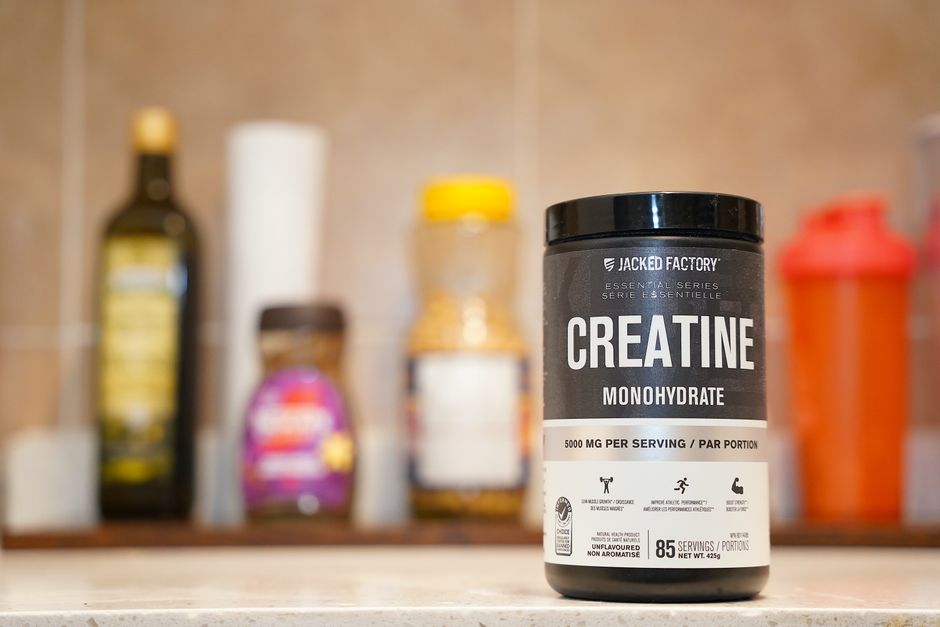
Creatine monohydrate is one of the most studied supplements in sports nutrition, and the evidence for its benefits is strong. For most healthy adults, it is safe and effective for improving high-intensity exercise performance and increasing muscle mass when combined with resistance training. However, it is not a weight-loss drug or a general health tonic, and it does not work without exercise.
What Is Creatine Monohydrate?
Creatine is a compound your body makes naturally. It is also found in foods like red meat and seafood. Your liver, kidneys, and pancreas produce about 1 to 2 grams of creatine per day from amino acids.
Creatine monohydrate is simply the supplemental form. It is creatine attached to a water molecule. This specific form has been used in research for decades and is the standard against which other creatine products are measured.
Most of the creatine in your body — roughly 95 percent — is stored in skeletal muscle. There, it helps your cells produce energy quickly during short bursts of intense activity.
How Does Creatine Work in the Body?
Your muscles use a molecule called ATP for energy. During high-intensity exercise like sprinting or heavy weightlifting, your body breaks down ATP very quickly. Creatine phosphate donates a phosphate group to help regenerate ATP so your muscles can keep working.
Think of creatine as a backup battery for your muscle cells. When your ATP stores run low, creatine helps recharge them fast. This matters most for efforts lasting roughly 10 seconds or less.
This mechanism is well established in physiology. It is not a mystery how creatine works. The biochemistry is clear and has been understood for decades.
Is Creatine Monohydrate Good For You for Muscle Growth?
Yes, for people who lift weights, the evidence is consistent. Research shows that creatine supplementation combined with resistance training leads to greater gains in muscle mass and strength than training alone.
The effect is modest but real. It is not a steroid and it does not build muscle on its own. Creatine allows you to do a few more reps or lift slightly heavier weight. Over months of training, that extra work adds up to more muscle.
Creatine also draws water into muscle cells. This increases cell volume, which may signal your body to build more protein. This water retention is intracellular — inside the muscle — not under the skin. It is not the same as bloating from water retention in the abdomen.


What Are the Other Proven Benefits?
The strongest evidence supports creatine for strength and power sports. But research has found other benefits too.
Some studies show creatine can help preserve muscle mass during periods of immobilization, such as after surgery or injury. This is clinically relevant for older adults at risk of muscle loss.
Evidence also suggests creatine may improve performance in repeated sprint efforts. Athletes in sports like soccer, basketball, and hockey may benefit because these sports involve short bursts followed by recovery periods.
There is some research on creatine for brain health and cognitive function, particularly in older adults and people under sleep deprivation. The results are preliminary. Some studies show modest benefits, but this is not yet an established clinical use.
Is Creatine Safe? What Are the Side Effects?
Creatine monohydrate has an excellent safety profile when taken at recommended doses. Decades of research and long-term studies have not found serious adverse effects in healthy individuals.
The most common side effect is weight gain from increased water in muscle cells. This typically amounts to 1 to 2 kilograms in the first week of supplementation. It is not fat gain.
Some people report stomach discomfort or cramping. This is more common with high doses taken all at once. Taking creatine with food or splitting the dose throughout the day usually reduces these symptoms.
A common myth is that creatine damages the kidneys. This is not supported by evidence in healthy people. Studies have looked at markers of kidney function and found no harm. However, people with pre-existing kidney disease should consult a doctor before taking creatine because their kidneys may not clear the waste product creatinine efficiently.
How Should You Take Creatine Monohydrate?
The standard dosing approach is simple. A daily dose of 3 to 5 grams is effective. This is the amount that research consistently uses and that maintains elevated muscle creatine levels.
Some people use a loading phase of 20 grams per day for five to seven days to saturate muscles faster. This is optional. Skipping the loading phase just means it takes about three to four weeks to reach full muscle saturation at 3 to 5 grams daily.
Timing does not matter much. Taking it before or after your workout appears to make little difference. What matters is consistency. You need to take it daily to keep muscle stores saturated.
Creatine monohydrate is the only form with strong evidence behind it. Other forms like creatine hydrochloride or buffered creatine are marketed as better absorbed, but no reliable evidence shows they outperform plain creatine monohydrate.
Who Should Not Take Creatine?
People with pre-existing kidney disease or a history of kidney stones should talk to their doctor before using creatine. This is a precaution, not a proven danger. But it is the responsible approach given how the kidneys process creatine byproducts.
Pregnant and breastfeeding women should not take creatine supplements. No clinical guidelines exist for this population, and there is no research confirming safety.
Teenagers who want to take creatine should discuss it with a pediatrician and a coach. Some sports organizations have policies about supplements for minors. The evidence on safety in adolescents is limited, though no serious harm has been documented.
What Does Creatine Not Do?
Creatine is not a fat burner. It does not increase metabolism or help you lose weight. In fact, the initial water weight gain can make the scale go up.
It is not a cognitive enhancer in the way that stimulants are. The brain research is interesting, but it is not strong enough to recommend creatine for mental performance in healthy young adults.
It does not improve endurance performance in long-distance events like marathons. The energy system creatine supports is the anaerobic one, not the aerobic system used in prolonged exercise.
It is not a cure for any disease. Some research explores creatine for conditions like muscular dystrophy or Parkinson’s disease, but results have been mixed and no clinical recommendation currently exists for these uses.
How Long Does It Take to Work?
With a loading phase, you may notice a difference in your training within the first week. Without loading, expect to wait three to four weeks before muscle creatine levels are fully saturated.
The performance effect is not dramatic. You will not suddenly lift 20 percent more weight. The benefit is usually a few extra reps or a slightly heavier set. Over months of consistent training, this accumulates.
If you stop taking creatine, muscle stores return to baseline in about four to six weeks. There is no withdrawal effect, and you do not lose muscle that you built while taking it, as long as you keep training.
Frequently Asked Questions
Does creatine monohydrate cause hair loss?
No reliable evidence confirms this. One small study from 2009 suggested a possible link, but no follow-up research has confirmed it, and most experts do not consider this a real risk.
Is creatine monohydrate a steroid?
No. Creatine is a naturally occurring compound made from amino acids, not a hormone. It works differently from steroids and has no hormonal effects.
Do I need to cycle off creatine?
No. Research shows long-term daily use is safe, and there is no evidence that cycling off provides any benefit. Continuous daily use at 3 to 5 grams is the standard approach.
Can I take creatine with coffee or other supplements?
Yes. Creatine is stable in hot liquids and does not interact negatively with caffeine or common supplements like protein powder. Taking them together is fine.
