
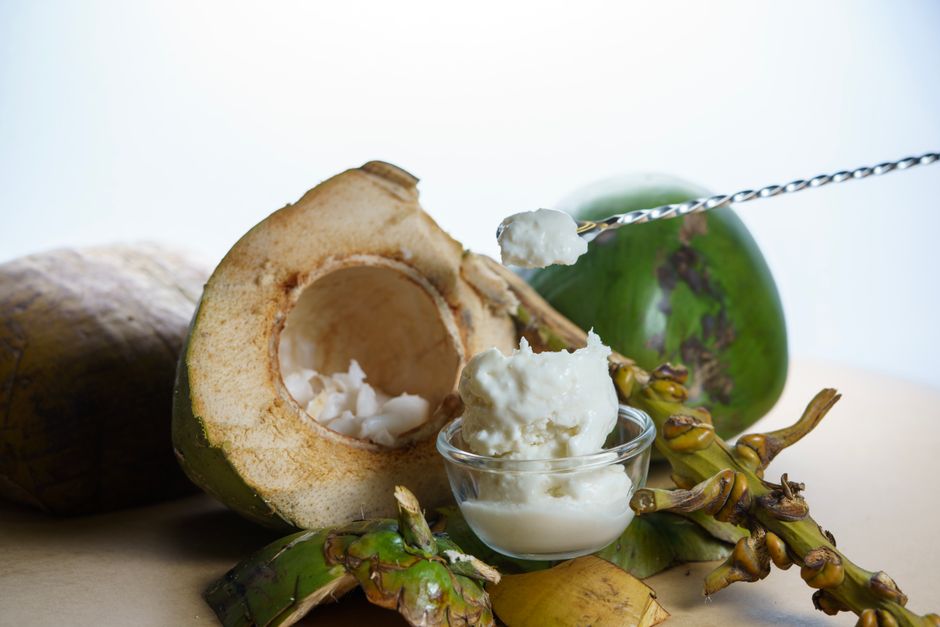
Coconut cream is a high-calorie, high-fat food, but the type of fat it contains is unique and may not be as harmful as once thought. The short answer is that coconut cream can be part of a healthy diet for most people when used in reasonable amounts, but it is not a health food or a superfood. Its health effects depend heavily on what you are eating instead of it and how much you use.
What Is Coconut Cream and How Is It Different From Coconut Milk?
Coconut cream is the thick, rich layer that forms at the top of a can of full-fat coconut milk. It is simply coconut milk with a much higher fat content. Coconut milk is about 20% fat, while coconut cream is closer to 50% fat. You can also buy coconut cream in cartons or cans that have been processed to stay creamy without separating.
The main difference is fat and calories. One tablespoon of coconut cream has about 50 calories and 5 grams of fat. The same amount of heavy dairy cream has about 50 calories and 6 grams of fat. They are surprisingly similar in basic nutrition.
Coconut cream also contains small amounts of iron, potassium, and magnesium. But the amounts are too small to make a real difference in your diet. You would need to eat a lot of coconut cream to get meaningful minerals, and that would come with too many calories.
What Is the Main Fat in Coconut Cream and Is It Bad for You?
The fat in coconut cream is mostly saturated fat. About 90% of the fat is saturated. For decades, health guidelines told us to avoid saturated fat because it raises LDL cholesterol, the kind linked to heart disease.
But the saturated fat in coconut is different from the saturated fat in butter or red meat. Coconut fat is made mostly of medium-chain triglycerides, or MCTs. These are shorter fat molecules that your body processes differently than the long-chain fats found in animal products.
Research published in the journal Lipids found that MCTs may increase energy expenditure slightly compared to long-chain fats. Some studies suggest MCTs are less likely to be stored as body fat and may be used more directly for energy.
However, this does not mean coconut cream is heart-healthy. The American Heart Association still advises limiting saturated fat to no more than 6% of total daily calories. For someone eating 2,000 calories a day, that is about 13 grams of saturated fat. A single tablespoon of coconut cream has about 5 grams of saturated fat. Three tablespoons would use up your entire daily limit.
Does Coconut Cream Raise Cholesterol?
Studies on coconut and cholesterol show mixed results. Some research has found that coconut oil and coconut cream raise HDL, the so-called good cholesterol. That sounds positive. But they also raise LDL, the bad cholesterol.
A study in the British Journal of Nutrition compared coconut cream to dairy cream in adults. People who ate coconut cream had higher total cholesterol and higher LDL cholesterol than those who ate dairy cream. The rise in HDL did not balance out the rise in LDL.
The effect also depends on what you normally eat. If you replace a diet high in processed foods and vegetable oils with coconut cream, your cholesterol numbers may look better. That is because you removed worse foods. But if you add coconut cream to an already balanced diet, it will likely raise your LDL.
Some people claim that coconut cream lowers cholesterol because it contains lauric acid. Lauric acid does raise HDL more than other saturated fats. But it raises LDL too. The net effect on your heart disease risk is still debated, and most cardiologists remain cautious.





How Many Calories and How Much Fat Are in Coconut Cream?
Coconut cream is very calorie-dense. One cup of canned coconut cream has about 800 calories and 80 grams of fat. That is more calories than a cup of heavy whipping cream.
Here is a comparison of one tablespoon of different cream options:
| Type of Cream | Calories | Total Fat | Saturated Fat |
|---|---|---|---|
| Coconut cream (canned) | 50 | 5 g | 4.5 g |
| Heavy dairy cream | 52 | 5.5 g | 3.5 g |
| Light coconut milk | 15 | 1.5 g | 1.3 g |
| Half and half | 20 | 1.7 g | 1 g |
The calories add up fast if you use coconut cream in smoothies, curries, or desserts. A single serving of curry made with a half cup of coconut cream can have 400 calories just from the cream.
If you are watching your weight, coconut cream is easy to overuse. The fat makes food taste rich and satisfying, which is why people keep using it. But the calorie load is real.
Is Coconut Cream Healthy for People With Specific Conditions?
For people with diabetes, coconut cream has no carbohydrates, so it does not raise blood sugar. That is a clear benefit compared to sweetened creamers or sugary toppings. However, the high fat content can slow digestion and affect how your body responds to insulin over time.
For people with heart disease or high cholesterol, most doctors recommend limiting coconut cream. The American Heart Association classifies coconut oil as a saturated fat to reduce. Coconut cream is essentially coconut oil mixed with water and fiber, so the same advice applies.
For people with digestive issues, some report that coconut cream is easier to tolerate than dairy cream. That is because it contains no lactose. If you are lactose intolerant, coconut cream is a good alternative for creamy sauces and soups.
For people with IBS, coconut cream can be a trigger for some. The high fat content can stimulate the gut and cause loose stools or cramping in sensitive individuals. Start with a small amount and see how you feel.
How Should You Use Coconut Cream in a Healthy Way?
The healthiest way to use coconut cream is as a replacement for something worse. If you are swapping it for heavy dairy cream in a dessert, you are making a mostly neutral trade. If you are swapping it for processed cheese sauces or cream-based soups, it can be an improvement.
Use coconut cream in small amounts. A tablespoon or two in a curry or smoothie adds richness without overwhelming your saturated fat limit for the day. Avoid using it as a daily creamer in coffee unless you measure it.
Look at the ingredient label. Some brands add guar gum, sugar, or preservatives. The best coconut cream has one ingredient: coconut. Some brands also add water and stabilizers to keep it from separating. That is fine, but avoid brands with added sugar.
Do not treat coconut cream as a health booster. It is not a source of vitamins, minerals, or antioxidants that you cannot get elsewhere. It is a flavorful fat that can make vegetables and legumes taste better. If it helps you eat more vegetables, that is a net positive.
Common Misconceptions About Coconut Cream
One common myth is that coconut cream can help you lose weight because of MCTs. The truth is that the amount of MCTs in coconut cream is not high enough to cause noticeable weight loss. Pure MCT oil has a much higher concentration. Studies showing weight loss from MCTs used doses of 15 to 30 grams of pure MCT oil per day, not coconut cream.
Another myth is that coconut cream is good for your thyroid or metabolism. There is no clinical evidence that coconut cream directly improves thyroid function. Some online claims come from the idea that coconut fat provides fuel for the thyroid, but this is not supported by research.
Some people believe that coconut cream is safe to eat in unlimited amounts because it is natural. Natural does not mean calorie-free or harmless. Coconut cream is a processed food that has been separated from the coconut water and fiber. It is not the same as eating fresh coconut flesh.
Frequently Asked Questions
Is coconut cream healthier than heavy cream?
They are similar in calories and fat. Coconut cream has no dairy or lactose, which is helpful for people with dairy issues. But it has more saturated fat than heavy cream.
Can coconut cream cause weight gain?
Yes, if you eat too much of it. Coconut cream is high in calories and fat. Using it in moderate amounts is fine, but large servings can lead to excess calorie intake.
Is coconut cream keto-friendly?
Yes, coconut cream is very low in carbohydrates and high in fat. It fits well into a ketogenic diet. Just watch the total calories if weight loss is your goal.
Does coconut cream have any vitamins?
Coconut cream contains small amounts of iron, potassium, and magnesium, but not enough to count as a significant source. Do not rely on it for nutrition.
