
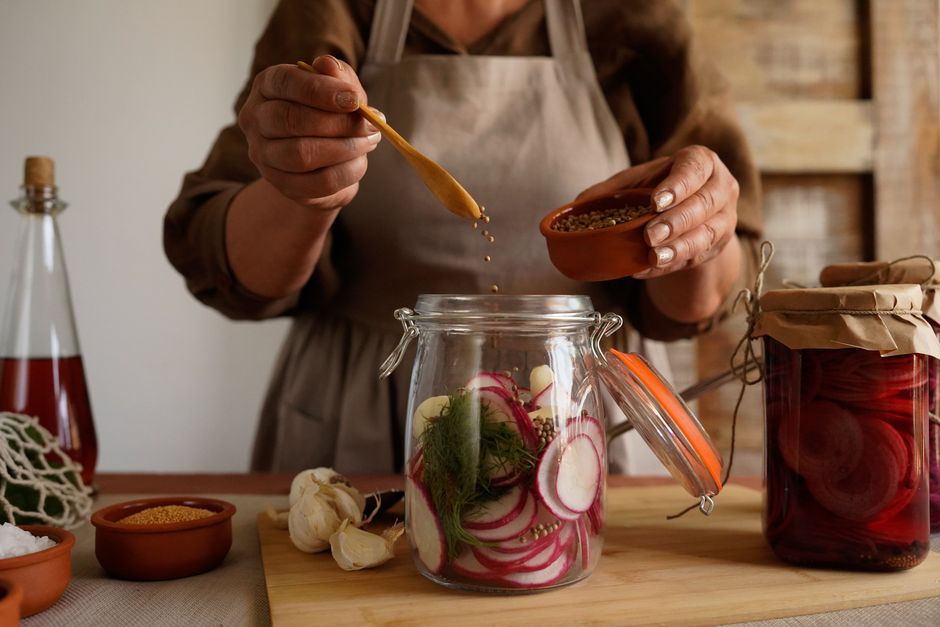
Yes, pickled onions can be a healthy addition to your diet, but it depends heavily on how they are made and how many you eat. They are low in calories and provide a small amount of fiber and antioxidants. The main concern is the sodium content, which can be very high depending on the pickling brine. If you choose a vinegar-based pickle with little added sugar and watch your portion size, pickled onions are a perfectly reasonable food. If you buy the sweet, syrupy kind or eat a whole jar at once, you are mostly eating salt and sugar.
Are Pickled Onions Healthy Compared to Raw Onions?
Raw onions are a nutritional powerhouse. They are rich in vitamin C, vitamin B6, potassium, and quercetin, a strong antioxidant linked to reduced inflammation. Pickling changes this profile in important ways.
The pickling process does destroy some vitamin C because it is sensitive to heat and acid. You lose a meaningful amount of that specific nutrient. However, the quercetin and other flavonoid antioxidants are more stable. Research published in the Journal of Food Science and Technology found that pickling onions in vinegar actually preserves most of their antioxidant activity. The fiber content stays roughly the same.
The biggest trade-off is sodium. Raw onions have almost no sodium. A single pickled onion can contain 100 to 200 milligrams of sodium depending on the brine. That adds up fast if you eat several. So if you compare a raw onion to a pickled onion on a per-gram basis, the raw onion wins for vitamins and mineral density. But pickled onions are not a replacement — they are a condiment. Used in small amounts, the nutritional difference is minor enough that it should not worry most people.
What About the Fermented Kind vs. Vinegar-Pickled Onions?
This is where a lot of confusion happens. There are two different ways to make pickled onions, and they are not the same thing.
Vinegar pickling is the most common method. You heat vinegar, water, salt, and sometimes sugar, then pour it over sliced onions. The acid preserves the onions. This process stops bacterial growth. It does not add probiotics. The health benefit here is mostly that you are eating onions with very few calories and no added fat.
Fermented pickling is different. You submerge onions in a saltwater brine and let them sit at room temperature for days or weeks. Naturally present bacteria consume sugars and produce lactic acid. This is how traditional dill pickles and sauerkraut are made. The result is a live, probiotic food that can support gut health.
Most pickled onions you buy at the store are vinegar-pickled, not fermented. Check the label. If it says “vinegar” as a main ingredient and does not say “live cultures” or “fermented,” it is not a probiotic food. Some people report that fermented onions are easier to digest because the fermentation breaks down some of the complex carbohydrates that cause gas. Strong evidence for this is limited, but it is a reasonable observation based on how fermentation works.
| Type | Preservation Method | Contains Probiotics? | Sodium Level |
|---|---|---|---|
| Vinegar-Pickled | Acid (vinegar) | No | Moderate to high |
| Fermented | Lactic acid (salt brine) | Yes | High |
| Raw Onion | None | No | Very low |
How Much Sodium Is Actually in Pickled Onions?
This is the single biggest health concern. A typical serving of store-bought pickled onions — about one ounce or four to five slices — contains between 150 and 300 milligrams of sodium. The American Heart Association recommends limiting sodium to 2,300 milligrams per day, with an ideal limit of 1,500 milligrams for most adults. If you eat a quarter cup of pickled onions, you have already consumed 10 to 20 percent of your daily sodium budget.
The variation between brands is huge. Some “bread and butter” style pickled onions are loaded with both sugar and salt. A single tablespoon of the liquid alone can contain over 100 milligrams of sodium. If you are someone with high blood pressure, kidney issues, or a doctor has told you to watch salt, you need to check the nutrition label carefully.
You can reduce the sodium by rinsing the pickled onions under cold water before eating them. This removes some of the brine and can cut the sodium by roughly 30 to 40 percent. The flavor will be milder, but it is a practical workaround if you like the texture but cannot have the salt.



Do Pickled Onions Have Any Specific Health Benefits?
Some studies suggest that the compounds in onions may offer benefits even after pickling. Onions contain organosulfur compounds, which are responsible for their pungent smell and some of their health effects. These compounds have been linked to lower blood pressure and reduced risk of certain cancers in population studies. The pickling process does not completely destroy these compounds.
One non-obvious point is that the vinegar itself has a benefit. Vinegar has been shown to modestly reduce the blood sugar spike that happens after a carbohydrate-heavy meal. A study in the Journal of Diabetes Research found that consuming vinegar with a meal lowered post-meal blood glucose levels. So eating pickled onions alongside a sandwich or rice bowl might help smooth out your blood sugar response. This is a small effect, not a replacement for medication, but it is real.
The antioxidants in pickled onions may also support gut health indirectly. Even without live probiotics, the polyphenols in onions can act as prebiotics — food for the good bacteria already living in your gut. This is widely claimed, and the evidence is reasonable though not definitive. Eating a variety of plant-based polyphenols is a well-established strategy for gut health.
What Are the Downsides of Eating Pickled Onions?
The downsides are straightforward and worth knowing.
First, the sugar content in some versions. Sweet pickled onions can have several grams of added sugar per serving. If you are watching your sugar intake for diabetes or weight management, stick to vinegar-only varieties. The ingredient list should not include sugar, high fructose corn syrup, or honey.
Second, the acidity can be hard on your teeth. Vinegar is acidic enough to erode tooth enamel over time if you eat pickled foods frequently. The risk is higher if you eat them alone rather than as part of a meal. Rinsing your mouth with water after eating pickled onions can help. Do not brush your teeth immediately — that spreads the acid around. Wait at least 30 minutes.
Third, some people report digestive discomfort. Onions are high in fructans, a type of fermentable carbohydrate that can cause gas and bloating in people with irritable bowel syndrome or FODMAP sensitivity. Pickling may reduce some of these compounds, but not completely. If raw onions bother your stomach, pickled onions might still cause issues, though some people find them easier to tolerate.
Frequently Asked Questions
Are pickled onions good for weight loss?
Yes, they are very low in calories, with about 5 to 10 calories per serving. They add flavor without significant calories, which can help with portion control.
Can pickled onions cause high blood pressure?
They can contribute to high blood pressure if you eat large amounts because they are high in sodium. One or two servings per day is usually fine for most people.
Are pickled onions a probiotic food?
Only if they are fermented, not vinegar-pickled. Most store-bought pickled onions are made with vinegar and do not contain live probiotics.
How long do pickled onions last in the fridge?
Vinegar-pickled onions last about two to three months in the refrigerator. Fermented ones can last six months or longer if kept cold.
