
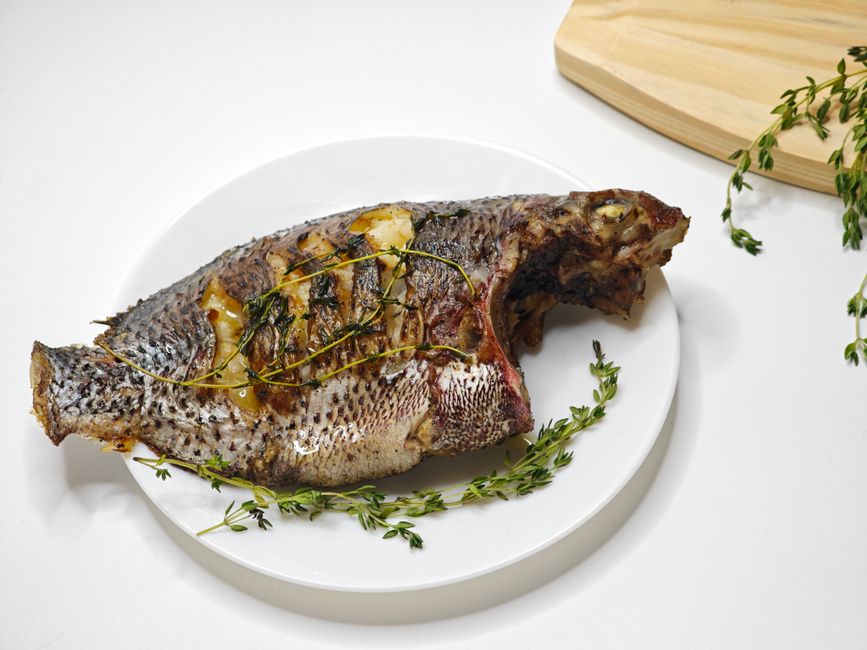
Baked tilapia is a healthy choice for most people. It is a lean source of protein, low in saturated fat, and provides key nutrients like selenium and vitamin B12. The main concern is its omega-6 to omega-3 fatty acid ratio, which is higher than in fatty fish like salmon, but for a balanced diet, baked tilapia is a perfectly safe and nutritious option when prepared without heavy oils or excessive salt.
What Are the Key Nutrients in Baked Tilapia?
A 3.5-ounce (100-gram) serving of cooked tilapia provides about 26 grams of protein and only 128 calories. It contains less than 3 grams of total fat, most of which is the healthier unsaturated kind.
Research from the USDA shows tilapia is an excellent source of selenium, a mineral that supports thyroid function and acts as an antioxidant. You get about 47 micrograms per serving, which is roughly 85% of the daily value for adults. It also provides a good amount of vitamin B12, niacin, and phosphorus.
One non-obvious point: tilapia contains more protein per calorie than many other fish. If you are watching your calorie intake but want to maintain muscle mass, this makes it a very efficient food choice.
Is the Omega-6 to Omega-3 Ratio a Real Problem?
This is the most common criticism of tilapia. Some articles claim the ratio is unhealthy. Let’s look at the numbers.
A study published in the Journal of the American Dietetic Association found that farmed tilapia has about 11 times more omega-6 than omega-3. For comparison, salmon has roughly equal amounts or slightly more omega-3. This has led to warnings that tilapia might promote inflammation.
However, this concern is often overstated for people eating a typical Western diet. The real issue is the overall balance of your diet, not one fish. If you eat tilapia along with plenty of vegetables, whole grains, and occasional fatty fish, the omega-6 content is not a health risk. The American Heart Association still includes tilapia as a heart-healthy protein choice. The problem arises only if tilapia is your only fish and the rest of your diet is high in processed foods and vegetable oils.
What About Contaminants and Farmed Tilapia?
Most tilapia sold in the US is farmed, primarily in China, Indonesia, and Ecuador. Contaminant levels are generally low, but there are legitimate concerns to understand.
The FDA lists tilapia as a “Best Choice” fish, meaning it is low in mercury. A 3-ounce serving contains about 2 to 6 micrograms of mercury, which is far below the limits for pregnant women and children. For comparison, tuna can have 50 to 100 micrograms per serving.
However, some studies have found that farmed tilapia can contain low levels of antibiotics and pesticides used in fish farming. A 2018 report from the Environmental Working Group noted that imported tilapia sometimes has residues, though levels are typically below US safety thresholds. To reduce risk, look for tilapia labeled as “Responsibly Farmed” or from sources certified by the Aquaculture Stewardship Council (ASC).



How Does Baking Affect the Nutrition?
Baking is one of the healthiest ways to cook tilapia. Unlike frying, baking does not add extra fat or create harmful compounds like acrylamide or advanced glycation end-products (AGEs), which form at high temperatures with dry heat.
The key is how you bake it. If you coat the fish in butter or heavy oil, you add saturated fat and calories. A simple preparation with lemon juice, herbs, and a light spray of olive oil keeps the nutrition profile clean. Baking also preserves the protein better than boiling, as there is no leaching into cooking water.
One practical tip: bake tilapia at 375°F (190°C) for 15-20 minutes. This temperature is high enough to kill any bacteria but low enough to avoid forming significant amounts of heterocyclic amines (HCAs), which are potential carcinogens that form when meat is cooked at very high temperatures.
What Are the Risks for Specific Populations?
For most healthy adults, baked tilapia poses no risks. But there are groups who should be more careful.
People with kidney disease should be aware that tilapia is moderately high in phosphorus — about 200 mg per serving. For someone on a renal diet, this could be a concern. A nephrologist can advise on portion control.
People with gout may worry about purines. Tilapia is a moderate-purine food, containing about 50-150 mg of purines per 100 grams. This is lower than sardines or organ meats but higher than most vegetables. One serving is typically fine unless you are in an active flare-up.
Pregnant women can safely eat 2-3 servings per week, as the FDA considers tilapia a low-mercury fish. The main risk during pregnancy is from raw or undercooked fish, not from baked tilapia itself.
Baked Tilapia vs. Other Common Fish: A Quick Comparison
This table shows how tilapia compares to other popular fish for key nutrients and contaminants.
| Fish (3.5 oz cooked) | Calories | Protein (g) | Total Fat (g) | Omega-3 (mg) | Mercury (mcg) |
|---|---|---|---|---|---|
| Baked Tilapia | 128 | 26 | 2.7 | 150 | 2-6 |
| Baked Salmon | 206 | 22 | 12 | 2500 | 5-10 |
| Baked Cod | 105 | 23 | 0.9 | 200 | 8-15 |
| Canned Tuna (light) | 116 | 26 | 0.8 | 250 | 50-100 |
As you can see, tilapia is low in fat and calories but also low in omega-3s compared to salmon. It is not a replacement for fatty fish in your diet, but it is a fine alternative to cod or chicken for lean protein.
What to Avoid When Preparing Baked Tilapia
How you prepare tilapia matters more than the fish itself. Here are common mistakes that reduce its health value.
- Heavy breading or frying: Adding a thick coating of breadcrumbs and deep-frying turns a lean fish into a high-calorie, high-fat meal. Baking with a light dusting of whole wheat breadcrumbs is fine, but avoid commercial frying mixes.
- Excessive salt: Many recipes call for salt or soy sauce, which can push sodium past 500 mg per serving. Use herbs, garlic, lemon, or black pepper instead.
- Overcooking: Cooking tilapia until it is dry and flaky destroys some B vitamins. Cook just until it flakes easily with a fork, which is usually about 145°F internal temperature.
- Pairing with unhealthy sides: Serving tilapia with white rice and buttered vegetables adds empty carbs and saturated fat. Pair it with quinoa, roasted vegetables, or a green salad to keep the meal balanced.
Is Baked Tilapia Healthy Nutrition And Risks Worth the Hype?
Some health gurus have called tilapia “worse than bacon” because of the omega-6 ratio. That claim is misleading and not supported by evidence. Bacon is high in saturated fat and sodium, while tilapia is lean and nutrient-dense.
Research published in Nutrients in 2020 reviewed the health effects of tilapia consumption and found no evidence it causes inflammation in healthy people. The study noted that tilapia is a good source of selenium and protein, and that the omega-6 content is only a concern if your entire diet is already high in omega-6 fats from processed foods.
The bottom line: baked tilapia is a healthy, affordable, and sustainable protein. It is not a superfood, and it is not a dangerous food. It is simply a good choice for most people, especially when baked simply and paired with vegetables.
Frequently Asked Questions
Is baked tilapia healthy for weight loss?
Yes, it is low in calories and high in protein, which helps you feel full. A 3.5-ounce serving has only 128 calories and 26 grams of protein.
Can I eat baked tilapia every day?
It is safe for most people to eat several times per week, but variety is better. Rotate with salmon, cod, or sardines for a wider range of nutrients.
Does baked tilapia have mercury?
Very little. The FDA lists tilapia as a “Best Choice” low-mercury fish, with about 2-6 micrograms per serving, far below safety limits.
Is farmed tilapia safe to eat?
Yes, when sourced responsibly. Look for ASC certification or labels indicating responsible farming practices to minimize contaminant risks.
