
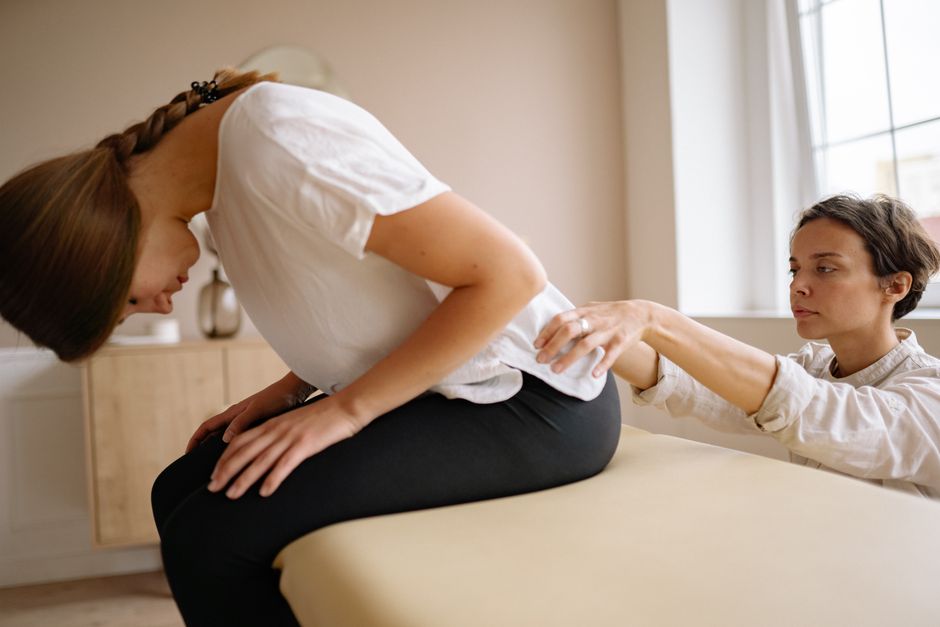
Back pain in early pregnancy is common, and in most cases it is not a sign that something is wrong. Roughly half of pregnant women report some back pain at some point, and for many it starts in the first trimester — often before the belly is visibly larger.
The cause is usually a mix of hormonal and physical changes, not injury. But “common” is not the same as “always harmless.” A few specific symptoms need urgent medical attention. Knowing the difference matters.
Is back pain normal during early pregnancy?
Yes. Back pain is a normal and expected symptom for many women in the first trimester.
The body begins changing almost immediately after conception. Levels of the hormone relaxin rise, which loosens ligaments throughout the body — including those that support the spine and pelvis. That added looseness can make the lower back feel unstable or achy.
At the same time, blood volume increases and the uterus starts to grow, shifting the center of gravity. Even small postural changes can put new strain on muscles that are not used to it.
There is also a less obvious factor. Early pregnancy often brings fatigue, constipation, and bloating. Each of these can change how you sit, stand, and move — and the lower back absorbs the difference.
What is not normal is severe, sudden, or one-sided pain. More on that below.
What causes back pain in the first trimester?
The first trimester is a hormonal transition more than a mechanical one. The uterus is still small. So the pain at this stage is driven mostly by chemistry, not weight.
Relaxin is the main player. This hormone softens the ligaments of the pelvis so the birth canal can eventually widen. It does not wait until the third trimester. Levels climb early, and the loosening affects the whole pelvic ring and lower spine.
Progesterone also rises. It relaxes smooth muscle, which slows digestion and can cause constipation. A backed-up bowel puts pressure on the lower back and pelvis.
Postural shifts happen gradually. As the abdomen changes, the lower back curve (lordosis) deepens. Muscles that were not working hard before now have to work more.
Stress and sleep changes are real contributors too. Poor sleep and tension both lower the threshold at which ordinary aches become noticeable.
It helps to know that the type of pain matters more than its presence. A dull, symmetrical ache in the lower back or across the pelvis is typical. Sharp, stabbing, or one-sided pain is not.
How is early pregnancy back pain different from later pregnancy pain?
Later pregnancy back pain is largely mechanical. Early pregnancy back pain is largely hormonal. That distinction shapes how each is managed.
By the second and third trimesters, the growing uterus shifts weight forward. The lower back muscles must counterbalance that weight all day. This is why back pain often worsens as pregnancy progresses and why posture and support become more important later.
In the first trimester, the belly is not yet the problem. The ligaments are simply looser, and the body is adjusting. This is why some women feel back pain very early — sometimes before a positive test — and others feel nothing until much later. Both are normal.
One practical point: because ligaments are already loose in early pregnancy, activities that demand sudden twisting or heavy lifting carry more risk than usual. This is not a reason to stop moving. It is a reason to move carefully.
-
 Is Lower Back Pain an Early Sign of Pregnancy? The Real Answer
 -
When Does Back Pain Begin in Pregnancy? The Real Answer
-
When Should I Worry About Back Pain in Pregnancy? The Real Answer
-
How to Help Lower Back Pain During Pregnancy? Tips That Actually Work
-
Joint Genesis Reviews. BioDynamix Supplement Legit Or Scam?





When is back pain during early pregnancy a warning sign?
Most early pregnancy back pain is not dangerous. But certain patterns require immediate medical care, and it is important to know them.
Seek urgent care if back pain comes with any of the following:
- Severe, cramping pain in the lower abdomen or back that does not ease
- Vaginal bleeding or fluid leaking
- Fever, chills, or burning during urination
- Pain that is sharp, one-sided, or steadily worsening
- Dizziness, fainting, or a racing heartbeat
- Shoulder pain combined with abdominal pain
These symptoms can point to conditions that are not related to normal pregnancy changes — including urinary tract infections, kidney problems, or, rarely, an ectopic pregnancy. Ectopic pregnancy is a medical emergency, and back or abdominal pain with bleeding or dizziness is a reason to call a doctor right away, not to wait.
Urinary tract infections deserve a specific mention. They are more common in pregnancy, and they do not always cause obvious urinary symptoms. Back pain with fever or burning is a reason to get checked promptly.
If you are unsure whether your pain is normal, call your provider. That call is never a waste of time.
What helps relieve back pain in early pregnancy?
For typical early pregnancy back pain, the goal is management, not elimination. Most strategies reduce discomfort rather than remove it entirely. That is a realistic expectation.
What tends to help:
- Gentle movement. Walking, swimming, and prenatal yoga are generally considered safe for most women with uncomplicated pregnancies. Staying still often makes pain worse.
- Heat. A warm (not hot) compress or a warm bath can relax tight muscles. Avoid hot tubs and saunas, which raise core body temperature.
- Supportive shoes. Flat, cushioned shoes reduce strain on the lower back compared with high heels.
- Sleep position. Sleeping on your side with a pillow between your knees can take pressure off the lower back.
- Posture checks. Sitting with feet supported and standing with weight evenly balanced both help.
What to be cautious about:
Medication choices in pregnancy are a decision for your provider, not a general article. Some over-the-counter pain relievers are not recommended at certain points in pregnancy. Do not start or continue any medication without asking your doctor or midwife first.
Physical therapy is a reasonable option and is often underused. A therapist trained in prenatal care can teach specific exercises for the muscles that support the spine and pelvis. Some clinicians recommend it early rather than waiting for pain to worsen.
The evidence for most specific exercises is modest, but movement in general is well supported for managing pregnancy-related back pain. The exact routine matters less than staying active within comfort.
Does back pain in early pregnancy mean miscarriage?
No. Back pain on its own is not a sign of miscarriage.
Miscarriage is common in early pregnancy, and it can cause cramping and back pain — but it almost always comes with vaginal bleeding or strong, persistent cramping. Back pain alone, without bleeding or severe cramps, does not indicate a miscarriage.
This is one of the most common worries women have, and it is understandable. If you are bleeding or having pain that feels like strong menstrual cramps, contact your provider. If you have mild back pain and no bleeding, there is no reason to assume the worst.
No symptom can reliably predict miscarriage on its own. Only a medical evaluation can confirm what is happening.
When should you call your doctor about early pregnancy back pain?
Call your provider any time back pain is severe, sudden, one-sided, or paired with bleeding, fever, or urinary symptoms. Those are the situations where a prompt check matters.
You should also call if the pain is interfering with sleep or daily activity, or if it is getting worse instead of better over days.
For mild, steady, symmetrical back pain with no other symptoms, there is usually no need for urgent care. Mention it at your next prenatal visit so your provider has the full picture.
The general rule: trust your instincts. If something feels wrong, it is worth a call. Providers expect these questions, and asking them is part of good prenatal care.
Frequently Asked Questions
Is back pain normal at 4 weeks pregnant?
Yes, back pain can be normal this early. Hormonal changes begin soon after conception, and ligament loosening can cause aches before any visible physical change.
Can early pregnancy cause lower back pain before a missed period?
It can, though it is not a reliable sign of pregnancy on its own. Many things cause back pain, and only a pregnancy test can confirm pregnancy.
When should I worry about back pain in early pregnancy?
Worry is warranted if back pain is severe, one-sided, or comes with bleeding, fever, or burning during urination. Those symptoms need prompt medical attention.
Does back pain in early pregnancy mean something is wrong with the baby?
No. Ordinary back pain is not a sign that anything is wrong with the pregnancy. Only severe pain or pain with bleeding or fever requires urgent evaluation.
