
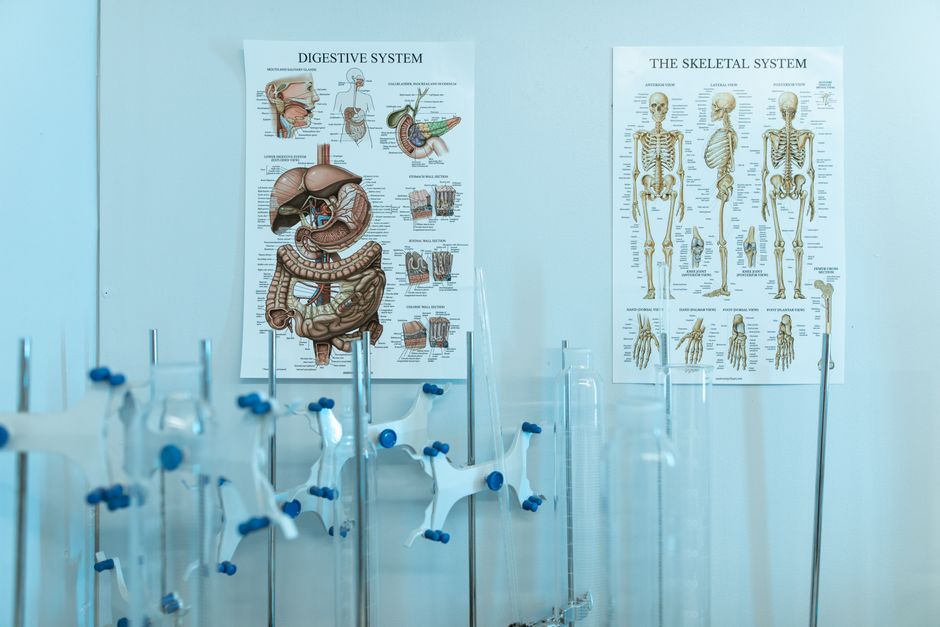
The muscular system is the engine behind every bite you take. Without muscles, food would sit in your mouth, stomach, and intestines without moving anywhere. Muscles push food through your digestive tract, mix it with digestive juices, and control when waste leaves your body. Some of these muscle actions you control on purpose, like chewing. Others happen automatically, like the waves that move food through your intestines. Together, these muscle movements turn a meal into nutrients your body can use.
How Do Muscles Move Food Through the Digestive Tract?
The digestive tract is a long tube made mostly of smooth muscle. Smooth muscle is a type of muscle you cannot control consciously. It lines your esophagus, stomach, small intestine, and large intestine. This muscle contracts and relaxes in coordinated waves called peristalsis.
Peristalsis is the main way food moves forward. A wave of contraction squeezes the tube behind a lump of food, pushing it ahead. The muscle ahead of the food relaxes to receive it. This happens over and over. Peristalsis starts in the esophagus when you swallow and continues through the entire tract until waste leaves the body.
Without peristalsis, digestion stops. Conditions that damage smooth muscle or the nerves that control it can cause serious problems. Gastroparesis is one example. The stomach muscles work too slowly or not at all. Food sits in the stomach for hours or days, causing nausea, bloating, and poor nutrition.
What Role Do Voluntary Skeletal Muscles Play in Digestion?
You control the first steps of digestion with skeletal muscles. These are the muscles attached to your bones. Chewing uses the masseter and temporalis muscles to grind food into smaller pieces. That increases the surface area for enzymes to work on later.
Swallowing also starts with voluntary muscle action. Your tongue pushes a bolus of chewed food to the back of your throat. Then the swallow reflex takes over, but you must choose to start it. The muscles of the throat and upper esophagus are partly skeletal muscle, giving you some control during the first second of swallowing.
The pelvic floor muscles also play a role at the very end of digestion. These skeletal muscles help you hold stool until you are ready to have a bowel movement. Weak pelvic floor muscles can lead to incontinence or trouble emptying the rectum completely.
How Does the Muscular System Help Break Down Food in the Stomach?
Stomach muscles do more than push food along. They churn it. The stomach has three layers of smooth muscle that run in different directions. One layer runs lengthwise, one runs around the stomach, and one runs diagonally. When these layers contract together, they produce a mixing action.
This mechanical digestion breaks food into smaller pieces without using chemicals. It also mixes the food with stomach acid and digestive enzymes. The result is a semi-liquid mix called chyme. Chyme is easier for the small intestine to process than chunks of solid food.
The stomach muscle contractions are strongest after a meal. They gradually increase in strength and frequency. If the stomach muscles do not contract properly, chyme does not form well. Food stays too solid and digestion in the small intestine suffers.

What Muscles Control the Release of Digestive Substances?
Sphincters are circular muscles that act like one-way doors between different parts of the digestive tract. They open and close to control the flow of food, liquids, and waste. Several important sphincters rely on smooth muscle.
- Lower esophageal sphincter: This muscle sits at the junction of the esophagus and stomach. It stays tight to keep stomach acid from flowing backward into the esophagus. When it relaxes too often or is weak, acid reflux occurs.
- Pyloric sphincter: Located between the stomach and the small intestine. It opens in small amounts to let chyme enter the duodenum. If it stays tight, the stomach cannot empty properly.
- Ileocecal valve: Between the small and large intestines. It prevents waste from moving backward into the small intestine.
- Anal sphincters: Both smooth and skeletal muscle control the anus. The internal anal sphincter is smooth muscle and works automatically. The external anal sphincter is skeletal muscle and you control it voluntarily.
Each of these muscle doors must open and close at the right time. Problems with these sphincters can cause reflux, vomiting, constipation, or incontinence.
How Does the Muscular System Help the Digestive System Function?
The digestive system cannot function without muscle activity at every stage. From the moment food enters your mouth until waste leaves your body, muscle contractions are the driving force. The muscular system provides the physical power needed to move contents through a 30-foot-long tract.
Muscle activity also helps regulate how fast digestion happens. For example, strong peristalsis in the small intestine pushes chyme along at a rate that allows nutrients to be absorbed. In the large intestine, slower peristalsis allows water to be reabsorbed from waste. Muscles fine-tune the pace of digestion.
Even the gallbladder relies on muscle contractions. When you eat a fatty meal, the gallbladder squeezes bile into the small intestine to help break down fat. Without that muscle contraction, fat digestion would be inefficient.
Can Weak Muscles Affect Digestion?
Yes, weak muscles anywhere in the digestive system can slow or stop digestion. This can happen for several reasons. Nerve damage from diabetes can disrupt the signals that tell stomach muscles to contract. Aging can weaken smooth muscle throughout the tract. Some medications also slow muscle contractions in the intestines.
Weakness in skeletal muscles can also cause problems. People with multiple sclerosis or Parkinson disease may struggle to chew or swallow safely. Weak pelvic floor muscles after childbirth or with age can make it hard to control bowel movements.
Some treatments can help. For motility problems, doctors may prescribe medications that stimulate smooth muscle contractions. In severe cases, a pacemaker-like device can be placed on the stomach to help it empty. Physical therapy for the pelvic floor can strengthen those muscles and improve bowel control.
How Does Exercise Influence Your Digestive Muscles?
Regular physical activity can support the muscle function of your digestive tract. Moderate exercise like walking or cycling increases blood flow to the digestive organs and stimulates peristalsis. Many people find that light activity after a meal helps reduce bloating and gas.
Aerobic exercise may also lower your risk of constipation. When you move your body, the intestines move more. This seems to help waste pass through the colon faster. Some research suggests that regular exercisers have a lower risk of colon cancer, though the reasons are not completely clear.
However, intense exercise right after a large meal can be uncomfortable. Blood flow shifts away from the digestive tract to working muscles. This can slow digestion and cause stomach upset. It is generally best to wait one to two hours after a meal before vigorous exercise.
For people with digestive conditions like irritable bowel syndrome, exercise can be tricky. Some find it helps, others find it triggers symptoms. Starting slowly and listening to your body is the safest approach.
When Should You See a Doctor About Digestive Muscle Problems?
Some symptoms point toward a problem with the muscles of digestion. These include chronic bloating, feeling full quickly after eating small amounts, nausea after meals, or ongoing constipation that does not respond to diet changes. Difficulty swallowing is another warning sign.
Unexplained weight loss or vomiting undigested food hours after eating can signal gastroparesis or other motility disorders. A doctor can run tests to check how well your stomach empties and whether peristalsis is normal. These tests include gastric emptying studies and esophageal manometry.
Do not assume that all digestive symptoms are from muscle problems. Many other conditions cause similar symptoms, including ulcers, food intolerances, and tumors. A proper diagnosis is essential before starting any treatment for digestive muscle issues.
Frequently Asked Questions
Do I control the muscles that move food through my body?
No, the muscles that push food through the esophagus, stomach, and intestines are involuntary smooth muscles. You control only the skeletal muscles used for chewing, starting to swallow, and holding stool.
Can weak stomach muscles cause weight loss?
Yes, when stomach muscles contract too slowly, a condition called gastroparesis can develop. This causes early fullness, nausea, and poor nutrient absorption, which can lead to weight loss.
Does walking after a meal help digestion?
Light walking stimulates peristalsis and may reduce bloating. However, brisk or intense exercise right after eating can divert blood flow away from the digestive tract and slow digestion.
How do I know if my digestive muscles are working properly?
Normal digestion without bloating, nausea, reflux, or irregular bowel movements generally indicates healthy muscle function. If you have persistent symptoms, a doctor can perform motility tests to check your digestive muscles.
