
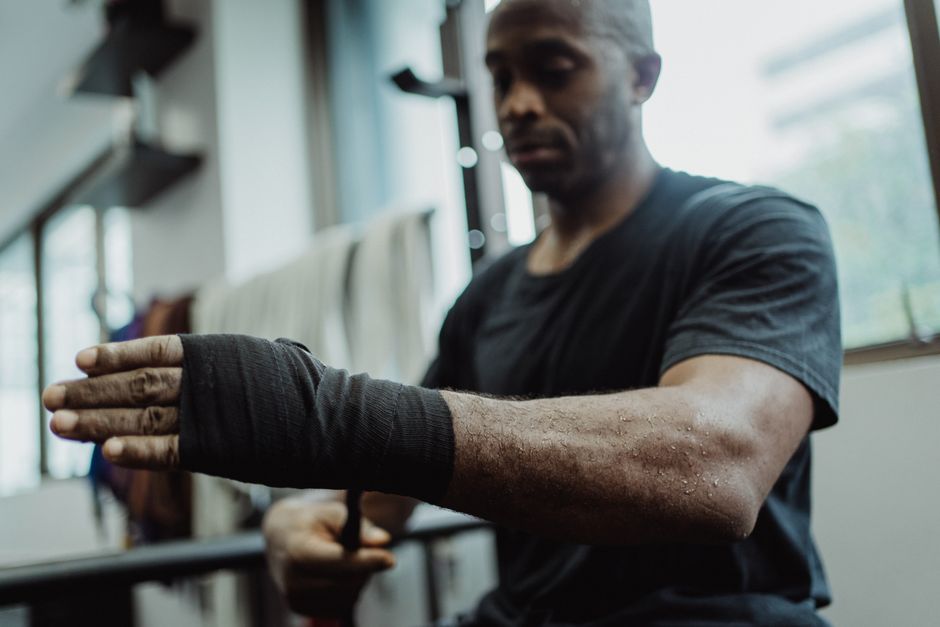
Wrapping your hands correctly before boxing is not optional. It is the difference between a solid training session and a painful wrist injury. The goal is to protect your knuckles, support your wrist, and keep your thumb secure. A proper wrap takes about two minutes once you know the pattern. This guide walks you through the standard method step by step, with tips for getting the tightness right every time.
Why Do You Need Boxing Wraps?
Your hands have dozens of small bones and fragile joints. Punches land with force that travels straight through your knuckles and into your wrist. Without support, that force can sprain ligaments or even break a metacarpal bone. Boxing wraps add a layer of compression that holds everything in place.
Wraps also protect your skin. The leather of a heavy bag rubs against your knuckles with every punch. Raw skin opens up fast. A wrap keeps that friction off your hands. It also absorbs sweat, which keeps your gloves from smelling like a gym locker.
Gloves alone are not enough. Gloves cushion the impact, but they do not stabilize your wrist the way a wrap does. The laces or Velcro on a glove hold it on your hand, not your wrist joint. That is the wrap’s job.
What You Need Before You Start
Standard boxing wraps are 180 inches long, or about 4.5 meters. Some brands sell 120-inch versions for smaller hands. For most adults, 180 inches gives you enough material to wrap each hand fully with a few layers over the knuckles.
Choose wraps made of cotton or a cotton-synthetic blend. Cotton breathes and absorbs sweat. Mexican-style wraps have a bit of elastic stretch, which some people find easier to get tight. Velcro closures at the end keep everything secured.
Do not use elastic bandages from a first aid kit. They compress too much and can cut off circulation. Boxing wraps are designed for this specific purpose.
Step-by-Step: How To Wrap Boxing Wraps
Start with your hand relaxed and fingers spread slightly. Place the loop of the wrap over your thumb. The loop is the small fabric circle at the very start of the wrap. Pull the rest of the material across the back of your hand toward your pinky side.
Wrap around your wrist three times. Keep it snug but not tight enough to pinch. Your wrist should feel supported, not strangled. The wrap should sit just above the wrist bone, not over it.
Bring the wrap across the back of your hand, between your thumb and index finger. Pass it around your palm once. This anchors the wrap and starts building the base layer.
Now wrap your knuckles. Go around the knuckles three times. Keep the wrap flat against your hand. Wrinkles create pressure points that hurt when you punch. Each pass should overlap the previous one by about half the wrap’s width.
Next, wrap between your fingers. Bring the wrap down between your pinky and ring finger, around the back of your hand, then between your ring and middle finger, around the back, and finally between your middle and index finger. This creates the X pattern across the back of your hand. It keeps the layers from shifting during a workout.
Return to your wrist and wrap twice more. This locks the finger wraps in place and adds extra wrist support.
Finish by wrapping your thumb. Bring the wrap across the back of your hand, over your thumb, then around the thumb and across the palm. You want the thumb held close to the hand, not wrapped so thick that you cannot close your fist.
Secure the Velcro at your wrist. Make a fist. The wrap should feel firm but your fingers should still move freely. If your fingertips turn white or tingle, it is too tight. Start over.





Common Mistakes and How to Fix Them
The most common mistake is wrapping too loose. A loose wrap shifts during punching and offers zero protection. You will feel the difference on your first hard punch. The wrap should not slide even a centimeter when you make a fist.
The second most common mistake is wrapping too tight around the wrist. This restricts blood flow and can cause numbness. Your hand should feel supported, not compressed. If your hand goes numb during a round, the wrap is too tight.
Another mistake is skipping the finger wraps. Some people think the knuckle wraps are enough. They are not. The X pattern between your fingers keeps the entire wrap stable. Without it, everything bunches up in your palm.
Wrapping the thumb too thick is also common. A thick thumb wrap makes it hard to close your fist fully. You lose punching power and risk jamming your thumb. Keep the thumb wrap thin and simple.
How Tight Should Boxing Wraps Be?
Tightness is a balance. The wrap needs to be snug enough to stay in place through a full workout. It should also be loose enough that your hand stays comfortable and your blood flows normally.
A good test is to make a fist after wrapping. The wrap should feel like a firm handshake, not a squeeze. Your fingers should close fully without resistance. When you open your hand, the wrap should not feel like it is cutting into your skin.
Different people need different tightness. Someone with skinny wrists needs a tighter wrap to feel secure. Someone with thick hands needs less tension to avoid cutting circulation. Learn what feels right for your hand. It takes a few sessions to find your ideal tightness.
Your wraps will loosen slightly during the first minutes of training. Cotton stretches a little as it warms up. If the wrap feels perfect at the start, it may feel slightly loose after ten minutes. Some boxers compensate by wrapping slightly tighter initially. Just do not go so tight that your hand goes numb.
How Long Do Boxing Wraps Last?
Quality cotton wraps last about six months with regular training. Wash them after every few sessions. Sweat breaks down the fabric and bacteria cause the material to smell. Most wraps are machine washable. Use cold water and air dry. Do not put them in the dryer, heat shrinks cotton and ruins the fit.
Replace your wraps when the Velcro stops sticking firmly, the fabric thins out, or the edges fray. A worn wrap does not provide the same support as a fresh one. The cost of new wraps is far less than the cost of a hand injury.
Some brands make quick-wrap gloves that slip on like fingerless gloves. They are faster to put on but provide less adjustable support. Most coaches recommend traditional wraps for serious training.
Frequently Asked Questions
How tight should boxing wraps feel?
Firm but comfortable, like a solid handshake. If your fingers tingle or turn white, it is too tight and you need to rewrap.
Can I use boxing wraps without gloves?
You can, but wraps alone do not provide enough padding for heavy bag work. They protect bones and joints but not the skin on your knuckles. Use gloves for any punching.
How often should I wash my boxing wraps?
Wash them after every two or three training sessions. Sweat and bacteria build up quickly, causing odor and breaking down the fabric.
Do I need 120-inch or 180-inch wraps?
Most adults need 180-inch wraps for full coverage. The 120-inch size works for smaller hands or people who prefer a thinner wrap. Try both if you can, the right length depends on your hand size.
Learning how to wrap boxing wraps takes practice. The first few attempts will feel clumsy. That is normal. After a week of training, the motions become automatic. Your hands will thank you on every punch.
