
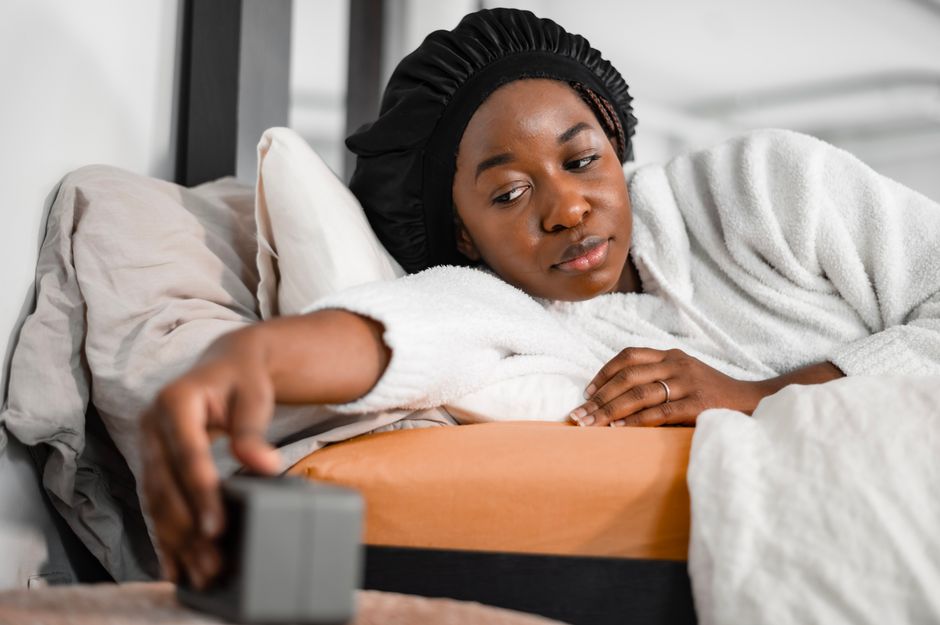
Waking up early after too little sleep is not about willpower. It comes down to timing your alarm to your body clock, getting light into your eyes fast, and removing the friction that keeps you in bed. The nine tips below cover what actually helps, what only feels like it helps, and where the honest limits of the evidence sit.
Why Is Waking Up Early After Little Sleep So Hard?
Two separate systems decide how you feel at 6 a.m. One is how much sleep you got. The other is where your internal clock sits at that moment.
The circadian system runs on a roughly 24-hour cycle and is set mainly by light exposure. When your alarm goes off during the biological night — the window when your body is still producing melatonin and your core temperature is near its lowest — you get what researchers call sleep inertia. That is the grogginess, slow thinking, and heavy limbs you feel in the first minutes after waking. Sleep inertia is well documented. It is usually worst when you wake from deep sleep or from a very short night.
Sleep pressure is the second system. It builds the longer you stay awake, driven in part by a compound called adenosine that accumulates in the brain. Caffeine works by blocking adenosine receptors, not by removing adenosine. That distinction matters later in this article.
Here is the part most people miss. You cannot fully override either system with discipline. You can work with them. Every tip below is really about shifting your clock, blunting sleep inertia, or reducing the friction between deciding to get up and actually standing.
How To Wake Up Early With Little Sleep: 9 Tips
1. Get bright light into your eyes within minutes of waking. Light is the strongest signal for resetting the circadian clock. Outdoor light even on a cloudy day is far brighter than typical indoor lighting. Some studies suggest morning light exposure helps advance the clock and improve alertness, though the effect depends on timing, duration, and how much sleep you got. Step outside or sit near a bright window as soon as you can.
2. Put your alarm across the room. This is not a trick so much as a removal of friction. If you must stand up to silence it, you have already changed your posture and started moving. Small behavioral barriers work better than resolve.
3. Set one alarm, not five. Repeated snoozing fragments the last stretch of sleep and can make you feel worse, not better. The evidence here is not strong, but the practical argument is simple: each snooze restarts the waking process without giving you useful sleep.
4. Drink water first. You wake up mildly dehydrated after a night without fluids. Drinking water does not magically restore alertness, but dehydration can worsen fatigue and headache. This is a low-cost habit with no real downside.
5. Delay caffeine by 30 to 60 minutes. Caffeine blocks adenosine receptors. Taking it immediately on waking may blunt some of the natural cortisol-driven wake-up response, though this is a commonly repeated idea rather than a firmly established finding. Some clinicians recommend waiting a short while. The bigger point is keeping total caffeine earlier in the day so it does not interfere with the next night’s sleep.
6. Move your body. A short walk, a few stretches, or a couple of minutes of light activity raises core temperature and increases blood flow. Exercise reliably increases alertness. It will not replace lost sleep, but it can shorten the foggy window.
7. Eat something small if you normally skip breakfast. A light meal with protein and fiber may help stabilize energy compared with nothing at all. The evidence on breakfast and alertness is mixed, so treat this as optional rather than essential.
8. Keep your wake time consistent, even after a short night. This is the most important long-term tip. A stable wake time anchors your circadian rhythm. Sleeping in for hours on a bad morning shifts your clock later and makes the next early wake harder. Consistency is what makes early rising feel less brutal over time.
9. Protect the following night. One short night is survivable. Two or three in a row is where performance, mood, and judgment clearly suffer. Go to bed earlier that evening rather than trying to power through on stimulants.
Does Caffeine Actually Help or Just Delay the Crash?
Caffeine improves alertness and reaction time, and this is one of the better-established findings in the field. It works by blocking adenosine receptors in the brain. Adenosine keeps building while caffeine is present, so when the caffeine clears, the accumulated pressure can hit at once.
That is why a late-afternoon coffee can wreck the next morning. Caffeine has a half-life of roughly five hours in most adults, though this varies widely between people and is longer in some. A cup at 4 p.m. can still be measurably active at 9 p.m.
Practical direction: keep caffeine to the morning, use it as a bridge rather than a substitute for sleep, and do not increase the dose to chase the same effect. Tolerance to caffeine’s subjective effects develops with regular use.





Can You Train Your Body to Wake Up Earlier?
Yes, to a degree. The circadian clock shifts in response to consistent light, meal timing, and activity patterns. Advancing your wake time gradually — by 15 to 30 minutes every few days rather than an hour at once — is generally easier on the system than a sudden jump. This gradual approach is common clinical advice, though individual responses vary.
Morning light is the key lever. Evening light is the opposite lever. Bright light at night, especially from screens held close to the face, can delay melatonin release and push your clock later. Dimming lights in the hour or two before bed supports an earlier natural wake.
Be realistic about the ceiling. If your genetics and chronotype lean strongly toward being a night owl, you can shift earlier, but you may never feel as natural at 5 a.m. as someone with an early chronotype. That is biology, not a character flaw.
What Actually Backfires When You Are Sleep Deprived?
Several popular tactics make things worse.
- Sleeping in for hours on weekends. This shifts your clock later and creates a version of jet lag on Monday. It is sometimes called social jet lag.
- Relying on energy drinks with high caffeine plus sugar. The short boost is often followed by a sharper dip.
- Using alcohol to fall asleep. Alcohol can shorten the time it takes to fall asleep, but it fragments sleep later in the night and reduces REM sleep. You wake less restored.
- Pushing through many short nights in a row. Chronic sleep restriction impairs attention and reaction time in ways people often underestimate in themselves.
- Assuming you have adapted. Feeling normal after repeated short sleep does not mean performance is normal. Studies of sleep restriction have found that people rate their own alertness higher than their measured performance warrants.
How Much Sleep Do You Actually Need?
Most adults need seven or more hours of sleep per night for good health, based on broad consensus from sleep and medical organizations. Individual needs vary, and some people genuinely function well on slightly less. Very few do well on consistently less than six.
Waking up early with little sleep is a short-term tactic, not a lifestyle. It can get you through a rough morning. It cannot replace the sleep your brain and body need for memory, immune function, metabolism, and mood regulation.
If you are regularly sleeping too little because of work, caregiving, or a sleep disorder, the tips above manage symptoms rather than fix the cause. Persistent difficulty sleeping, loud snoring, gasping at night, or daytime sleepiness despite adequate time in bed are reasons to talk with a clinician.
When Should You Talk to a Doctor About Sleep?
Short-term sleep loss from a deadline or a newborn is normal. Ongoing problems are not something to push through indefinitely.
Speak with a clinician if you snore heavily, wake gasping, fall asleep during the day despite enough time in bed, or feel unrested most mornings for weeks. These can point to conditions such as sleep apnea or insomnia disorder, which have specific treatments. No set of morning tips substitutes for a diagnosis.
Frequently Asked Questions
How can I wake up early if I only slept a few hours?
Get bright light into your eyes within minutes, stand up to silence a single alarm, and drink water. These reduce sleep inertia but do not replace the sleep you lost.
Does snoozing make you more tired?
Repeated snoozing fragments the last stretch of sleep and can leave you feeling worse. The evidence is not strong, but setting one alarm is generally the better habit.
Is it bad to sleep in on weekends?
Sleeping in for hours shifts your body clock later and makes Monday mornings harder. A modest extra hour is usually less disruptive than a long lie-in.
Can caffeine replace lost sleep?
No. Caffeine improves alertness by blocking adenosine, but it does not restore the functions sleep provides. It also lingers for hours and can disrupt the next night.
