
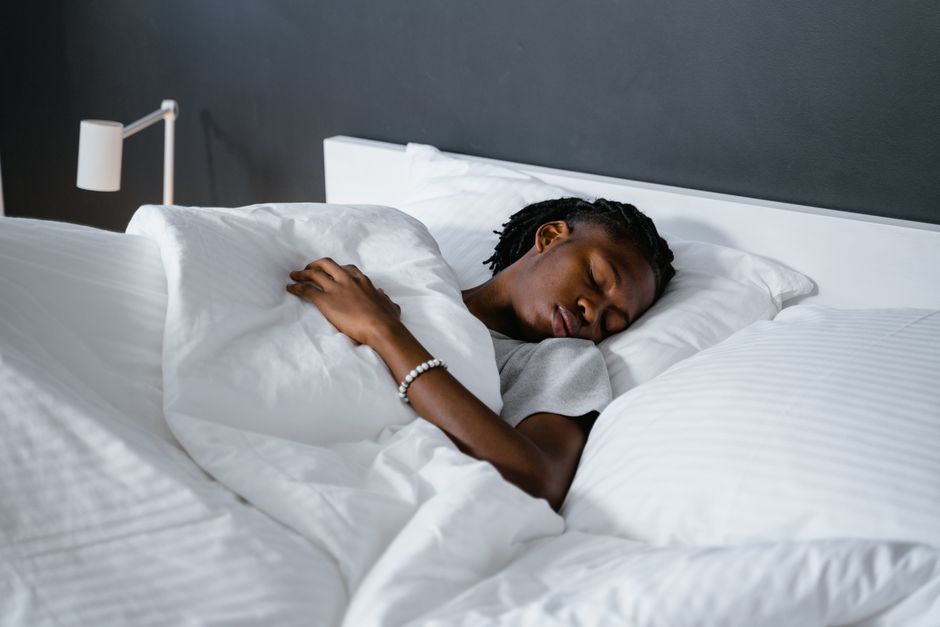
You cannot force sleep to happen. But you can create the conditions your brain and body need to fall asleep and stay asleep. The science points to a handful of things that matter most: a consistent sleep and wake schedule, morning light exposure, a cool dark room, limited caffeine and alcohol close to bedtime, and a wind-down period before bed. These are not tricks. They work with your circadian rhythm and sleep drive, the two systems that regulate when you feel sleepy and when you wake up.
Most sleep advice online falls into two camps. Some of it is solid and backed by decades of research. Some of it is marketing dressed up as science. This article separates the two. You will find what the evidence supports, what remains uncertain, and what you can reasonably try tonight.
How Does Your Body Decide When To Sleep?
Two separate systems control your sleep. Understanding them makes every other tip on this page make more sense.
The first is your circadian rhythm. This is a roughly 24-hour internal clock that runs in nearly every cell of your body. It is set primarily by light exposure, especially light hitting your eyes in the morning. When light enters your retina, it signals a region of the brain called the suprachiasmatic nucleus, which helps align your internal clock with the outside world. Morning light tells your body it is daytime. Darkness in the evening signals that night is coming.
The second system is sleep drive, sometimes called sleep pressure. A chemical called adenosine builds up in your brain the longer you are awake. The more adenosine accumulates, the sleepier you feel. Sleep clears it out. This is why you feel more tired after being awake for 18 hours than after 12.
These two systems work together. Your circadian rhythm determines the window when sleep comes easily. Your sleep drive determines how strongly you feel the pull toward sleep within that window. Problems with either system can make falling asleep or staying asleep harder.
This is also why sleeping in dramatically on weekends can backfire. It weakens the signal from your circadian clock and reduces sleep pressure at your usual bedtime.
What Are The Most Effective Science Backed Tips For Better Sleep?
The strategies below have the strongest research support. None of them are complicated. Consistency matters more than perfection.
Keep a consistent sleep and wake schedule
Going to bed and waking up at roughly the same time every day, including weekends, is one of the most consistently supported habits in sleep research. A regular schedule strengthens your circadian rhythm, which makes it easier to fall asleep and wake up naturally.
If you need to adjust your schedule, shift it gradually. Moving bedtime earlier by 15 to 30 minutes every few nights is generally easier on your system than jumping two hours at once.
Get morning light within an hour of waking
Natural daylight in the morning is a powerful signal for your circadian clock. Even 10 to 15 minutes outdoors on a bright morning helps. On cloudy days, you may need longer. Indoor lighting is usually far dimmer than outdoor light, even on an overcast day.
If you cannot get outside, sitting near a bright window helps. Light therapy lamps are sometimes used for circadian rhythm disorders, though evidence for their benefit in general sleep improvement is stronger for specific conditions like seasonal affective patterns than for everyday insomnia.
Keep your bedroom cool, dark, and quiet
Core body temperature needs to drop slightly for sleep to begin. A bedroom that is too warm can interfere with this process. Most sleep researchers suggest a room temperature somewhere in the mid-to-upper 60s Fahrenheit, though individual comfort varies and no single number works for everyone.
Darkness matters because light exposure at night can suppress melatonin, the hormone that helps signal sleep timing. Blackout curtains or an eye mask can help if your room is not dark enough. For noise, steady background sound like a fan is often easier to sleep through than unpredictable sounds.
Limit caffeine and alcohol
Caffeine blocks adenosine, the chemical that builds sleep pressure. Its effects can last for many hours. Caffeine has a half-life of roughly five to six hours in most adults, meaning a significant amount can still be in your system long after that afternoon coffee. Individual differences are large, and genetics, medications, and pregnancy all affect how quickly your body clears it.
Alcohol is more complicated than most people realize. It can make you feel sleepy at first, but it disrupts sleep architecture later in the night. It suppresses REM sleep early on and causes more awakenings as it metabolizes. Many people who drink before bed report waking at 3 or 4 in the morning and struggling to fall back asleep.
Build a wind-down period
Your brain does not switch from full engagement to sleep instantly. A 30 to 60 minute period of lower stimulation before bed helps. This could mean dimming lights, reading something calm, light stretching, or taking a warm shower. The warm shower effect is not just psychological: the subsequent drop in core body temperature after you get out may help trigger sleepiness.
Does Screen Time Really Affect Sleep?
Yes, but the reason is often misunderstood. The main problem is not only the blue light from screens. It is also what you are doing on them.
Blue light does suppress melatonin, and melatonin helps signal to your body that it is time for sleep. But research suggests the effect from typical evening screen use is modest for most people. The bigger issue is mental engagement. Scrolling, responding to messages, watching stimulating content, or reading upsetting news keeps your brain activated when it should be winding down.
If you use screens close to bedtime, consider lowering brightness, using night mode features, and choosing content that is calm rather than engaging. Reading on a device with dim lighting is likely less disruptive than watching an intense show or arguing in a group chat.
The evidence on blue light blocking glasses is mixed. Some studies show small improvements in sleep quality, others show none. They are not harmful, but they are not a substitute for reducing mental stimulation before bed.





What About Melatonin And Other Sleep Supplements?
Melatonin is a hormone your body produces naturally. As a supplement, it is most useful for shifting sleep timing, such as adjusting to a new time zone or working with certain circadian rhythm disorders. Evidence for melatonin as a general sleep aid for adults with ongoing insomnia is weaker.
Dosing is not standardized. Melatonin is sold as a supplement in the US, which means it is not regulated the same way as medications. Content in products has been found to vary widely from what the label states. If you are considering melatonin, talk to a healthcare provider, especially if you take other medications or are pregnant or breastfeeding. No clinical guidelines currently establish a standard dose for pregnant women or infants.
Other supplements marketed for sleep, including valerian, magnesium, and L-theanine, have limited or mixed evidence. Some small studies suggest possible benefits, but results are not consistent enough to recommend them broadly. They are not proven treatments for insomnia.
| Approach | Evidence Strength | Notes |
|---|---|---|
| Consistent sleep schedule | Strong | Core behavioral recommendation |
| Morning light exposure | Strong | Supports circadian timing |
| Cool, dark, quiet room | Strong | Supports sleep onset and maintenance |
| Limiting caffeine and alcohol | Strong | Both affect sleep quality |
| Melatonin supplements | Mixed | Best for circadian shifts, not general insomnia |
| Blue light glasses | Mixed | Small or no effect in many studies |
| Valerian, magnesium, L-theanine | Limited | Inconsistent results |
When Should You Talk To A Doctor About Sleep?
Occasional poor sleep is normal. Ongoing difficulty falling asleep, staying asleep, or waking unrefreshed for weeks or months is worth discussing with a healthcare provider.
Some sleep problems have underlying causes that behavioral changes alone will not fix. Insomnia disorder, sleep apnea, restless legs syndrome, and circadian rhythm disorders all require proper evaluation. Sleep apnea in particular is common and often undiagnosed. It causes brief pauses in breathing during sleep and is linked to cardiovascular problems if untreated. Warning signs include loud snoring, gasping or choking during sleep, and excessive daytime sleepiness despite adequate time in bed.
Cognitive behavioral therapy for insomnia, often called CBT-I, is considered the first-line treatment for chronic insomnia by major clinical guidelines. It is not the same as general talk therapy. It specifically targets the thoughts and behaviors that keep insomnia going. If you have been struggling with sleep for more than a few weeks, this is worth asking your doctor about.
Prescription sleep medications exist and are appropriate in some situations. They also carry risks including dependence, next-day drowsiness, and interactions with other drugs. They are generally recommended for short-term use while other strategies are put in place. This is a conversation to have with a clinician who knows your health history.
What Actually Does Not Work For Sleep
A few popular ideas are worth addressing directly.
- Alcohol as a sleep aid. It may help you fall asleep faster, but it fragments sleep later and reduces sleep quality. It is not a treatment for insomnia.
- Staying in bed trying harder to sleep. This often makes things worse. If you are awake for what feels like a long time, getting up and doing something calm in dim light until you feel sleepy is a standard behavioral recommendation.
- Expensive sleep trackers as diagnostic tools. Consumer wearables can estimate sleep stages, but their accuracy varies. They are not a substitute for a clinical sleep study. For some people, checking sleep scores obsessively increases anxiety and makes sleep harder.
- Melatonin as a nightly long-term solution. It is not designed for that purpose in most cases, and long-term effects in adults are not well studied.
Good sleep is not about finding one perfect trick. It is about supporting the systems your body already uses to regulate sleep. Light, timing, temperature, and consistency do most of the work. Everything else is secondary.
Frequently Asked Questions
How many hours of sleep do adults actually need?
Most adults need seven to nine hours per night for optimal health, according to major sleep and health organizations. Some people function well on slightly less, but consistently getting under seven hours is linked to a range of health risks over time.
Is it bad to sleep in on weekends?
Sleeping in occasionally is not harmful, but regularly shifting your wake time by more than an hour can disrupt your circadian rhythm and make Monday mornings harder. Keeping wake time within about an hour of your usual schedule is generally easier on your sleep system.
Can melatonin help me fall asleep faster?
Melatonin is most effective for shifting sleep timing, such as jet lag or circadian rhythm disorders, and its benefit for general insomnia is less consistent in research. It is not a guaranteed sleep aid and dosing is not standardized in supplement form.
Does exercising during the day help you sleep better?
Regular physical activity is associated with better sleep quality in many studies, though the effect varies by person and exercise type. Vigorous exercise close to bedtime may be stimulating for some people, so timing matters.
