
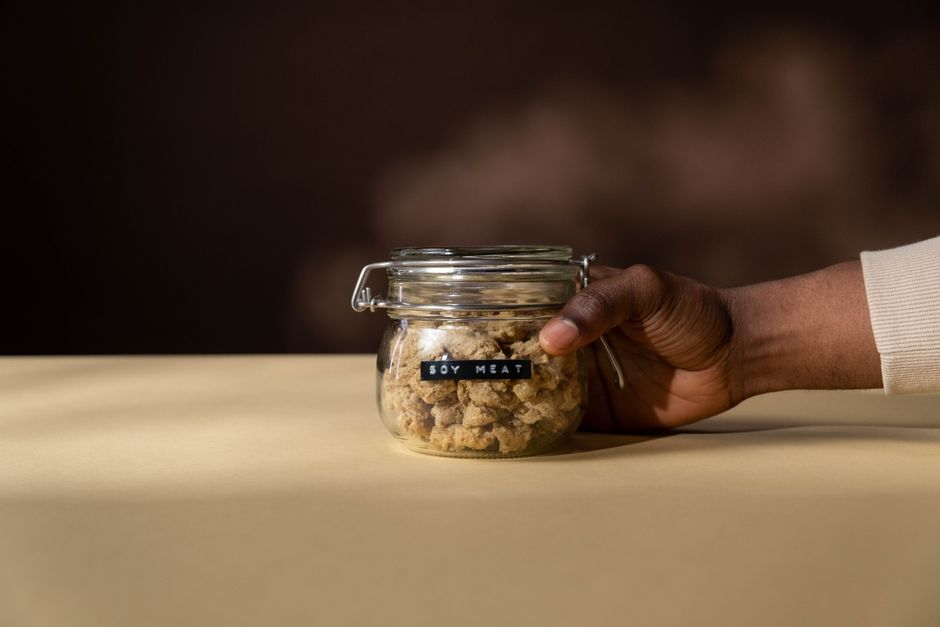
If you want to replace ground meat with something plant-based, textured soy protein is one of the simplest options. It is a dehydrated soy product that turns into a chewy, protein-rich crumble when you soak it in hot water or broth. After rehydration, you season and cook it just like you would ground beef, turkey, or pork in most recipes. It absorbs flavors well, so it works in chili, tacos, pasta sauce, sloppy joes, and even meatloaf.
What Is Textured Soy Protein and How Does It Compare to Meat?
Textured soy protein — often called TSP or TVP (textured vegetable protein) — is made from defatted soy flour. The flour is cooked under pressure, then dried into granules, flakes, or chunks. The process removes most of the fat and concentrates the protein. A ¼ cup serving of dry TSP contains about 12 grams of protein and only 1 gram of fat. It has no cholesterol and very few carbohydrates.
Compared to lean ground beef, TSP has similar protein content by weight when rehydrated. But beef provides vitamin B12, heme iron, and zinc in forms your body absorbs more easily. TSP does not naturally contain B12 — you need to get that from other sources. It does provide iron and zinc, though in less absorbable plant form. The fiber content is a advantage. Ground meat has no fiber. TSP has about 3 grams per serving.
How To Use Textured Soy Protein As A Meat Substitute
Start with the dry granules. The basic ratio is 1 part TSP to 1¾ to 2 parts hot liquid. For most recipes that call for 1 pound of ground meat, use 1 cup of dry TSP and 1¾ cups of hot water or broth. Pour the hot liquid over the granules, stir, and let them sit for 5 to 10 minutes. They will absorb the liquid and double in size.
After rehydration, drain any excess liquid if needed. The texture resembles cooked ground meat — slightly chewy and crumbly. You can use it immediately or refrigerate it for a day or two. To add flavor, use vegetable broth, beef broth, or a mix of water and soy sauce for the rehydration liquid. Season it with onion powder, garlic powder, smoked paprika, cumin, chili powder, or whatever matches your recipe.
To brown it, heat a pan with oil and cook the hydrated TSP for 5 to 7 minutes, stirring occasionally. If you want a crispier or drier texture similar to browned ground beef, cook it longer over medium heat until some moisture evaporates. For recipes like chili or spaghetti sauce, you can add the hydrated TSP directly to the sauce and simmer.
What Are the Best Recipes for Textured Soy Protein?
Because TSP mimics the texture of cooked ground meat, it works best in saucy or heavily seasoned dishes. Here are some of the most reliable uses:
- Chili — Rehydrate with broth, then brown in a pot. Add canned tomatoes, beans, chili powder, cumin, and oregano. Simmer for 20 minutes. The TSP absorbs the chili flavor and holds its shape.
- Tacos or burritos — After rehydration, cook the TSP in a skillet with oil and taco seasoning. Add a little water to let the seasoning coat the crumbles. Serve in tortillas with toppings.
- Spaghetti sauce — Rehydrate with water, then add directly to your marinara or tomato sauce while it simmers. The crumbles blend into the sauce and provide a meaty texture.
- Sloppy joes — Rehydrate with some of the sauce mixture (ketchup, Worcestershire-style sauce, mustard, brown sugar). Simmer on the stove until thick.
- Meatloaf or veggie burgers — Mix rehydrated TSP with breadcrumbs, egg or flax egg, finely diced onion, and seasonings. Form into a loaf or patties and bake or pan-fry.
You can also use large TSP chunks in stews or as a substitute for chicken pieces if you break them up or buy the chunk variety. Always match the seasoning to the dish — TSP on its own tastes bland and slightly beanlike.




How Does TSP Compare to Other Plant-Based Meat Alternatives?
TSP is different from tofu, tempeh, and seitan in texture and processing. Tofu is made from soy milk and has a soft, custard-like texture that works well in stir-fries and scrambles but does not mimic ground meat the same way. Tempeh is fermented whole soybeans with a firm, nutty texture — it holds up well in crumbles but has a stronger flavor. Seitan is made from wheat gluten and chews like chicken or beef strips, but it is not soy-based.
Store-bought plant-based burgers and grounds (brands like Beyond Meat and Impossible Foods) are more processed than TSP. They often contain added oils, binders, and flavorings to mimic the taste and juiciness of meat. TSP is less processed — it has one ingredient: defatted soy flour. It is also significantly cheaper. The trade-off is that TSP requires more work to season and rehydrate, and the final texture is drier than the juicy, high-fat plant burgers.
From a nutrition standpoint, TSP is leaner than most commercial plant-based alternatives. It has less saturated fat and no added oils unless you add them during cooking. For people watching their fat intake, TSP can be a better option than the newer plant burgers, which often derive 40–50% of calories from fat.
Is Textured Soy Protein Healthy?
TSP is a good source of plant protein and fiber with minimal fat. It provides about 12 grams of protein per ¼ cup dry — roughly the same as 2 ounces of cooked meat. It also contains magnesium, phosphorus, and small amounts of iron and zinc. Because it is made from defatted soy flour, it has almost no saturated fat and no cholesterol.
One concern people raise is the isoflavones in soy. Isoflavones are plant compounds that can weakly mimic estrogen in the body. Decades of research, including large observational studies and meta-analyses, have not found harmful effects from moderate soy intake in healthy people. Some evidence even suggests a protective effect against certain cancers, though the data is not conclusive. The Food and Drug Administration and the American Cancer Society both consider soy foods safe. For most adults, 2 to 3 servings of soy foods per day is well within the range studied.
TSP is a processed food, but processing here is mechanical — not chemical — and the final product retains most of the soy protein and fiber. It does not contain the additives, excess sodium, or sugar found in many packaged meat substitutes. If you are comparing it to whole foods like lentils or beans, TSP is less nutrient-dense because it lacks the full spectrum of vitamins and minerals found in legumes with their skins intact. It works best as one part of a varied diet.
What About Allergies and Safety?
Soy allergy is one of the most common food allergies, especially in children. Anyone with a known soy allergy should avoid TSP. For everyone else, TSP is safe to eat. The high heat used during manufacturing kills any bacteria, so the dry product has a very long shelf life. Once rehydrated, treat it like cooked meat — refrigerate leftovers and use them within 3 to 4 days.
Some people experience bloating or gas from soy because of the oligosaccharides — complex sugars that the intestines cannot fully digest. Soaking and rinsing TSP before cooking can reduce these compounds. If you are not accustomed to high-fiber foods, start with a smaller serving and increase gradually.
There is no evidence that TSP or any soy product causes thyroid problems in people with normal thyroid function. In individuals with existing hypothyroidism who consume very large amounts of soy (multiple servings daily), the isoflavones may interfere slightly with thyroid hormone absorption. This can be managed by taking thyroid medication at a different time from the soy meal.
Frequently Asked Questions
How do you rehydrate textured soy protein?
Pour 1¾ cups of hot water or broth over 1 cup of dry TSP granules. Let them sit for 5 to 10 minutes. Drain any excess liquid before using.
Does textured soy protein taste like meat?
No, it has a mild, slightly nutty flavor on its own. It absorbs the taste of whatever broth, spices, or sauce you cook it in, so it mimics the flavor profile of the dish rather than meat itself.
Is textured soy protein a complete protein?
Yes, soy protein contains all nine essential amino acids in amounts that meet human needs. It is one of the few plant proteins considered complete.
Can I use TSP in any recipe that calls for ground meat?
It works best in recipes with enough moisture and seasoning — chili, sauces, tacos, and casseroles. It will not work well in dry dishes like meatballs that rely on fat for binding and moisture.
