
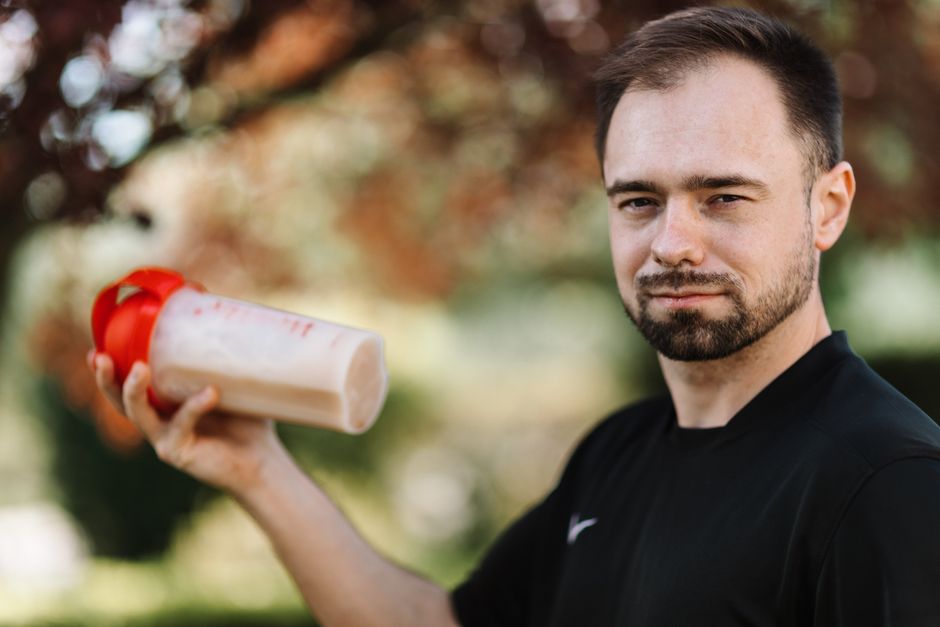
Most protein shakes land somewhere between 20 and 30 grams of protein per serving, and that range covers what the research supports for most healthy adults. The exact number depends on your body weight, your total daily protein needs, and what else you ate that day. A shake is one meal or snack in a larger day of eating — not a target you have to hit on its own.
How Much Protein Should Be In A Protein Shake?
A typical shake delivers 20 to 30 grams. That is not an arbitrary number. It reflects two separate lines of research: how much protein adults need across a full day, and how much the body can put to use from a single sitting.
Daily protein needs for most healthy adults fall in the range of 0.8 grams per kilogram of body weight as a minimum, with higher intakes commonly recommended for people who exercise regularly, are over 65, or are recovering from illness. For a 150-pound (68 kg) adult, 0.8 g/kg works out to about 54 grams per day. Athletes and older adults often need more, which is why a shake becomes a practical way to close the gap.
Per-meal research is where the 20-to-30-gram figure comes from. Studies using muscle protein synthesis as a marker suggest that a single dose of roughly 20 to 25 grams of high-quality protein stimulates muscle building in young adults, with larger doses offering diminishing returns. Older adults may need closer to 30 to 40 grams per meal to get a similar response, though this varies by individual and study design.
That upper limit is not a ceiling on how much protein you can digest. Your gut absorbs nearly all the protein you eat. The 20-to-30-gram range is about how much appears to maximize the muscle-building signal from one meal, not about absorption.
Does the 20 to 30 Gram Rule Apply to Everyone?
No. The 20-to-30-gram figure is a useful default, but several groups need different amounts.
- Older adults: Research suggests older muscles respond less efficiently to protein, so 30 to 40 grams per meal may be needed to reach a similar effect.
- Strength athletes and heavy trainers: Total daily intake matters more than any single shake. Many athletes spread 1.6 to 2.2 grams per kilogram of body weight across four or more meals.
- People in a calorie deficit or losing weight: Higher protein intake helps preserve muscle, and shakes are a common tool for hitting that target.
- People with kidney disease: Protein intake should be set by a clinician. General population guidelines do not apply.
- Pregnant or breastfeeding women: Protein needs rise during pregnancy and lactation, but no clinical guidelines specify a target protein amount for a shake. Follow your clinician’s guidance.
The common thread: your shake should fit your total daily needs, not define them.
How Do You Calculate Your Own Protein Target?
Start with your body weight in kilograms (pounds divided by 2.2), then multiply by a range that fits your situation.
For generally healthy, sedentary adults, 0.8 grams per kilogram per day is the established minimum. For active adults, most sports nutrition guidance points to 1.2 to 1.6 g/kg. For people doing regular resistance training or trying to build muscle, 1.6 to 2.2 g/kg is the range most often cited in the research literature.
A 160-pound (73 kg) adult training several days a week might aim for around 115 to 160 grams of protein per day. If they eat three meals and one shake, that could look like 30 to 40 grams at each meal and 20 to 30 grams from the shake.
One shake rarely needs to carry more than a quarter of your daily protein. Treat it as one input among several.
What Happens If You Drink More Than 30 Grams in One Shake?
Nothing harmful for most healthy people. The extra protein is digested, absorbed, and used for energy or other body functions.
The idea that the body “wastes” protein above 30 grams per sitting is a simplification. What studies actually show is that the muscle-building response plateaus — more protein does not keep increasing it. But protein is still used for immune function, enzymes, hormones, and tissue repair. If you drink a 50-gram shake, you are not throwing 20 grams away.
That said, very large single doses can cause temporary fullness, bloating, or loose stools in some people. If a shake leaves you uncomfortable, splitting it into two smaller servings is a reasonable adjustment.
Do Protein Shakes Work Better Than Protein From Food?
Not inherently. What matters most is total daily protein and whether you are getting enough of the essential amino acids.
Whey and casein (from milk) and soy are complete proteins, meaning they contain all nine essential amino acids in amounts the body can use. Pea, rice, and hemp proteins are lower in one or more essential amino acids on their own, but blends of pea and rice can cover the gaps. Some studies suggest whey produces a slightly faster and larger muscle protein synthesis response than some plant proteins, but the difference narrows when total daily protein intake is matched.
Food sources like eggs, chicken, fish, dairy, and lean meat work just as well for most people. Shakes are convenient, not superior. If you can hit your protein target with meals alone, you do not need a shake.
What Should You Look For on a Protein Powder Label?
Protein content per scoop is the number that matters most, followed by the type of protein and how many ingredients you do not recognize.
Most whey and plant protein powders list 20 to 25 grams of protein per scoop. Some “mass gainer” products list 50 grams or more per serving, often with added sugars and maltodextrin. Those are designed for people trying to gain weight, not for general use.
Third-party testing matters because protein powders are regulated as dietary supplements in the US, not as foods. That means they do not go through the same pre-market review as other products. Independent testing programs verify that what is on the label is in the tub and that heavy metals and other contaminants are within safe limits. Look for a certification mark from a recognized testing body.
Added sugars, artificial sweeteners, and fillers vary widely. None are inherently dangerous at typical intake levels, but they add up if you drink shakes daily.
How Many Shakes a Day Is Reasonable?
One is typical. Two is common among athletes and people with high protein needs. Beyond that, most people are better off getting protein from food.
Shakes are not a meal replacement in the nutritional sense. They lack fiber, many micronutrients, and the food matrix that whole foods provide. Replacing two or three meals a day with shakes can leave gaps in your diet that a multivitamin will not fully cover.
If you use shakes regularly, think of them as a supplement to meals — not a substitute for them.
Does Timing Matter for a Protein Shake?
Total daily protein matters more than when you drink it. The old “anabolic window” idea — that you must consume protein within 30 minutes of training — has been softened considerably by later research.
Studies suggest that the window is wider than once believed, especially if you ate protein in the hours before training. For most people, spreading protein fairly evenly across three to four meals produces good results. A shake after a workout is convenient and effective, but it is not magic.
If you train fasted in the morning, a shake afterward is a practical way to start refueling. If you ate a solid meal two hours before training, the urgency drops.
Frequently Asked Questions
Is 30 grams of protein enough in a shake?
For most healthy adults, 20 to 30 grams per shake is enough to support muscle protein synthesis and contribute meaningfully to daily protein needs. Older adults may benefit from closer to 30 to 40 grams per serving.
Can you absorb more than 30 grams of protein in one sitting?
Yes. Your body absorbs nearly all the protein you eat, regardless of dose. The 30-gram figure reflects where the muscle-building response plateaus, not a limit on absorption.
How much protein should a woman put in a protein shake?
Most women can use the same 20-to-30-gram range as men, adjusted for body weight and activity level. Daily needs are typically calculated as 0.8 to 2.2 grams per kilogram of body weight depending on exercise and health status.
Is it bad to drink a protein shake every day?
For most healthy adults, daily protein shakes are not harmful and can help meet protein needs. People with kidney disease or other conditions affecting protein metabolism should check with a clinician first.
