
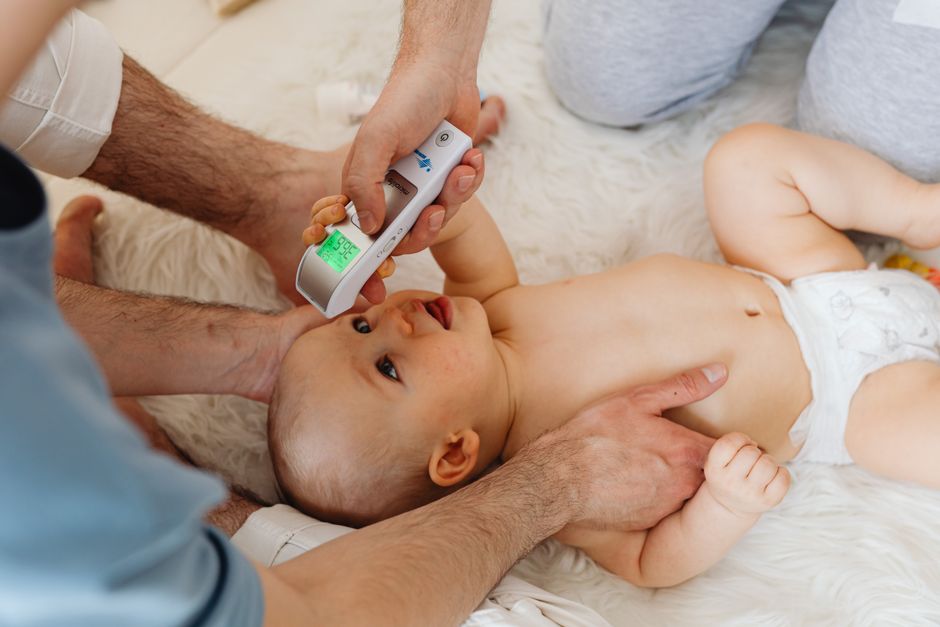
Every parent knows the feeling. Your baby is fussy. They have a runny nose. Maybe a cough. Your mind goes straight to the worst-case scenario. The honest answer is that most sniffles are just colds. But some symptoms are red flags you cannot ignore. The key difference comes down to three things: fever height and duration, breathing effort, and how your baby acts between coughs. A baby with a simple cold will still smile and make eye contact. A baby with something serious like RSV, pneumonia, or meningitis will look sick even when not coughing.
What Are the First Signs of a Common Cold in Babies?
Colds are caused by viruses. Over 200 different viruses can cause the common cold. In babies, the first sign is usually a clear runny nose. This often comes with sneezing and mild congestion. Your baby might be a bit fussier than normal. They may not want to eat as much because breathing through a stuffy nose is hard for them.
Fever is possible with a cold but it is usually low-grade. Research shows most cold fevers stay under 100.4 degrees Fahrenheit in babies under 3 months. For older babies, cold fevers can reach 102 but they come and go. The fever should not last more than three days. If it does, that is a sign to call your doctor.
Your baby will also likely have a mild cough. This is the body clearing mucus from the airway. The cough is usually wet sounding but not deep. The key here is that your baby acts normally between coughing fits. They still want to play, eat, and be held. If they are lethargic between coughs, that is a different story.
How Can You Tell if It Is RSV, Bronchiolitis, or Just a Cold?
Respiratory syncytial virus, or RSV, is very common. Most children have had it by age two. But RSV can be serious in infants under 12 months. The tricky part is that RSV starts exactly like a cold. Runny nose, mild cough, low fever. The difference shows up around day three to five.
RSV often causes bronchiolitis. This is inflammation of the small airways in the lungs. The warning sign is wheezing. You might hear a whistling sound when your baby breathes out. Another sign is fast breathing. A normal breathing rate for a baby under 12 months is 30 to 60 breaths per minute when awake. If your baby is breathing faster than 60 breaths per minute, that is concerning.
Look at their ribs and neck. Retractions happen when the skin pulls in between the ribs or above the collarbone with each breath. This means your baby is working hard to breathe. Nasal flaring is another sign. Their nostrils widen with each breath. These are not cold symptoms. These are signs your baby needs medical attention.
Current research suggests that RSV is the leading cause of hospitalization in infants under one year. But most babies with RSV do not need hospitalization. They just need supportive care at home. The distinction comes down to breathing effort. A baby with a cold breathes normally. A baby with RSV-related bronchiolitis works for every breath.
What Symptoms Mean You Need to See a Doctor Right Now?
Some symptoms are never normal with a cold. You need to know them. Write them down if you need to. This is not about being paranoid. It is about being prepared.
| Symptom | What It Looks Like | What It Might Mean |
|---|---|---|
| Fever over 100.4°F in a baby under 3 months | Rectal temperature reading | Serious bacterial infection possible |
| Fever lasting more than 3 days | Fever that keeps coming back | Secondary infection like ear infection or pneumonia |
| Difficulty breathing | Retractions, nasal flaring, grunting | RSV, bronchiolitis, or pneumonia |
| Dehydration | Fewer than 4 wet diapers in 24 hours | Baby not getting enough fluids |
| Lethargy | Hard to wake, no eye contact, limp body | Sepsis or meningitis possible |
| Blue lips or face | Bluish tint around mouth or nails | Not enough oxygen |
If your baby has any of these, call your pediatrician or go to the emergency room. Do not wait to see if it gets better. These are not cold symptoms. These are signs your baby needs medical evaluation.
One more thing parents often miss. A high-pitched cry that sounds different from normal can be a sign of meningitis in babies. If your baby cries in a way you have never heard before and has a fever, that is a reason to go in.





How To Tell If Baby Has A Cold Vs Something Serious by Watching Their Behavior
This is the most practical tool you have. Your baby’s behavior tells you more than any thermometer. A baby with a cold is uncomfortable but responsive. They will still track your face with their eyes. They will still reach for a toy. They might cry but they settle when you hold them.
A baby with something serious looks sick. Their eyes might be glassy. They may stare off into space. They might be floppy or unusually stiff. They may not respond to your voice or a rattle. This is called poor social interaction. It is one of the strongest signs that something is wrong beyond a simple cold.
Feeding behavior is another clue. A baby with a cold might eat less because they are congested. But they will still take some milk. They might stop to breathe but they keep trying. A baby with a serious illness often refuses to eat entirely. They may vomit everything they take in. If your baby has not had a wet diaper in 8 hours, that is a dehydration concern.
Sleep patterns matter too. A cold might make your baby wake more often because they are uncomfortable. But they still sleep in stretches. A baby with a serious infection may be excessively sleepy. They are hard to wake for feeds. This is not normal tiredness. This is your baby conserving energy because their body is fighting hard.
What Home Care Actually Works for a Baby Cold?
Most colds do not need medication. They need supportive care. The evidence is clear that over-the-counter cold medicines do not work in children under 4 years old. They can also be dangerous. The American Academy of Pediatrics advises against them. Do not give your baby any cold medicine without a doctor’s approval.
What does work is nasal suctioning. Use a bulb syringe or a nasal aspirator. Saline drops loosen the mucus. Squirt a drop or two in each nostril, wait 30 seconds, then suction. Do this before feeds and before sleep. It makes a real difference in how well your baby can breathe and eat.
- Use a cool-mist humidifier in the nursery. Dry air makes congestion worse.
- Keep your baby upright more often. Hold them or wear them in a carrier. Gravity helps drain mucus.
- Offer smaller, more frequent feeds. A congested baby gets tired from sucking. Shorter feeds more often help them stay hydrated.
- Use a warm bath. The steam can loosen congestion. Do not add anything to the water.
- Keep the room temperature comfortable. Not too hot. Overheating can make a baby more uncomfortable.
Honey is not safe for babies under 12 months. It can cause infant botulism. Do not use it. Do not use vapor rubs on babies under 2 years old. They can cause breathing irritation. Stick with the basics. Saline, suction, and rest are the only things proven to help.
Fever itself is not dangerous. It is the body’s immune response. You do not need to treat a fever unless your baby is clearly uncomfortable. Acetaminophen (Tylenol) is safe for babies over 2 months. Ibuprofen (Motrin) is safe for babies over 6 months. Always dose by weight, not age. Check with your pediatrician if you are unsure.
What Are the Red Flags That Require Immediate Emergency Care?
Some things are emergencies. Not “call the doctor tomorrow.” Go to the ER now. If your baby stops breathing for more than 10 seconds, call 911. If their lips or face turn blue, that is cyanosis. It means their blood is not getting enough oxygen. Do not wait.
If your baby has a seizure with fever, that is a febrile seizure. Most febrile seizures are not dangerous, but they need to be evaluated. If your baby is limp, unresponsive, or has a bulging soft spot on their head, those are meningitis signs. If your baby is having trouble breathing and their nostrils flare with every breath, that is respiratory distress.
Trust your gut. You know your baby better than anyone. If something feels wrong, even if you cannot name it, call your doctor. Pediatricians are used to these calls. They would rather reassure you than have you stay home with a sick baby who needed help. As of 2026, current guidelines still emphasize that parental concern is a valid reason for evaluation.
One last thing. Do not compare your baby to another baby. Some babies get very sick with a simple cold. Others barely seem to notice RSV. Your job is not to figure out which virus your baby has. Your job is to watch for the signs that your baby needs help. If you see those signs, act on them.
Frequently Asked Questions
How long should I wait before calling the doctor for a baby cold?
Call your doctor immediately if the baby is under 3 months old and has any fever. For older babies, call if the fever lasts more than 3 days or if they show signs of dehydration.
Can a baby have a cold without a fever?
Yes, many baby colds do not cause a fever at all. A runny nose and mild cough without fever is still likely a cold if the baby acts normally otherwise.
What is the difference between a cold and teething symptoms?
Teething does not cause a runny nose or cough. Teething causes drooling, chewing on hands, and mild irritability. If your baby has nasal congestion, it is likely a cold.
When should I take my baby to the ER for a cough?
Go to the ER if your baby has trouble breathing, makes grunting sounds, has blue lips, or is working hard to breathe with retractions between the ribs.
