
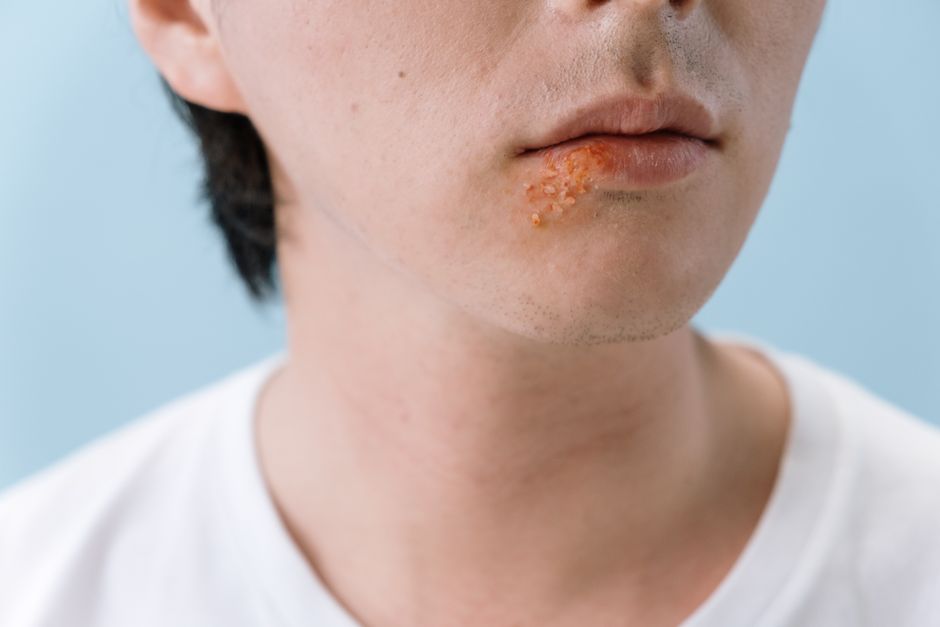
Cold sores on your lips are caused by the herpes simplex virus type 1, or HSV-1. This virus spreads through direct contact, like kissing or sharing a drink. Once the virus enters your body, it stays there for life, hiding in nerve cells near your cheekbone. Most people are exposed to HSV-1 as children, but not everyone develops visible cold sores.
What Exactly Is HSV-1 and How Does It Cause Cold Sores?
HSV-1 is a common virus that infects most adults by age 50. Research shows about 67% of people under 50 worldwide carry HSV-1. The virus enters through small breaks in your skin or the moist lining of your mouth and lips.
Once inside, the virus travels to a cluster of nerve cells called the trigeminal ganglion. This is near your ear, behind your cheekbone. The virus can stay inactive there for months or years. When something triggers it, the virus travels back down the nerve to your lip surface. There it multiplies and creates the blister you see.
Not everyone who carries the virus gets cold sores. Some people carry it silently with no symptoms. Others get one sore every few years. A small number of people get frequent outbreaks. Current research suggests your immune system and genetics play a big role in how often you get outbreaks.
What Triggers a Cold Sore Outbreak?
Stress is one of the most common triggers. When you are stressed, your body produces cortisol. This hormone can lower your immune response, giving the virus a chance to reactivate. Studies have found that people with high stress levels report more frequent outbreaks.
Illness and fever are another major trigger. This is why cold sores are sometimes called fever blisters. A cold, the flu, or any infection that raises your body temperature can wake up the virus. Sun exposure on your lips is also a well-known trigger. Ultraviolet light can damage the skin and weaken local immunity.
Other triggers include hormonal changes, like during menstruation or pregnancy. Fatigue, poor sleep, and physical exhaustion can also lead to outbreaks. Some people report that certain foods, like chocolate or nuts, trigger their cold sores. Strong evidence for this is limited, but some people find it true for themselves.
Is HSV-1 the Same as HSV-2?
No, they are different viruses. HSV-1 typically causes cold sores on the mouth and lips. HSV-2 usually causes genital herpes. But this distinction is blurring. Research shows that HSV-1 now causes about half of new genital herpes cases in some countries. This is because of changes in sexual behavior, like oral sex.
Both viruses are similar in structure and behavior. Both stay in your body for life. Both can cause sores on the mouth or genitals. The main difference is that HSV-1 prefers the mouth area and HSV-2 prefers the genital area. But either virus can infect either location.
As of 2026, there is no cure for either virus. But antiviral medications can reduce outbreaks and lower the risk of spreading the virus to others.




What Are the Best Treatments for Cold Sores?
Antiviral creams are the first line of treatment. Products containing acyclovir or penciclovir can shorten the healing time by about one day. They work best when applied at the first sign of a tingle or redness. This early stage is called the prodrome phase.
Prescription oral antivirals are more effective than creams. Valacyclovir and acyclovir pills can reduce outbreak duration and pain. Some people take these only when they feel an outbreak starting. Others take a low daily dose to prevent outbreaks entirely. This is called suppressive therapy.
Here is a comparison of common treatment options:
| Treatment | How It Works | Typical Use |
|---|---|---|
| Acyclovir cream | Stops virus from multiplying at skin level | 5 times daily for 5 days |
| Valacyclovir pills | Stops virus from multiplying throughout body | 2 times daily for 1-3 days |
| Lysine supplements | Some evidence it may reduce outbreaks | Daily or at first sign |
| Laser therapy | Low-level laser reduces pain and healing time | At first sign of outbreak |
Lysine supplements are widely used, but strong evidence is mixed. Some studies suggest lysine may help prevent outbreaks in people who get them often. Other studies show little benefit. It is not a proven treatment, but some people report it helps them.
Cold compresses and over-the-counter pain relievers can help with discomfort. Keeping the area clean and dry may prevent bacterial infection. Do not pick at the blister. This can spread the virus to other parts of your face or cause scarring.
What Common Myths About Cold Sores Should You Ignore?
One common myth is that cold sores are caused by being dirty or unhealthy. This is false. HSV-1 is extremely common and spreads easily. Getting a cold sore has nothing to do with hygiene. Many healthy people get them.
Another myth is that you can catch cold sores from towels or toilet seats. The virus does not survive long on dry surfaces. Transmission requires direct contact with the sore or the fluid inside it. Sharing a towel right after someone uses it on their sore could spread it, but this is rare.
A third myth is that cold sores are only contagious when you see a blister. This is not true. The virus can spread even when no sore is visible. This is called asymptomatic shedding. Research shows that people with HSV-1 shed the virus on about 10% of days without any symptoms.
Some people believe that once you have had a cold sore, you are immune to getting another one. This is also false. The virus stays in your body and can reactivate many times. You can get cold sores for your entire life.
How Can You Prevent Spreading HSV-1 to Others?
Avoid direct contact with your sore. Do not kiss anyone while you have an active blister. Do not share drinks, utensils, lip balm, or towels. Wash your hands after touching your sore. The fluid inside the blister is highly contagious.
Be careful during the tingling stage before the blister appears. The virus is active even then. Some people use a barrier like a bandage over the sore to reduce accidental contact. This is not foolproof but can help.
If you get frequent outbreaks, talk to your doctor about suppressive therapy. Taking a low dose of valacyclovir daily can reduce asymptomatic shedding. This lowers the chance of passing the virus to a partner. Condoms reduce but do not eliminate the risk of spreading HSV-1 to the genitals.
Tell any sexual partner that you carry HSV-1. Many people already have it, but it is respectful to inform them. The virus can be transmitted during oral sex even without a visible sore.
What Causes Cold Sores On Lips Hsv 1 Explained in Simple Terms
HSV-1 is a virus that enters your body through contact with an infected person. It hides in your nerve cells and waits for a trigger. When triggered, it travels to your lip and causes a blister. The blister heals in about 7 to 10 days. The virus then goes back into hiding until the next trigger.
The virus is not dangerous for most healthy adults. It is uncomfortable and can be embarrassing, but it is not a serious health threat. For people with weakened immune systems, like those on chemotherapy or with HIV, the virus can cause more severe infections. This is rare.
There is no cure, but treatments are effective. Antiviral pills and creams can reduce the length and severity of outbreaks. Avoiding known triggers can help prevent outbreaks. Stress management, sun protection on your lips, and good sleep habits all help.
Frequently Asked Questions
Can you get cold sores from stress alone?
Stress does not cause the infection, but it can trigger the virus to reactivate if you already carry HSV-1.
How long is a cold sore contagious?
A cold sore is contagious from the first tingle until the blister is completely healed and the skin is dry.
Can you get HSV-1 on your lip from someone with no sore?
Yes, the virus can spread through asymptomatic shedding even when no sore is visible.
Does toothpaste help cold sores?
There is no clinical evidence that toothpaste heals cold sores, and it can irritate the skin.
