

Taking your blood pressure correctly takes about five minutes and a few simple habits. Sit quietly for five minutes first. Put the cuff on your bare upper arm, one inch above the bend of your elbow. Rest your arm on a table so the cuff sits at heart level. Keep both feet flat on the floor and your back supported. Then press start and stay still and silent until the reading finishes.
Most home readings are wrong for avoidable reasons. A cuff over a sleeve, a dangling arm, or talking during the measurement can all push the number up. Because pictures are the easiest way to learn this, this guide describes exactly what each step looks like, so you can picture the setup in your head or follow along with any standard instruction sheet that came with your monitor.
What Supplies Do You Need Before You Start?
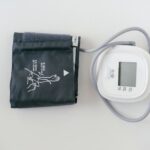
You need four things: a validated upper-arm monitor, the correct cuff size, a chair with a back, and a flat table or desk.
Upper-arm monitors are the standard for home use. Wrist and finger monitors are easier to put on, but they are more sensitive to body position, and research has generally found them less accurate than arm cuffs. If you already own a wrist monitor, your clinician can help you compare it against an arm reading.
Cuff size matters more than most people realize. A cuff that is too small will read high. A cuff that is too large can read low. The cuff box or label lists an arm circumference range in centimeters. Measure around the middle of your bare upper arm with a soft tape measure and match it to that range. If you are between sizes, ask the manufacturer or your pharmacist which cuff to use.
A few other practical points:
- Use a monitor that has been validated. Many national health agencies publish lists of validated devices.
- Check the batteries or plug it in. Weak power can cause errors.
- Bring the monitor to a medical visit once a year so staff can compare it against theirs.
How To Take Blood Pressure Step By Step With Pictures
Picture each step as a snapshot. If you follow them in order, you remove most of the errors that make home readings unreliable.
Picture 1: Empty your bladder and avoid stimulants. A full bladder can raise a reading. So can caffeine, nicotine, and exercise within the previous 30 minutes. Sit down and rest for five minutes before you begin.
Picture 2: Sit in a supported chair. Both feet flat on the floor. Do not cross your legs. Your back should rest against the chair back. Slouching or perching on a stool changes the reading.
Picture 3: Bare your upper arm. Roll up your sleeve or take your arm out of the sleeve. Do not put the cuff over clothing. Thin fabric may seem harmless, but the effect on the reading varies and is hard to predict.
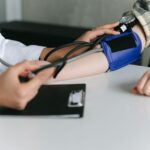
Picture 4: Wrap the cuff one inch above the elbow crease. The bottom edge of the cuff should sit about one inch above the bend of your elbow. The tubing should run down the inside of your arm, roughly in line with your middle finger. The cuff should feel snug, not tight. You should be able to slip one fingertip under the edge.
Picture 5: Rest your arm on the table at heart level. Your forearm should be supported, palm up, relaxed. The middle of the cuff should line up roughly with the middle of your chest. An arm hanging at your side, or held up in the air, will shift the reading.
Picture 6: Press start and stay still. Do not talk, text, or scroll. Do not look at the screen while it inflates. Talking during a measurement can raise the reading by a meaningful amount in many people.
Picture 7: Write the number down. Record the top number (systolic), the bottom number (diastolic), the date, and the time. Note anything unusual, such as poor sleep or a stressful morning.
Picture 8: Wait one minute and repeat. Take a second reading. Then a third if you want. Average the readings rather than trusting a single number. Blood pressure naturally fluctuates, so one high or low reading rarely means much on its own.
Why Does Body Position Change The Reading So Much?
Blood pressure is a physical measurement, not a fixed property. It depends on how hard the heart is pumping, how much resistance the blood vessels offer, and how much blood is sitting in the system at that moment.
Change any of those and the number moves. An unsupported arm makes the muscles work, which can raise the reading. An arm below heart level adds the weight of the blood column, which also pushes the number up. Crossing your legs compresses veins in the thigh and can nudge the reading higher. A full bladder causes discomfort and mild stress, which activates the nervous system.
This is why the instructions sound fussy. They are not about precision for its own sake. They exist because small physical differences produce real changes in the number on the screen, and those changes can look like a medical problem when they are only a positioning problem.



When Should You Measure, And How Often?
Measure at the same times each day, ideally twice: once in the morning before medications and breakfast, and once in the evening. Take two or three readings a minute apart and average them.
The exact schedule depends on why you are monitoring. Some people check for a week before a medical visit. Others track daily for ongoing care. Your clinician can tell you what schedule fits your situation, and how many days of readings they want to see. Bring your log to appointments rather than trying to remember the numbers.
A few habits that help:
- Do not measure right after caffeine, a cigarette, or exercise.
- Do not measure over a full bladder.
- Do not measure while upset or in the middle of an argument if you can wait.
- Keep the same arm each time, unless your clinician tells you otherwise.
What Do The Numbers Mean?
Blood pressure is written as two numbers, systolic over diastolic, measured in millimeters of mercury (mm Hg).
For most adults, a normal reading is below 120/80 mm Hg. Readings consistently at or above 130/80 mm Hg are generally considered high, though the exact threshold that matters for you depends on your age, other conditions, and your clinician’s judgment. A single high reading is not a diagnosis. Diagnosis comes from a pattern of readings over time, often confirmed with measurements taken in a clinic.
One clarification worth knowing: the top number and the bottom number do not always rise and fall together. In older adults, the systolic number often climbs while the diastolic number stays normal or even drops. That pattern is common and is part of why clinicians look at both numbers rather than one.
What Are The Most Common Mistakes?
Most home errors fall into a short list.
- Cuff over clothing. Take the arm out of the sleeve or roll it up fully.
- Wrong cuff size. Check the range printed on the cuff against your measured arm circumference.
- Arm not at heart level. Rest it on a table. Do not hold it up.
- Talking or moving. Stay quiet and still until the reading appears.
- Feet dangling or legs crossed. Both feet flat, legs uncrossed.
- One reading only. Take two or three and average them.
- No log. Write the numbers down. Memory is unreliable for this.
If your readings swing widely for no clear reason, or if they are consistently very high or very low, contact your clinician. Do not adjust any medication on your own based on home readings. That decision belongs with the person who prescribed it.
Frequently Asked Questions
Which arm should I use to take blood pressure?
Use the arm your clinician recommends, and keep using the same one each time. If you have never been told, the first visit usually includes a check of both arms, because a difference between them can matter.
Can I take blood pressure over a sleeve?
No. Place the cuff on bare skin, about one inch above the bend of your elbow. Clothing under the cuff can change the reading in ways that are hard to predict.
How long should I wait between blood pressure readings?
Wait about one minute between readings, then average two or three of them. Taking them back to back without a pause can give misleading results.
Why is my blood pressure higher at the doctor’s office?
Many people run higher in a clinic because of stress or the setting itself, a pattern sometimes called white coat effect. Home readings taken correctly often give a clearer picture of your usual range.
