
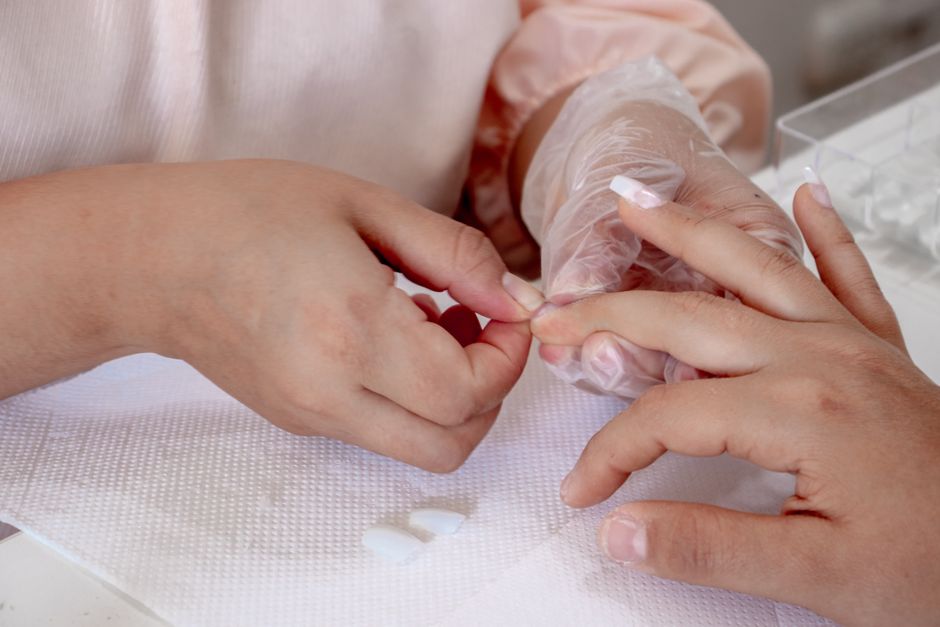
Taking off acrylic tips at home is risky if you do it wrong. The safest method uses pure acetone to break down the acrylic glue. You soak your nails in acetone, then gently push the softened acrylic off with a cuticle pusher. Never rip, pry, or peel the tips off. That tears layers of your natural nail with them.
What You Need To Remove Acrylic Tips Safely
Gather everything before you start. Running around mid-removal with acetone on your hands is dangerous and messy.
- 100% pure acetone. Not regular nail polish remover. It must say pure acetone on the label.
- A glass bowl or metal bowl. Plastic will melt or discolor.
- Cotton balls or cotton pads.
- Aluminum foil cut into squares large enough to wrap each fingertip.
- A cuticle pusher with a flat end. Metal or wood works.
- A nail file or buffer block.
- Cuticle oil or a rich hand cream.
- A towel to protect your table.
Do not use nail polish remover that lists acetone as one ingredient among many. It is too diluted. Pure acetone is the only solvent strong enough to dissolve acrylic tips efficiently.
Step-by-Step Instructions for Soaking Off Acrylics
Start by filing down the shine on the acrylic surface. This breaks the top seal and lets acetone penetrate faster. Use a coarse nail file. File until the acrylic looks dull and powdery. You do not need to file the entire tip off. Just rough up the surface.
Soak one cotton ball in acetone. Place it directly on your nail. Wrap that fingertip tightly in aluminum foil. Secure it so the cotton stays pressed against the acrylic. Repeat for all ten fingers.
Wait 20 to 30 minutes. This is not a quick process. Set a timer. Do not get up and move around with foil on your fingers. Acetone spills can damage furniture and skin.
Remove the foil from one finger at a time. Push the softened acrylic off with your cuticle pusher. It should slide off with light pressure. If it resists, rewrap that finger and wait another five to ten minutes.
Work through all ten nails one at a time. Rewrap each finger after you finish it. This keeps the remaining acrylic soft.
How To Take Acrylic Tips Off Without Damaging Your Natural Nails
The natural nail underneath is thinner and weaker than you expect. Acrylics trap moisture against the nail plate. Your natural nail can soften and peel during wear. Removing the acrylic roughly makes this worse.
Never pull or twist the tip. Acrylic bonds tightly to the natural nail. Forcing it off removes the top layers of your nail plate. This causes white patches, ridges, and permanent thinning.
Push gently with the flat end of your cuticle pusher. The acrylic should lift away in soft, waxy pieces. If you feel pain or resistance, stop immediately. Pain means you are pulling live nail tissue. Wait longer and resoak.
Once all acrylic is off, buff the natural nail lightly. Use a fine buffer. Do not file the natural nail surface aggressively. You only want to smooth remaining residue, not remove nail layers.
Wash your hands thoroughly after removal. Acetone dries out skin and nails severely. Apply cuticle oil to every nail and massage it in. Reapply oil several times a day for the next week.





What To Do If Acrylic Tips Do Not Come Off
Some acrylics are harder than others. Hard gel overlays and certain builder formulas resist acetone. If your nails have not softened after 40 minutes of total soaking, stop.
Do not keep soaking indefinitely. Prolonged acetone exposure damages the skin around your nails and weakens the natural nail bed. It can cause chemical burns on sensitive cuticles.
Your options are limited at this point. You can book a professional removal at a nail salon. A technician will use an electric file to thin the acrylic before soaking. This is the safest route for stubborn product.
You can also grow the acrylic out and let it lift naturally. Clip the free edge as the natural nail grows. Eventually the acrylic will separate enough to remove safely. This takes several weeks but causes zero trauma to the nail plate.
Common Mistakes People Make When Removing Acrylics at Home
Ripping the tips off is the most damaging mistake. It feels faster but causes visible nail damage immediately. Torn nail plates can take months to grow out fully.
Using non-acetone remover is a waste of time. These products do not dissolve acrylic. You will soak for an hour and get nowhere.
Skipping the filing step extends your soak time significantly. Filing the top layer is not optional. It makes the removal process twice as fast.
Picking at partially dissolved acrylic is another common error. If the edges lift but the center stays stuck, do not pull. The bond in the center is still strong. Picking creates uneven nail surfaces that are hard to repair.
Applying fresh acrylic immediately after removal is also a mistake. Your natural nails need time to rehydrate and recover. Give them at least a few weeks before applying new tips.
How To Care for Natural Nails After Acrylic Removal
Your nails will look thin, dull, and possibly ridged after acrylic removal. This is normal. The nail plate has been covered and soaked in solvent. It needs time to rebuild.
Moisturize relentlessly. Cuticle oil is the most important product you can use. Apply it at least twice daily. Focus on the cuticle area and the base of the nail. This promotes healthy new nail growth.
Keep your nails short for a few weeks. Long nails are more likely to bend and tear when the nail plate is thin. Shorter nails experience less leverage and less trauma.
Avoid gel polish or dip powder immediately after removal. These products require filing and soaking again. Give your nails a break from all enhancements for at least two weeks.
Wear gloves when washing dishes or cleaning. Water and cleaning chemicals dry out nails further. Gloves protect the nail plate and cuticles from additional damage.
Your nails may peel in the weeks after removal. This is damaged keratin shedding. Continue moisturizing and do not peel the layers off yourself. Let them grow out and clip them as they reach the free edge.
When To See a Professional Instead of DIY Removal
Some situations require professional help. If your nail bed is painful, red, or swollen, do not attempt home removal. This can indicate an infection or an allergic reaction. A doctor or licensed nail technician should examine it first.
If you see green or dark discoloration under the acrylic, stop. This may be a bacterial or fungal growth. Removing the acrylic yourself could spread the infection. Professional assessment is needed.
If your natural nails feel extremely thin or bend backward easily, professional removal is safer. A technician can use gentler techniques and apply a strengthening treatment immediately.
Professional removal costs between $10 and $30 at most salons. Compare that to the cost of repairing a torn nail plate or treating an infection. The professional option is often the more economical choice.
Frequently Asked Questions
How long should I soak my acrylic nails in acetone?
Soak for 20 to 30 minutes. If the acrylic does not soften after 40 minutes total, stop and see a professional.
Can I use regular nail polish remover instead of pure acetone?
No. Regular nail polish remover is too diluted to dissolve acrylic tips effectively.
Is it safe to pull acrylic tips off my nails?
No. Pulling acrylic tips off tears layers of your natural nail plate and causes permanent thinning and ridges.
How long until my natural nails recover after acrylic removal?
Most natural nails need two to three months to fully regrow. Visible thinning and ridges improve within a few weeks with regular cuticle oil use.
