
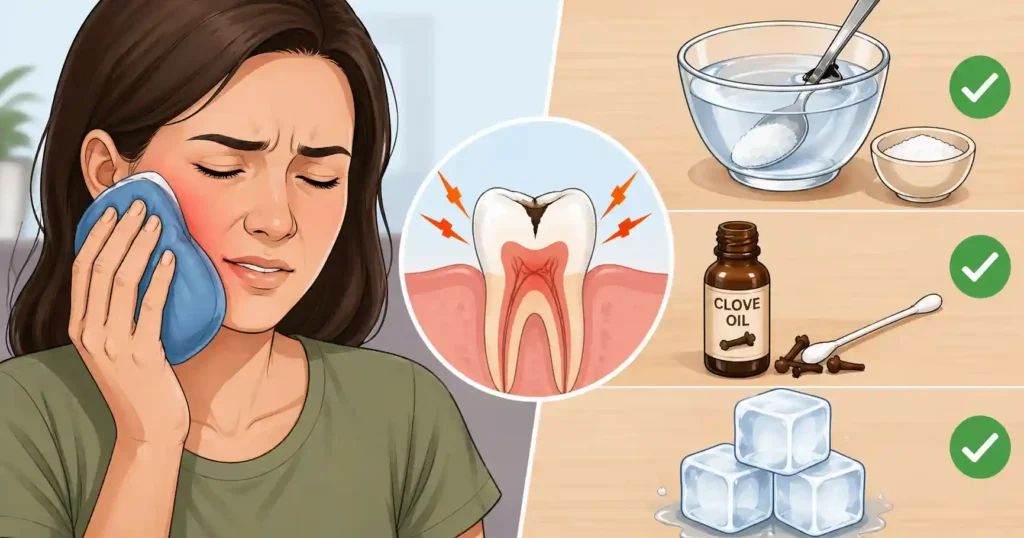
To stop tooth pain fast at home, use cold therapy, saltwater rinses, and targeted numbing agents like clove oil to reduce nerve sensitivity and inflammation. These methods work by lowering pressure inside the tooth and calming irritated nerves. They provide temporary relief, not a permanent fix.
Key Takeaways
- Cold compress + clove oil = fastest relief combo
- Night pain gets worse due to increased blood pressure in the head
- Most “natural remedies” are slow and overrated
- Avoid heat, aspirin on gums, and lying flat
- Home remedies are temporary, not treatment
What stops tooth pain instantly at home?
The fastest way to reduce tooth pain at home is to numb the nerve and reduce inflammation simultaneously. That means a cold compress, a saltwater rinse, and a numbing agent.
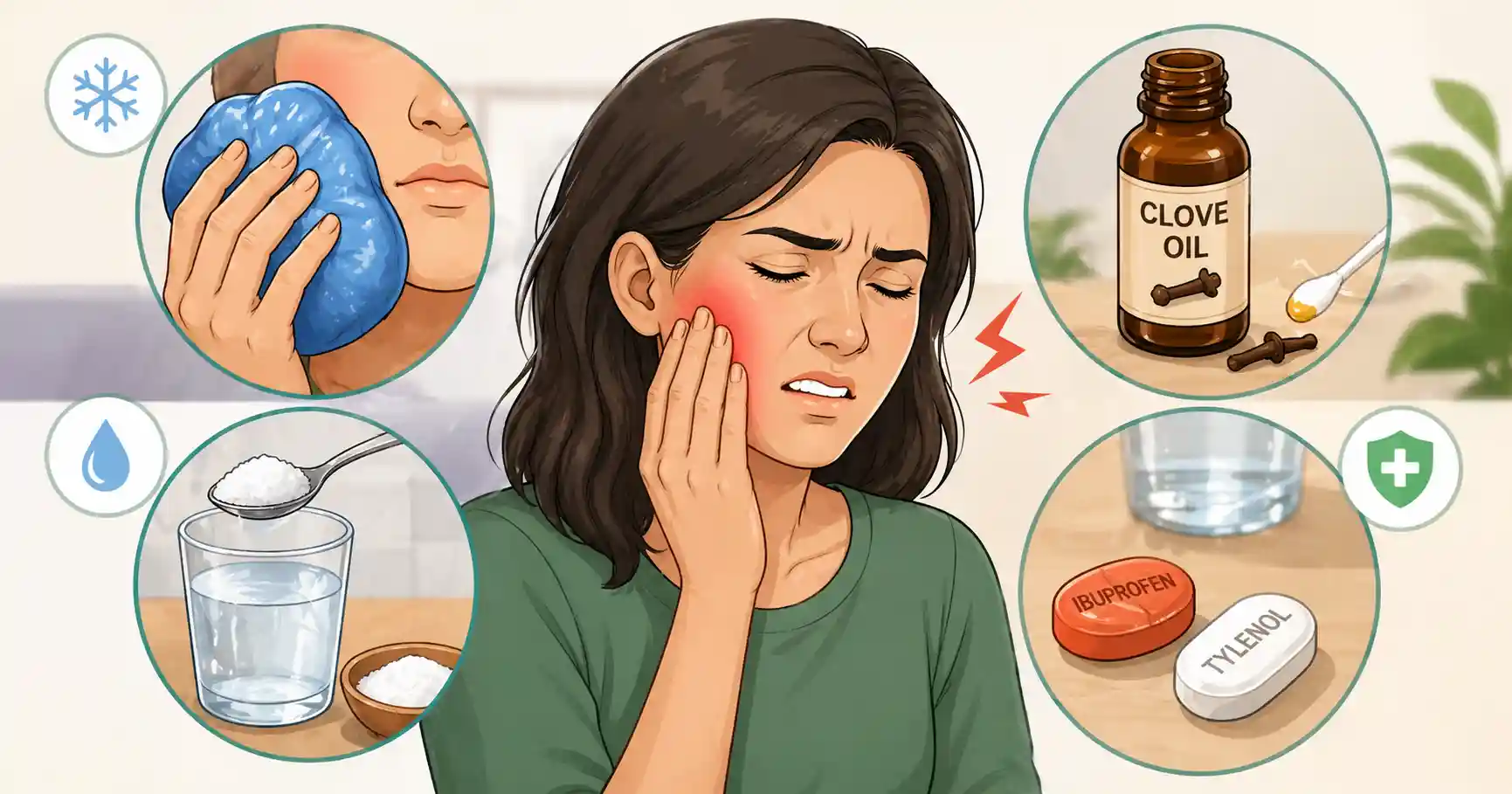
Here’s what actually works within minutes:
1. Cold compress (fastest for sharp pain)
- Wrap ice in a cloth
- Hold on cheek for 10–15 minutes
Why it works: Cold reduces nerve signals and blood flow. Less pressure = less pain.
2. Saltwater rinse (first step always)
- 1/2 teaspoon salt + warm water
- Swish for 30 seconds
Why it works: Reduces bacteria and pulls fluid out of inflamed tissue.
3. Clove oil (strongest natural numbing agent)
- Dab a tiny amount on cotton
- Apply directly to the tooth
Clove contains eugenol, a natural anesthetic used in dentistry.
4. Painkillers (if needed)
- Ibuprofen works better than Paracetamol for inflammation
Quick Takeaway: Cold + clove oil is the fastest combo for nerve pain.
Why does tooth pain get worse at night?
Tooth pain feels worse at night because blood pressure in your head increases when you lie down. This pushes more fluid into the inflamed tooth.
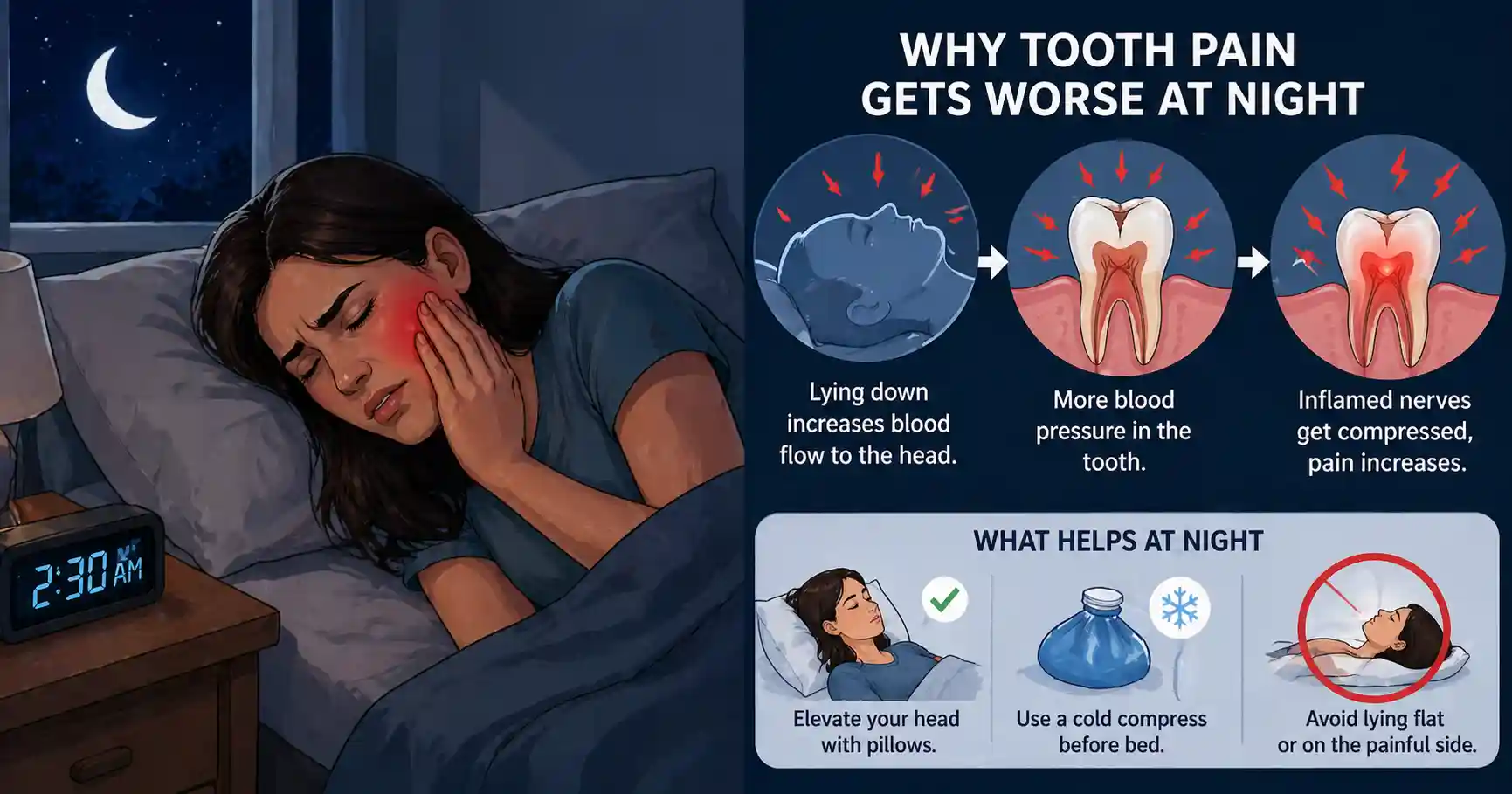
Here’s what’s actually happening:
- Lying flat → more blood flow to the head
- More blood = more pressure in the tooth
- Inflamed nerves get compressed
- Pain spikes
Also, there are fewer distractions at night. Your brain focuses on pain more.
What actually helps at night:
- Sleep with head elevated (2 pillows)
- Avoid lying on the painful side
- Use a cold compress before bed
Quick Takeaway: Elevate your head and avoid heat—pressure is the real problem.
Which home remedies actually work fast (and which are useless)?
Most articles list everything equally. That’s wrong. Some remedies work fast. Some barely do anything.
Here’s a clear breakdown:
| Remedy | Speed | Effectiveness | Why it works |
|---|---|---|---|
| Cold compress | Very fast | High | Reduces nerve signals |
| Clove oil | Fast | High | Numb nerve (eugenol) |
| Saltwater rinse | Medium | Moderate | Reduces bacteria |
| Hydrogen peroxide rinse | Medium | Moderate | Kills bacteria |
| Garlic | Slow | Low | Weak antibacterial |
| Onion | Slow | Low | Mild effect only |
Brutal truth:
- Garlic and onions are overhyped
- They don’t help much with nerve pain
- They might help the infection slightly, but not instantly
A review in the Journal of Dentistry (2016) notes that eugenol (clove oil) has real anesthetic effects, while most home remedies lack strong clinical support.1Eugenol as Local Anesthetic, ResearchGate.
Quick Takeaway: Use cold + clove. Skip kitchen myths.
-
 How to Relieve Tooth Pain Exposed Nerve? Simple Steps That Help
 -
ProvaDent Reviews 2026: Legit, Scam, or Worth It? {UPDATE}
-
Prodentim Reviews & Complaints 2025: Is It Safe For Gum & Teeth?
-
Prodentim Reviews. Does This Oral Probiotic Supplement Work?
-
ProvaDent Reviews: Oral Probiotic Scam & Complaint Analysis


How to stop tooth pain fast at home naturally?
Natural relief works best when it targets both bacteria and nerve irritation. That means combining rinses with numbing.
Best natural combo:
- Saltwater rinse
- Clove oil application
- Cold compress
Optional:
- Peppermint tea bag (mild numbing effect)
- Hydrogen peroxide rinse (diluted)
What people misunderstand:
Natural ≠ fast.
- Most natural remedies are slow-acting
- Only clove oil works quickly because it affects nerves directly
Research from the National Institutes of Health (NIH, 2020) highlights clove oil’s role in dental pain control, but evidence for other remedies is limited.
Quick Takeaway: Only a few natural remedies actually work quickly—clove oil is the main one.
What should you NOT do when you have tooth pain?
Some common “home fixes” actually make pain worse or cause damage.
Avoid these:
- Do not apply aspirin directly to the tooth → can burn gum tissue
- Do not use hot water or heat packs → increases swelling
- Do not chew on that side → worsens nerve irritation
- Do not ignore severe pain for days → could mean infection
How to reduce tooth pain at home for different situations?
Not everyone has the same type of pain. This matters.
For sharp, nerve pain:
- Cold compress
- Clove oil
- Ibuprofen
For swelling or infection:
- Saltwater rinse
- Hydrogen peroxide rinse
- Pain reliever
For kids:
- Use a saltwater rinse
- Avoid strong essential oils unless diluted
- Consult a dentist sooner
While pregnant:
- Avoid strong medications unless approved
- Use saltwater + cold compress
- Clove oil in very small amounts only
Quick Takeaway: Match the remedy to the type of pain. And always consult a doctor.
Why home remedies fail for some people
If your tooth nerve is exposed or deeply infected, home remedies won’t be enough.
Here’s the reality:
- Cavities reaching nerve → intense pain
- Abscess → pressure + infection
- Cracked tooth → constant irritation
Home remedies:
- Reduce symptoms
- Do NOT fix the cause
As of 2026, dental guidelines still emphasize that persistent tooth pain requires professional treatment.
FAQs
How to stop tooth pain fast at home overnight?
Use a cold compress, rinse with saltwater, and apply clove oil before bed. Sleep with your head elevated to reduce pressure. Avoid heat and lying flat, as both increase blood flow and worsen pain during the night.
What kills tooth pain instantly at home?
Nothing truly kills tooth pain instantly, but a cold compress and clove oil come closest. Cold reduces nerve activity, while clove oil numbs the area. Pain relief usually starts within minutes but is temporary.
How to ease tooth pain at home without medicine?
Use saltwater rinses, cold compresses, and clove oil. Peppermint tea bags can also provide mild relief. These methods reduce inflammation and nerve sensitivity without medication, though results vary depending on the cause.
Can I stop tooth pain permanently at home?
No, home remedies cannot fix the root cause of tooth pain. They only reduce symptoms. If the issue is decay, infection, or nerve damage, you will need dental treatment to solve it fully.
Why is my tooth pain worse at night?
Pain increases at night because lying down raises blood flow to the head, increasing pressure inside the tooth. This puts more stress on the nerve and makes the pain feel stronger.
Final Thoughts
If you’re searching for how to stop tooth pain fast at home, focus on what actually works: reduce pressure, numb the nerve, and control inflammation. Skip the myths. Use targeted methods. And if the pain keeps coming back, it’s not random—it’s a signal something deeper needs fixing.
Scientific References
- 1Eugenol as Local Anesthetic, ResearchGate. ↩︎
