
You cannot make a needle sterile at home. Sterile means completely free of all living microorganisms, including bacterial spores, and that standard requires an autoclave — a machine that uses pressurized steam at temperatures and pressures no kitchen method can reach. What you can do is reduce the number of germs on a needle through disinfection or cleaning. That is a meaningful difference, and it matters because a stick and poke tattoo pushes a needle through the skin and deposits ink into the dermis, bypassing the body’s most important barrier against infection.
If you are trying to do this safely, the honest answer is that the safest path is a new, sealed, sterile needle from a reputable supplier. If that is not possible, understanding what home methods can and cannot do is essential before you decide what to do next.
Why Can’t You Sterilize a Needle at Home?
Sterilization is defined by the complete destruction or removal of all microbial life, including bacterial endospores. Endospores are the dormant, highly resistant forms of certain bacteria — Clostridium and Bacillus species among them — and they can survive boiling water, alcohol, and most household chemicals.
Health care facilities achieve sterilization with an autoclave, which uses saturated steam under pressure. The standard conditions are typically around 121°C (250°F) at 15 psi for a set holding time, or 134°C (273°F) at higher pressure for a shorter time. A pot of boiling water on a stove reaches 100°C (212°F) at sea level and cannot exceed that. No amount of boiling time compensates for the missing pressure.
Dry heat sterilization exists too, but it requires higher temperatures and longer exposure than a home oven reliably delivers. A kitchen oven cycles on and off and does not hold a stable, verified temperature, so it cannot be treated as a sterilization device.
This is the core fact behind the whole topic: home methods disinfect or clean. They do not sterilize. Anyone who tells you otherwise is using the word incorrectly.
What Is the Difference Between Cleaning, Disinfecting, and Sterilizing?
These three words describe different levels of microbial reduction, and mixing them up leads people to take risks they do not realize they are taking.
- Cleaning removes visible dirt, ink, and organic material. It reduces germs but does not kill them reliably.
- Disinfecting kills many or most disease-causing organisms on a surface or object. It does not reliably kill bacterial spores.
- Sterilizing destroys all forms of microbial life, including spores. This is the standard for anything that will pierce the skin.
For a tattoo needle, the appropriate standard is sterilization. Disinfection is a fallback, not an equivalent. That gap is where infections happen.
What Are the Safest Options for Getting a Sterile Needle?
The only reliable way to have a sterile needle is to buy one that is already sterile and keep it that way until use. Tattoo needles are sold individually packaged and sterilized by the manufacturer, usually with ethylene oxide gas or gamma irradiation. The package is sealed, and it carries a sterilization indicator.
Before use, check that the package is intact and undamaged. A torn, punctured, or previously opened package is no longer sterile, even if the needle looks clean. Do not use a needle from an opened package for a stick and poke.
Buying from a licensed tattoo supply company or a pharmacy is safer than buying from an unknown online seller. Counterfeit or repackaged needles exist, and there is no way to verify sterility once a package is opened.
If you cannot obtain a sealed sterile needle, the honest position is that you cannot make the procedure sterile. You can reduce risk, but you cannot eliminate it. That is a decision each person has to weigh, and the risk is real.

Can You Disinfect a Needle with Boiling Water or Alcohol?
Boiling and alcohol are the two methods people ask about most. Neither sterilizes, and both have important limits.
Boiling a needle in water for several minutes will kill many bacteria and viruses, but it does not reliably kill bacterial spores, and it may not fully penetrate clotted blood or ink residue inside the needle. Heat also dulls the needle, which makes the poke more painful and more traumatic to the skin. There is no established boiling time that produces sterility.
Isopropyl alcohol at 70% concentration is a common disinfectant. It kills many bacteria and viruses on clean surfaces, but it does not reliably kill spores, and its effectiveness drops sharply when organic material like blood or ink is present. Soaking a used needle in alcohol does not make it safe to reuse.
A critical point: alcohol is flammable, and it evaporates. A needle soaked in alcohol and then flamed is a burn and fire hazard, and the flame does not sterilize the metal. Do not do this.
What About Bleach or Other Household Chemicals?
Bleach solutions are used in some settings to disinfect surfaces, and diluted bleach can kill many organisms, including some that alcohol does not. But bleach is corrosive to metal. It pits and dulls needles, and it leaves residue that can be pushed into the skin.
Household chemicals are not designed or tested for sterilizing instruments that will enter the body. There is no reliable home protocol for using bleach on a tattoo needle, and the corrosive damage makes the needle worse, not better. This is not a method to use.
Pressure cookers and Instant Pots are sometimes suggested because they reach higher temperatures than boiling. A pressure cooker can reach around 121°C at 15 psi, which is in the range autoclaves use. However, a home pressure cooker does not hold a verified, stable temperature and pressure for the required time, and there is no way to confirm the cycle actually achieved sterilization conditions. Some clinicians and researchers have explored this, but it is not an established or reliable home sterilization method. Do not assume a pressure cooker makes a needle sterile.
What Are the Real Risks of a Non-Sterile Stick and Poke?
The skin is a strong barrier. A needle breaks it, and whatever is on the needle goes into the dermis, where blood vessels and immune cells are. That is why sterility matters more here than for a surface cut.
Risks include local bacterial infections, which can range from minor redness and pus to serious skin infections that need antibiotics. More seriously, bloodborne pathogens can be transmitted if the needle carries contaminated blood. Hepatitis B, hepatitis C, and HIV are the main concerns, and they are transmitted through blood. A needle that has been used on another person and not properly sterilized is a real transmission risk.
There is also the risk of atypical mycobacterial infections, which have been linked to tattoo ink and contaminated water, though these are less common. And there is the risk of an allergic reaction to ink, which is separate from infection but can be significant.
These risks are not theoretical. They are the reason licensed tattoo studios use single-use sterile needles and autoclaves for reusable equipment.
How Should You Prepare Your Skin and Workspace?
Even with a sterile needle, the rest of the setup matters. The goal is to keep the needle sterile and the skin as clean as possible.
- Wash your hands thoroughly with soap and water before starting.
- Clean the skin area with an antiseptic such as chlorhexidine or povidone-iodine, following the product directions.
- Work on a clean surface. Cover it with a fresh, clean barrier if possible.
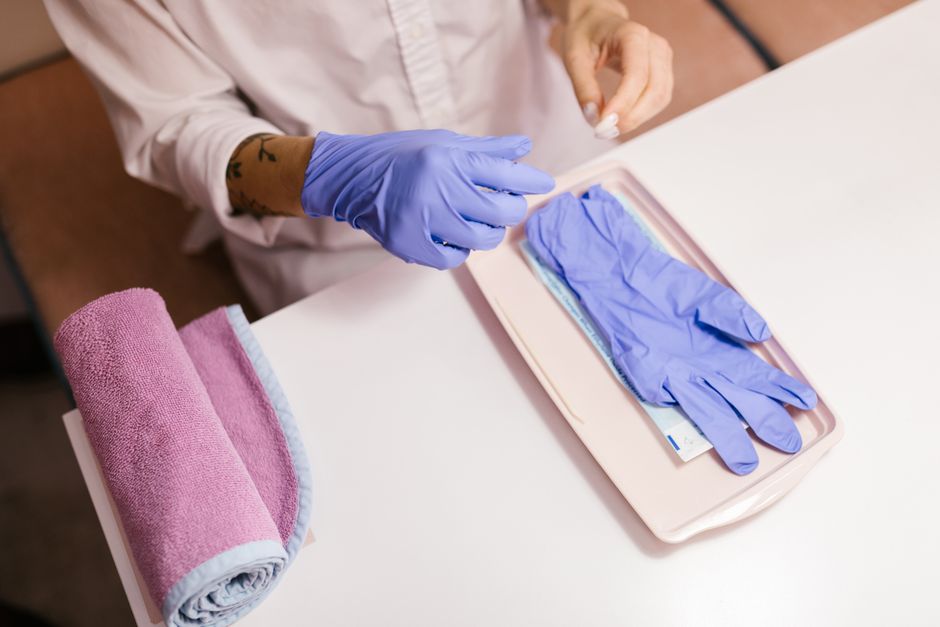
- Use single-use gloves. Change them if you touch anything that is not clean.
- Keep the needle in its sterile packaging until the moment you use it.
- Do not touch the needle tip with your fingers or let it contact any non-sterile surface.
- Use fresh, single-use ink cups and do not dip a used needle back into a shared ink supply.
After the tattoo, keep the area clean and covered as directed. Watch for signs of infection: increasing redness, swelling, warmth, pain, pus, or fever. If these appear, see a health care provider. Do not wait.
When Should You See a Doctor?
See a health care provider if you develop signs of infection after a stick and poke, or if you are concerned about bloodborne pathogen exposure. Symptoms to watch for include spreading redness, swelling, warmth, pain that worsens, pus, red streaks, or fever.
If you used a needle that may have been used by someone else, or that you could not confirm was sterile, talk to a doctor about testing for hepatitis B, hepatitis C, and HIV. Testing is the only way to know, and early detection matters for treatment.
This is not a situation to manage alone or to wait out. Infections and bloodborne exposures are treatable, but they need medical care.
Frequently Asked Questions
Can you sterilize a needle at home?
No. Sterilization requires an autoclave that uses pressurized steam at temperatures and pressures home equipment cannot reach. Home methods can disinfect or clean, but they cannot sterilize.
Does boiling a needle make it sterile?
No. Boiling water reaches 100°C (212°F), which kills many germs but does not reliably kill bacterial spores. There is no established boiling time that produces sterility.
Is it safe to reuse a stick and poke needle?
No. Reusing a needle risks transmitting bloodborne pathogens like hepatitis B, hepatitis C, and HIV, and it can cause serious skin infections. Always use a new, sealed, sterile needle.
What should I do if I think the needle was not sterile?
See a health care provider and ask about testing for hepatitis B, hepatitis C, and HIV. Watch for signs of infection such as redness, swelling, pain, pus, or fever.
