
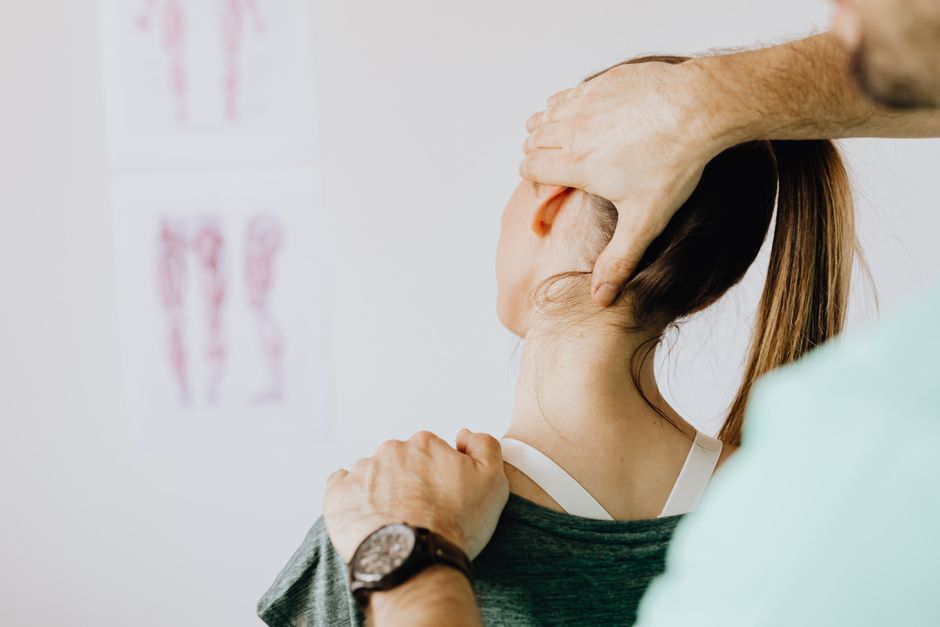
Upper back pain can stop you in your tracks. The tight knot between your shoulder blades or the burning ache along your spine makes it hard to focus on anything else. The fastest way to relieve it involves three simple steps: stop what you are doing, change your position, and apply gentle movement or heat. Most people find relief within minutes by standing up, rolling their shoulders back, and placing a heating pad on the sore area for 10 to 15 minutes. If that does not work, a few specific stretches usually will. The key is acting quickly before the muscles tighten further.
What Actually Causes Upper Back Pain?
Most upper back pain comes from muscle strain. The muscles between your shoulder blades, along your spine, and around your neck work hard to keep you upright. When you sit at a desk, hunch over a phone, or sleep in a bad position, these muscles get overworked. They tighten up and sometimes develop small knots called trigger points.
Research shows that poor posture is the most common cause. A 2023 study in the Journal of Physical Therapy Science found that people who sit for more than six hours a day are twice as likely to report upper back pain. The problem is not just sitting itself. It is the forward head position and rounded shoulders that come with it. Your head weighs about 10 to 12 pounds. For every inch it moves forward, the strain on your upper back muscles doubles.
Stress also plays a big role. When you are stressed, your shoulders creep up toward your ears. You might not notice it, but your trapezius muscles stay partially contracted for hours. This leads to fatigue and pain by the end of the day. Some people also get upper back pain from sleeping on their stomach, which twists the neck and upper spine.
Less common causes include herniated discs in the thoracic spine, arthritis, or a condition called costochondritis where the cartilage between ribs and breastbone becomes inflamed. These are rarer. If your pain came on suddenly after an injury or is accompanied by numbness, tingling, or weakness in your arms, see a doctor.
How to Relieve Upper Back Pain Fast With Stretches
Stretching is the fastest non-medical way to relieve upper back pain. The goal is to lengthen the tight muscles and improve blood flow. Here are three stretches that work well for most people.
Seated Cat-Cow Stretch – Sit upright in a chair with your hands on your thighs. Inhale, arch your back, and push your chest forward. Exhale, round your back, and tuck your chin toward your chest. Repeat slowly 10 times. This movement mobilizes the entire thoracic spine and releases tension between the shoulder blades.
Doorway Chest Stretch – Stand in an open doorway. Place both forearms on the door frame at shoulder height. Gently lean forward until you feel a stretch across your chest and front shoulders. Hold for 30 seconds. This is important because tight chest muscles pull your shoulders forward, making upper back muscles work harder.
Ear to Shoulder Stretch – Sit or stand tall. Slowly tilt your head to one side, bringing your ear toward your shoulder. Do not lift your shoulder. Hold for 20 seconds on each side. Repeat three times. This targets the upper trapezius and levator scapulae muscles that often cause pain at the top of the shoulder blades.
Do these stretches gently. Never force a stretch into sharp pain. Mild discomfort is okay. Sharp pain means stop.
Does Heat or Ice Work Better for Quick Relief?
Heat works better than ice for most upper back pain. Heat increases blood flow, relaxes tight muscles, and reduces stiffness. A 2021 review in the Journal of Clinical Medicine found that heat therapy significantly reduced muscle pain within 15 to 30 minutes of application. Ice is best for acute injuries with swelling, like a sprain or strain from a sudden movement.
For upper back pain that has been building for days or weeks, use heat. Apply a heating pad or warm towel for 15 to 20 minutes. Do not fall asleep with a heating pad on. Use the lowest effective setting to avoid burns. If you do not have a heating pad, a warm shower directed at your upper back works almost as well.
Ice can help if the pain is sharp and came on suddenly. Apply an ice pack wrapped in a thin towel for 10 to 15 minutes. Do not put ice directly on skin. Alternate heat and ice if you are not sure which to use. Start with ice for 10 minutes, then heat for 15 minutes. This contrast therapy can reduce inflammation and relax muscles at the same time.
| Method | Best For | How Long | Evidence Strength |
|---|---|---|---|
| Heat | Chronic tightness, stiffness, muscle knots | 15-20 minutes | Strong – multiple studies confirm benefit |
| Ice | Sudden injury, sharp pain, swelling | 10-15 minutes | Moderate – effective for acute inflammation |
| Contrast (both) | Uncertain cause, mixed symptoms | 10 min ice then 15 min heat | Weak – some people report benefits |





What About Massage, Foam Rolling, and Tools?
Massage can relieve upper back pain fast if done correctly. A 2023 study in Pain Medicine found that a single 10-minute massage session reduced upper back pain intensity by 40 percent on average. The effect lasted about two hours. Regular massage over several weeks produced longer-lasting relief. The catch is that self-massage is harder to do on your own upper back than on your neck or lower back.
Foam rollers and massage balls work well for reaching the area between your shoulder blades. Lie on the floor with a foam roller placed horizontally under your upper back. Gently roll from the base of your neck down to the middle of your back. Stop on any tender spots and hold for 30 seconds. Do this for two to three minutes total. Some people report that a lacrosse ball or tennis ball placed against a wall works even better for pinpointing knots.
There are also tools like the Theracane or massage guns. These can help, but the evidence is weaker. A 2022 systematic review found that percussion massage guns provide short-term pain relief similar to manual massage, but the quality of studies was low. Use these tools gently. Pressing too hard on a knot can make the muscle spasm worse. Start with light pressure and increase slowly.
One non-obvious insight: stretching the chest is often more important than massaging the back. Tight pectoral muscles pull the shoulders forward. This forces the upper back muscles to work harder just to keep you upright. If you only massage the back without stretching the chest, the pain comes back faster. Spend equal time on both areas.
What Medications and Topicals Actually Help?
Over-the-counter pain relievers can help but are not a long-term solution. Ibuprofen (Advil, Motrin) and naproxen (Aleve) are nonsteroidal anti-inflammatory drugs. They reduce inflammation and pain. Acetaminophen (Tylenol) relieves pain but does not reduce inflammation. A 2020 review in the Cochrane Database found that NSAIDs are modestly effective for acute back pain, but the effect is small for chronic pain. Take them as directed and only for a few days at a time. Long-term use can cause stomach problems or kidney issues.
Topical creams and patches offer a targeted option with fewer side effects. Products containing menthol, camphor, or capsaicin create a cooling or warming sensation that distracts the brain from the pain. A 2021 study in the Journal of Pain Research found that diclofenac gel, an NSAID in topical form, reduced upper back pain significantly more than placebo after one week. The gel is available over the counter under brand names like Voltaren.
Muscle relaxants are sometimes prescribed for severe spasms. Drugs like cyclobenzaprine or methocarbamol can help, but they cause drowsiness and are meant for short-term use only. Current research suggests that muscle relaxants are no more effective than NSAIDs for most people, and side effects are common. Do not ask your doctor for these unless the pain is truly disabling.
As of 2026, there is no strong evidence that CBD creams or magnesium sprays reliably relieve upper back pain. Some people report benefits, but clinical trials have not confirmed it. If you try these, do not expect a dramatic effect. They are safe for most people, but they are not a proven solution.
When Should You See a Doctor for Upper Back Pain?
Most upper back pain gets better on its own within a few days to two weeks. You should see a doctor if the pain lasts longer than two weeks despite trying home treatments. Also see a doctor if the pain is severe, came on after a fall or accident, or is accompanied by symptoms like numbness, tingling, or weakness in your arms or legs.
Red flags that require immediate medical attention include: loss of bladder or bowel control, fever with back pain, unexplained weight loss, or pain that wakes you up at night. These could indicate a serious condition like a spinal infection, tumor, or cauda equina syndrome. These are rare, but they need emergency treatment.
For chronic upper back pain that does not improve, physical therapy is the most evidence-backed option. A 2022 study in the Archives of Physical Medicine and Rehabilitation found that six weeks of physical therapy reduced upper back pain by 60 percent on average, and the benefits lasted for at least six months. A physical therapist can identify which muscles are weak and which are tight, then give you a customized plan. This is more effective than general stretching advice from the internet.
Chiropractic care and osteopathic manipulation also help some people. A 2021 meta-analysis in Spine found that spinal manipulation provided moderate short-term relief for upper back pain compared to no treatment. The effect was similar to exercise alone. If you try chiropractic, look for a practitioner who uses gentle techniques and does not push long-term treatment plans.
Common Misconceptions About Upper Back Pain
One common myth is that cracking your back is dangerous. It is not dangerous for most people. The popping sound is gas bubbles bursting in the joints, not bones grinding together. Cracking your own back occasionally is fine. But if you have to crack it many times a day to feel comfortable, that is a sign of underlying tightness that needs stretching, not more cracking.
Another misconception is that you need to strengthen your upper back to fix the pain. This is only half true. Strengthening helps, but only after you have released the tight muscles. If you strengthen tight muscles, you make them tighter and more painful. The correct order is: stretch the tight muscles first, then strengthen the weak ones. For most people, the chest and front shoulders are tight, and the mid-back and rear shoulders are weak.
Some people believe that sleeping on a hard mattress fixes back pain. There is no strong evidence for this. A 2020 study in Sleep Health found that medium-firm mattresses were associated with less back pain than either very firm or very soft mattresses. The best mattress is one that keeps your spine in a neutral position. If you wake up with pain, your mattress or pillow might be the problem. Side sleepers often need a thicker pillow to keep the neck aligned with the spine.
Frequently Asked Questions About relieve upper back pain fast
How long does it take to relieve upper back pain fast?
Most people feel some relief within 10 to 20 minutes of stretching or applying heat. Complete relief may take a few hours to a few days depending on the cause.
Can poor posture cause upper back pain even if I exercise?
Yes. Exercise strengthens muscles but does not automatically fix posture. If you sit hunched for eight hours a day, your muscles still get tight and overworked regardless of your fitness level.
Is it safe to use a foam roller on my upper back every day?
Yes, daily foam rolling is safe for most people if done gently. Avoid rolling directly on the spine. Stick to the muscles on either side of the vertebrae.
What is the fastest way to relieve upper back pain fast without medication?
The fastest method is a combination of heat and gentle stretching. Apply a heating pad for 10 minutes, then do the seated cat-cow stretch for two minutes. This relaxes muscles and increases blood flow quickly.
