
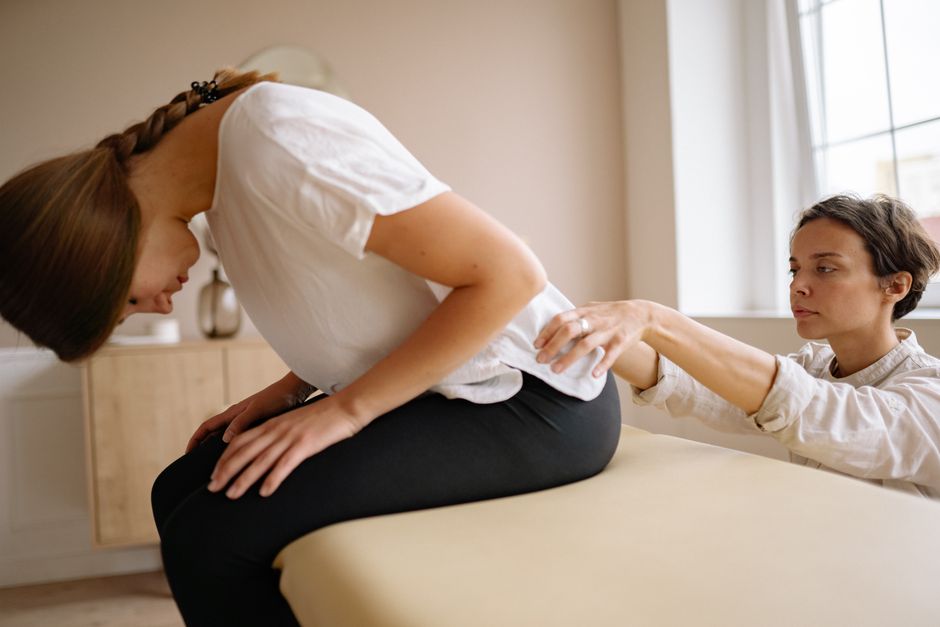
Standing feels harmless. Your back may disagree. When you stand still for long stretches, the muscles along your spine stay switched on without a break. Blood flow to those muscles drops, they fatigue, and pain builds. The fix is not to stand less. It is to stand differently, move more often, and give the tissues what they need to recover.
Most back pain from prolonged standing is muscular and mechanical, not a sign of serious disease. Short breaks every 30 minutes, small posture shifts, supportive footwear, and a floor mat can reduce symptoms for many people. If pain is severe, keeps getting worse, or comes with numbness or weakness in your legs, that is a different situation and needs a doctor.
Why Does Standing Too Long Cause Back Pain?
Your spine is not a rigid pole. It is a stack of bones held upright by muscles working constantly against gravity. When you stand still, those muscles contract for long periods without rest. Muscles are built for work-and-release cycles. Sustained contraction squeezes the small blood vessels inside them.
Without fresh blood flow, waste products build up and the muscle fibers tire. This is why the ache tends to creep in gradually rather than arrive all at once. The lower back takes the biggest share of the load because it sits between your upper body weight and your legs.
There is a second factor people rarely think about. The discs between your vertebrae absorb fluid and nutrients when load is removed, and they lose some when load is applied. Standing still keeps a steady load on the lower discs for hours. That is one reason lying down or changing position feels so good after a long day on your feet.
Some people also have an exaggerated inward curve in the lower back, called lordosis. This posture puts more pressure on the small joints at the back of the spine. If that is your natural shape, standing still may bother you sooner than it bothers someone with a flatter back.
What Are the Signs the Pain Is Muscular and Not Something Else?
Muscular back pain from standing has a recognizable pattern. It builds slowly. It eases when you sit, lie down, or change position. It feels like an ache, tightness, or a dull burn rather than a sharp stab. It usually sits in the lower back and may spread into the buttocks.
Pain that does not follow that pattern deserves attention. See a doctor promptly if you notice any of these:
- Pain that shoots down one leg below the knee, especially with numbness, tingling, or weakness
- Loss of bladder or bowel control, or numbness around the groin or inner thighs
- Pain after a fall or accident
- Fever, unexplained weight loss, or pain that wakes you at night
- Pain that keeps getting worse over weeks instead of better
- A history of cancer
Those signs can point to nerve compression or other conditions that need medical evaluation. They are uncommon, but they are not something to wait out.
How Do You Relieve Back Pain from Standing Too Long?
Change your position before the pain starts, not after. That single habit does more than any stretch or gadget. Muscles recover during the breaks, not during the standing. Set a reminder if you need one.
Every 30 minutes or so, do one of these:
- Sit for a few minutes
- Walk for 60 to 90 seconds
- Shift your weight from one foot to the other several times
- Place one foot on a low stool or ledge, then switch
The foot-on-a-ledge trick works because it flattens the lower back curve slightly and takes pressure off the joints at the back of the spine. It is one of the simplest things you can do at a counter, a workstation, or a trade site.
Supportive shoes matter more than most people expect. Flat, hard soles with no cushioning transmit force straight up through your legs and into your back. Shoes with a cushioned heel and a slight rise reduce that transmission. Avoid standing for long periods in thin sandals or barefoot on hard floors.
An anti-fatigue mat helps if you stand in one spot. These mats are made of soft rubber or foam that lets your feet and legs make tiny adjustments. The evidence for them is not strong, but they are low risk and many people find them helpful.
When the ache is already there, heat is a reasonable first step. A warm shower, a heating pad on low for 15 to 20 minutes, or a warm compress can relax tight muscles. Do not sleep on a heating pad, and do not use high heat on skin that has reduced sensation.
Gentle movement beats rest for ordinary muscular back pain. Lying down for a full day tends to make muscles stiffer and weaker. Walk, do light household tasks, and keep moving at a level that does not spike the pain.





Do Stretches and Exercises Help?
Stretching can ease the tight feeling, but it is not a cure. The tightness you feel is usually a tired muscle, not a short one. Stretching a fatigued muscle gives temporary relief. It does not fix the underlying load problem.
What does help over time is strength. A stronger core and stronger hip muscles take load off the lower back. This is well established in the rehabilitation literature, though the exact best exercises are still debated.
Two categories are worth knowing:
- Core stability work. Exercises that teach you to hold your trunk steady while your limbs move, such as bird dogs and dead bugs.
- Hip and glute strength. Bridges, clamshells, and similar moves. Weak hips let the pelvis tilt and the lower back work harder.
A physical therapist can build a plan around your specific posture and pain pattern. That is more useful than following a generic routine, especially if the pain has lasted more than a few weeks.
Does Standing on a Mat or Wearing a Belt Help?
Anti-fatigue mats and back belts are common in workplaces. The evidence for both is limited. Mats appear to reduce discomfort in some studies, but the quality of that research is not high. Back belts are widely used in industry, yet reviews have not found consistent evidence that they prevent back pain or injury.
That does not mean they are useless. It means you should not count on them as your main strategy. If a belt helps you get through a shift, use it. Just do not skip the breaks and the strength work because the belt is on.
Compression socks and shoe insoles are sometimes recommended for people who stand all day. Some clinicians suggest them for leg fatigue and swelling. The evidence for back pain specifically is thin. Try them if you like, but treat them as comfort measures, not treatment.
When Should You See a Doctor?
See a doctor if the pain lasts more than a few weeks, keeps you from working, or does not improve with the basic steps above. Also go if you have any of the warning signs listed earlier, such as leg weakness or numbness in the groin area.
Most back pain from standing is not dangerous. It is a load-and-recovery problem. But the symptoms that point to nerve involvement or other conditions are worth taking seriously rather than pushing through.
Your doctor may check your posture, strength, reflexes, and sensation. In most cases no imaging is needed for ordinary muscular back pain. Imaging often finds changes that are common in people without any pain at all, which can lead to unnecessary worry.
What About Supplements and Pain Relievers?
Be skeptical of supplements marketed for back pain. There is no strong evidence that any supplement treats mechanical back pain. Some products make bold claims that no large human trial has confirmed. If a bottle promises to fix your spine, that is a marketing claim, not a medical one.
Over-the-counter pain relievers can help you get through a rough day. They treat the symptom, not the cause. If you find yourself needing them regularly, that is a signal to look at your standing setup and your strength, and to talk to a clinician.
Topical creams and gels containing menthol or similar ingredients are another option. They create a cooling or warming sensation that can distract from the ache. The effect is modest and short-lived.
For most people, the realistic goal is management, not a permanent cure. Back pain from standing tends to come back when the habits that caused it come back. That is not a failure. It is just how mechanical pain works.
Frequently Asked Questions
How often should I take a break from standing?
Roughly every 30 minutes, even if the break is only a minute or two. Sitting, walking, or shifting your weight all count.
Is it better to sit or keep standing when my back hurts?
Change position. Neither sitting nor standing is best on its own, because both become painful when held too long. Alternate between them and move in between.
Can a back belt prevent back pain from standing?
Reviews have not found consistent evidence that back belts prevent back pain or injury. They may feel supportive, but they should not replace breaks and strength training.
How long does standing-related back pain usually last?
Most episodes of ordinary muscular back pain ease within a few days to a few weeks with activity and position changes. Pain that lasts longer or gets worse should be checked by a doctor.
