
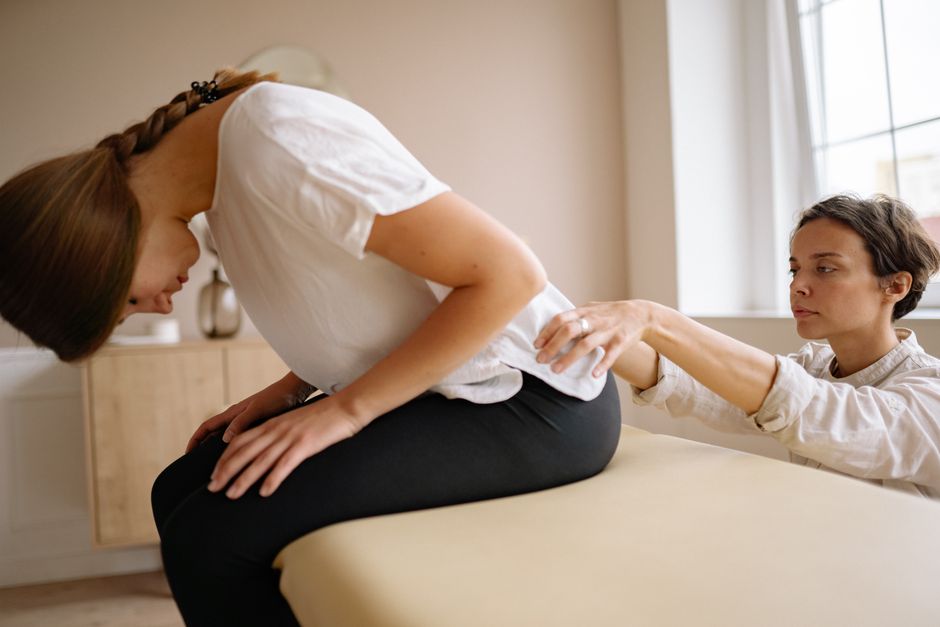
Back pain is one of the most common complaints of pregnancy. It affects roughly half of all pregnant women at some point, and it usually shows up in the second half as the belly grows and posture shifts. You cannot prevent it entirely, but you can reduce how severe it gets and how much it limits your day.
Why Does Pregnancy Cause Back Pain?
Two things happen at once. Your body releases a hormone called relaxin that loosens the ligaments in your pelvis and spine. Looser joints are less stable, so the muscles around them have to work harder to hold you upright.
At the same time, your growing belly pulls your center of gravity forward. To keep from tipping over, you lean back. That arch puts extra strain on the lower back and the muscles that run along the spine. The result is a dull ache that builds through the day.
There is a specific pattern called posterior pelvic pain, where the discomfort sits deep in the buttocks or the back of the hip. Some clinicians also call this pelvic girdle pain. It is different from ordinary lower back pain and often feels worse when you walk, climb stairs, or turn over in bed. If your pain is in that location rather than the center of your lower back, mention it to your provider. The two problems respond to slightly different approaches.
Back pain in pregnancy is not a sign that something is wrong with your baby. It is a mechanical consequence of carrying extra weight with loosened joints. That said, severe pain, pain with fever, pain that shoots down your leg with numbness or weakness, or loss of bladder control are not normal and need prompt medical attention.
What Posture Changes Actually Help?
Standing and sitting differently takes pressure off the lower back immediately. These changes are simple and you can start today.
- Stand with your feet about shoulder-width apart. This widens your base and reduces the forward pull on your spine.
- Keep your shoulders back and your chest up instead of slumping forward.
- When standing for a while, put one foot on a low stool or box. Switch feet every few minutes.
- Sit with your back supported and your feet flat on the floor. A small rolled towel behind your lower back can help.
- Avoid standing or sitting in one position for long stretches. Change position often.
Sitting is harder on your back than most people realize. When you sit, the discs in your spine carry more load than when you stand. Getting up every 30 minutes or so and walking briefly keeps the back from stiffening. A chair with armrests makes it easier to stand without straining.
How Can You Sleep More Comfortably With Back Pain?
Side sleeping is the position most providers recommend in the second and third trimesters. It takes pressure off the vena cava, the large vein that returns blood from your lower body to your heart. Lying flat on your back can let the weight of the uterus press on that vein.
To make side sleeping easier on your back, sleep on your side with a pillow between your knees. This keeps your hips level and stops your top leg from pulling your pelvis out of line. Tuck another pillow under your belly for support. A full-length body pillow can do both jobs at once.
If you wake up stiff, a warm bath or a heating pad on a low setting before bed can relax tight muscles. Keep heating pads on low and do not leave them on for long periods. If you are unsure whether heat is right for you, ask your provider.
-
 How to Help Lower Back Pain During Pregnancy? Tips That Actually Work
 -
How to Relieve Back Pain During Pregnancy? Tips You Can Try
-
How Do You Get Rid of Back Pain During Pregnancy? What to Know
-
Is Back Pain Normal During Early Pregnancy? The Real Answer
-
Joint Genesis Reviews 2026: Honest Look at Complaints & Results





Which Exercises Are Safe and Helpful?
Movement helps, even when it feels like the last thing you want to do. Gentle exercise keeps your muscles strong and your joints supported. The key is choosing the right kind.
Walking is one of the safest options. It is low impact and easy to adjust to how you feel that day. Swimming and water exercise are often recommended because the water supports your weight and takes load off your joints.
Strengthening the muscles that support your spine matters too. Pelvic tilts are a common starting point. Lie on your back with your knees bent, flatten your lower back against the floor, hold briefly, then release. If lying on your back is uncomfortable, do the same motion standing with your back against a wall.
Kegel exercises strengthen the pelvic floor, the hammock of muscle that supports your pelvic organs. Some clinicians recommend them during pregnancy, though evidence that they specifically reduce back pain is limited. They are generally considered safe for most women. Ask your provider if they are appropriate for you.
Avoid exercises with a high risk of falling, deep twisting of the spine, or lying flat on your back for long periods after the first trimester. Skip contact sports and anything that could let a ball or another person strike your belly. If an activity causes pain, stop.
Before starting any new exercise routine during pregnancy, check with your provider. This is especially important if you have a history of preterm labor, placenta previa, or other complications.
Do Belly Bands and Support Belts Work?
Maternity support belts wrap under the belly and around the lower back. Some women find they ease the ache, especially when standing or walking for a while. The evidence for them is mixed. Some studies suggest modest relief, while others find little difference.
If you want to try one, a few practical points help. Wear it low, under the belly, not across the middle. Do not wear it all day, because your core muscles can become dependent on the support. Take it off when you sit. Ask your provider or a physical therapist for guidance on fit.
Support belts are not a treatment for a specific problem. They are a comfort tool. If they help, use them. If they do not, there is no harm in stopping.
When Should You See a Doctor or Physical Therapist?
Talk to your provider if back pain is interfering with sleep, work, or daily activities. You do not have to wait until it becomes severe. Early help often works better than waiting.
A physical therapist who works with pregnant women can teach you safe exercises and body mechanics. This is different from general advice. A trained therapist can assess whether your pain is coming from the lower back, the pelvic joints, or both, and tailor a plan to you.
Seek care right away if you have any of these:
- Pain that shoots down your leg, especially with numbness, tingling, or weakness
- Loss of bladder or bowel control
- Fever along with back pain
- Severe pain that comes on suddenly
- Regular contractions or cramping before 37 weeks
These symptoms can point to conditions that need urgent evaluation. Do not wait to see if they improve on their own.
What About Pain Relief Options?
Acetaminophen is generally considered the first-choice pain reliever during pregnancy, but even this is not completely without questions. Some research has raised concerns about long-term use, and the evidence is still developing. Use the lowest effective dose for the shortest time, and talk to your provider before taking anything.
Nonsteroidal anti-inflammatory drugs like ibuprofen and naproxen are not recommended during pregnancy, especially in the third trimester. They can cause problems for the baby and affect labor. Avoid them unless your provider specifically tells you otherwise.
Opioid pain relievers are not appropriate for routine pregnancy back pain. They carry risks for both mother and baby.
Heat and cold can help without medication. A warm shower, a heating pad on low, or an ice pack on a sore spot can ease muscle tension. Massage from a trained prenatal massage therapist is another option some women find helpful. Make sure the therapist has experience with pregnancy.
Everyday Habits That Take Pressure Off Your Back
Small changes add up. Lifting and carrying are two of the biggest culprits for flare-ups.
- When lifting, squat with your knees bent and keep the load close to your body. Do not bend at the waist.
- Avoid lifting heavy objects. Ask for help.
- Carry groceries in two bags, one in each hand, to balance the load.
- Wear low-heeled, supportive shoes. High heels shift your weight forward and increase the arch in your back.
- Keep items you use often at waist height so you do not have to bend or reach.
Your back is doing more work than usual right now. Rest when you need to. Fatigue and pain often go together, and pushing through both tends to make things worse.
Does Back Pain Go Away After Birth?
For most women, back pain improves in the weeks after delivery. The hormone relaxin levels drop, your posture returns to normal, and the extra weight comes off. But recovery is not always quick. Some women continue to have back pain for months.
If pain persists beyond a few weeks after birth, talk to your provider. A physical therapist can help you rebuild strength in your core and pelvic floor. Do not assume you just have to live with it.
Frequently Asked Questions
Is back pain normal during pregnancy?
Yes, it is very common and affects about half of pregnant women. It is usually caused by hormonal changes and shifts in posture, not by a problem with the baby.
What is the fastest way to relieve pregnancy back pain?
Changing position, using heat on a low setting, and gentle movement often bring quick relief. If pain is severe or comes with numbness or weakness, contact your provider right away.
Can I take ibuprofen for back pain while pregnant?
No, nonsteroidal anti-inflammatory drugs like ibuprofen are not recommended during pregnancy, especially in the third trimester. Acetaminophen is generally considered the first choice, but talk to your provider first.
Does a maternity belt really help with back pain?
Some women find relief, but the evidence is mixed. If you try one, wear it low under the belly and take it off when sitting.
