
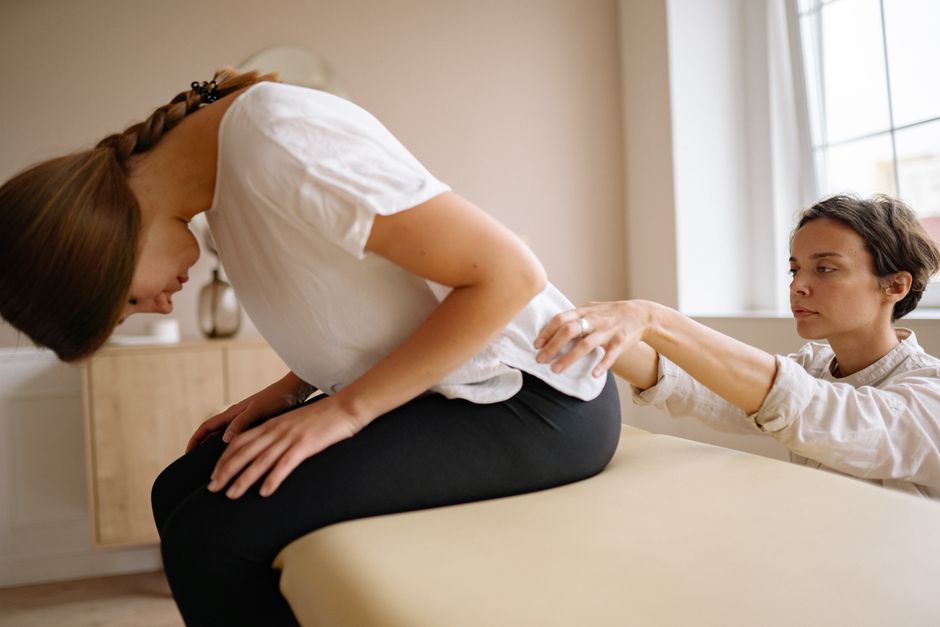
Large breasts add weight to the front of your chest, and your spine has to balance that weight all day. The result is often a dull ache between the shoulder blades, tightness in the upper shoulders, and a nagging pain in the lower back. The most effective way to relieve back pain from large breasts is to combine a properly fitted support bra with posture changes, targeted strengthening of the upper back and core, and — for some people — a conversation with a doctor about whether breast reduction is worth considering.
None of these steps work overnight. But used together, they address the actual cause of the pain instead of just masking it.
Why Do Large Breasts Cause Back Pain?
The spine is a load-bearing structure, and it was not designed to carry extra weight hanging off the front of the chest. When breasts are heavy, the center of gravity shifts forward. To keep you upright, the muscles in your upper back and neck have to work harder all day long.
Over time, that constant effort leads to muscle fatigue and strain. Many people develop a forward head position and rounded shoulders as the body tries to compensate. This posture puts more stress on the joints and discs of the neck and upper back.
The lower back often gets pulled in too. When the upper body leans forward, the lower back arches to counterbalance it. That extra arch can cause aching in the lumbar region, especially after standing or walking for a while.
Two other factors make this worse:
- Bra fit. A bra that does not support the weight properly lets the breasts pull on the shoulders and upper back all day.
- Weak supporting muscles. If the muscles that hold your shoulders back are not strong, they tire faster under the extra load.
This is a mechanical problem. That matters, because mechanical problems usually respond to mechanical solutions — better support, better posture, and stronger muscles.
Does a Good Bra Really Make a Difference?
Yes. For many people, a well-fitted support bra is the single most effective daily change. It lifts the weight of the breasts off the shoulders and distributes it across the rib cage and back, which reduces the load your spine has to manage.
Fit matters more than brand or price. A few things to look for:
- Band support. Most of the weight should be carried by a snug band around the rib cage, not by the shoulder straps. If your straps dig in and leave marks, the band is probably too loose.
- Wide straps. Wider straps spread pressure over a larger area of the shoulder.
- Full coverage cups. A cup that contains the whole breast keeps tissue from spilling and shifting.
- Sturdy back panel. A wider back band with more hooks gives more support than a narrow one.
Getting professionally fitted can help, since many people wear the wrong size without knowing it. A bra does not need to be uncomfortable to be supportive — if it hurts, it does not fit.
One clarification worth making: a bra manages the load, but it does not reverse posture problems or strengthen weak muscles. It works best as part of a bigger plan, not on its own.
What Posture Changes Help Most?
Good posture reduces the strain that heavy breasts place on your back. The goal is not to sit or stand rigidly. It is to keep your ears roughly over your shoulders and your shoulders over your hips, so your spine carries the load instead of your muscles fighting it all day.
Small adjustments add up:
- Raise your computer screen so you are not looking down.
- Keep your shoulders relaxed and slightly back, not hunched forward.
- Take breaks to stand and move every 30 to 60 minutes if you sit for long stretches.
- Avoid carrying heavy bags on one shoulder, which adds uneven load to an already stressed spine.
Posture is a habit, and habits take time to change. Do not expect a quick fix. The point is to reduce the daily strain, not to hold a perfect pose.
-
 How to Relieve Back Pain from Standing Too Long? A Simple Guide
-
How to Minimize Back Pain During Pregnancy? A Simple Guide
-
How to Relieve Bad Lower Back Pain? What Really Works Best
-
How to Relieve Menstrual Back Pain? What You Need to Know
-
Joint Genesis Reviews 2025 — Side Effects, Ingredients & Results





Which Exercises Help Strengthen the Back and Core?
Strengthening the muscles that support your spine helps them handle the extra load without tiring as quickly. The focus should be on the upper back, shoulders, and core.
Movements that often help include:
- Rows. These work the muscles between the shoulder blades that pull your shoulders back.
- Reverse flys. These target the upper back and help counter a rounded-shoulder posture.
- Core work. Planks and similar exercises support the lower back, which often aches from compensating.
- Stretching the chest. Tight chest muscles pull the shoulders forward. Gentle doorway stretches can help.
Start gently and build up. If an exercise causes sharp pain, stop. For persistent or worsening pain, a physical therapist can design a program suited to your body.
It is worth being honest here: strengthening helps many people, but it is not a guaranteed cure. It reduces strain and improves tolerance. It rarely makes the underlying weight disappear.
Can Breast Reduction Surgery Help?
For some people, breast reduction surgery reduces back and shoulder pain. This is one of the more established surgical options for symptom relief, and it is not just cosmetic — reducing breast weight directly addresses the mechanical cause of the pain.
That said, surgery is a real decision with real risks, including scarring, changes in nipple sensation, and difficulty breastfeeding afterward. Recovery takes time, and results vary from person to person.
If you are considering it, talk with a doctor who can review your symptoms, your health, and whether you are a reasonable candidate. Insurance coverage varies, and many plans require documentation that other treatments have not worked. This is a conversation to have with a clinician, not something to decide from a single article.
When Should You See a Doctor?
Most back pain from large breasts is muscular and mechanical. But some back pain has other causes, and those need medical attention.
See a doctor if you have:
- Pain that follows an injury or fall
- Numbness, weakness, or tingling in your arms or legs
- Pain that wakes you at night or keeps getting worse
- Loss of bladder or bowel control, which is a medical emergency
- Fever, unexplained weight loss, or pain that is not related to activity
These signs can point to something other than muscle strain. Getting them checked is not overreacting — it is the right call.
For everyday muscular pain, the combination of proper support, posture awareness, and strengthening is usually the first line of management. The realistic goal is to reduce pain and improve daily function, not necessarily to eliminate it entirely.
Frequently Asked Questions
Can large breasts actually cause back pain?
Yes. The extra weight shifts your center of gravity forward, which forces your back and neck muscles to work harder to keep you upright. Over time, that strain commonly causes upper and lower back pain.
What is the best bra for back pain from large breasts?
A support bra with a snug band, wide straps, and full-coverage cups works best because it carries the weight on the rib cage rather than the shoulders. Fit matters more than brand or price.
Do exercises really help, or is surgery the only fix?
Strengthening the upper back and core helps many people manage the pain by improving muscle support. Surgery is an option for some, but it carries real risks and is not the only path.
When should I see a doctor about back pain?
See a doctor if you have numbness, weakness, pain after an injury, or pain that keeps getting worse. Loss of bladder or bowel control is an emergency and needs immediate care.
