
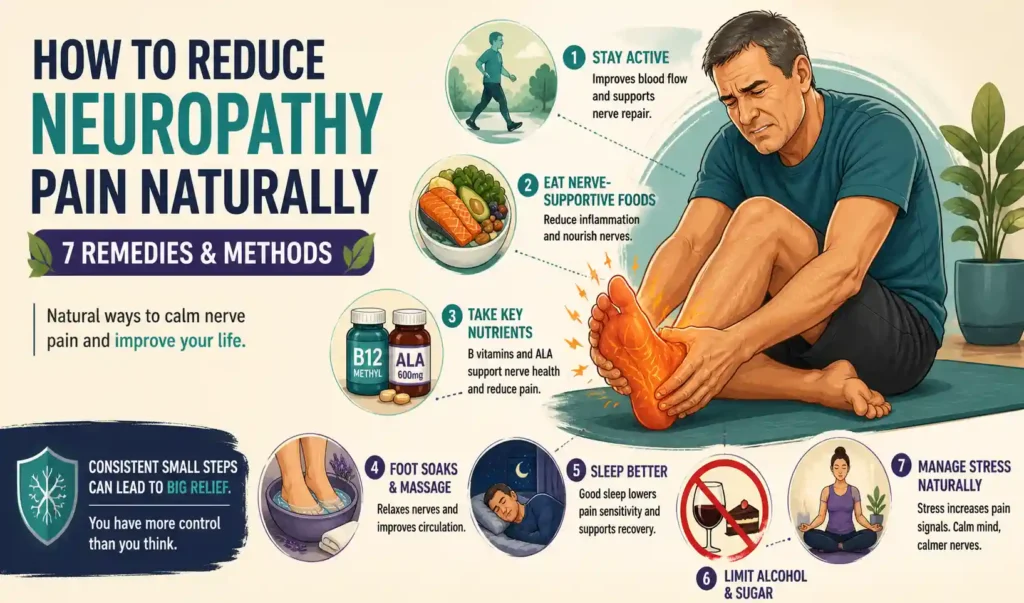
Neuropathy pain can be reduced naturally by improving blood flow to damaged nerves, lowering inflammation, and stabilizing how nerves send pain signals. These are the three things driving your nerve pain. The best natural methods target at least one of them directly.
Key Takeaways
- Neuropathy pain has three main drivers — poor blood flow, chronic inflammation, and unstable nerve signaling.
- Exercise and blood sugar control have the biggest impact — they target the root cause, not just symptoms.
- Alpha-lipoic acid (600mg) is the most studied option — best taken on an empty stomach for proper absorption.
- Form matters for B vitamins — methylcobalamin and benfotiamine reach nerve tissue; standard forms often don’t.
- Alcohol directly damages nerves — even moderate intake can cancel out other efforts.
- Most failures come from execution, not methods — wrong forms, poor consistency, or quitting too early.
Why Most Natural Remedies Don’t Work
Most people try a few things — some vitamins, a foot soak, maybe an oil — and get disappointed. The problem isn’t the effort. It’s the approach.
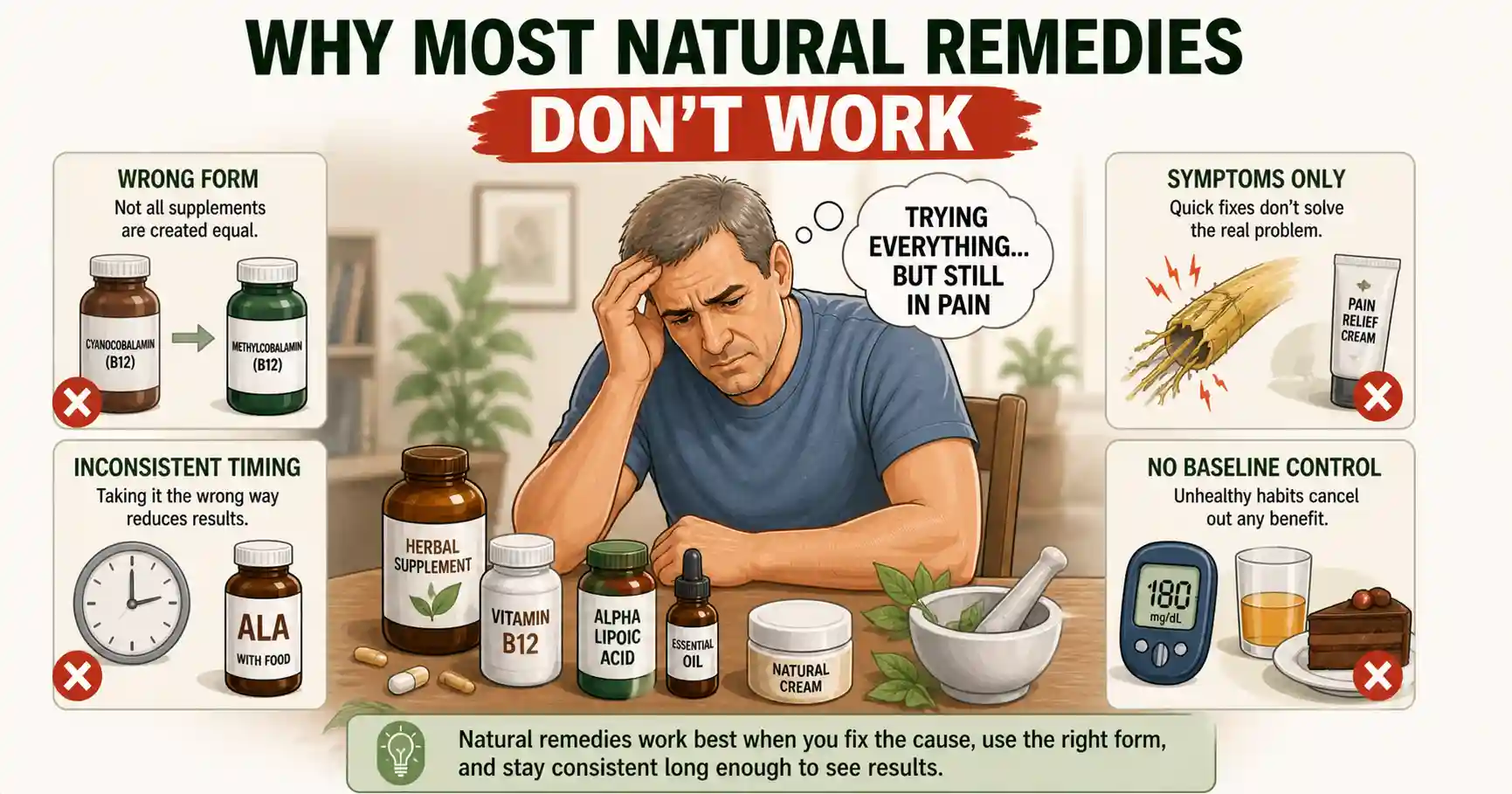
Neuropathy pain comes from three root issues:
- Poor blood flow — damaged nerves aren’t getting enough oxygen
- Chronic inflammation — nerve tissue stays irritated and hypersensitive
- Unstable nerve signaling — damaged fibers misfire and send false pain signals
If a remedy doesn’t target one of these, it won’t do much.
The other mistake people make: adding helpful things while keeping harmful ones. Taking B vitamins while still drinking heavily. Taking ALA while blood sugar runs high all day. That cancels most of the benefit.
Quick Takeaway: Random remedies fail because they don’t address what’s actually driving the pain.
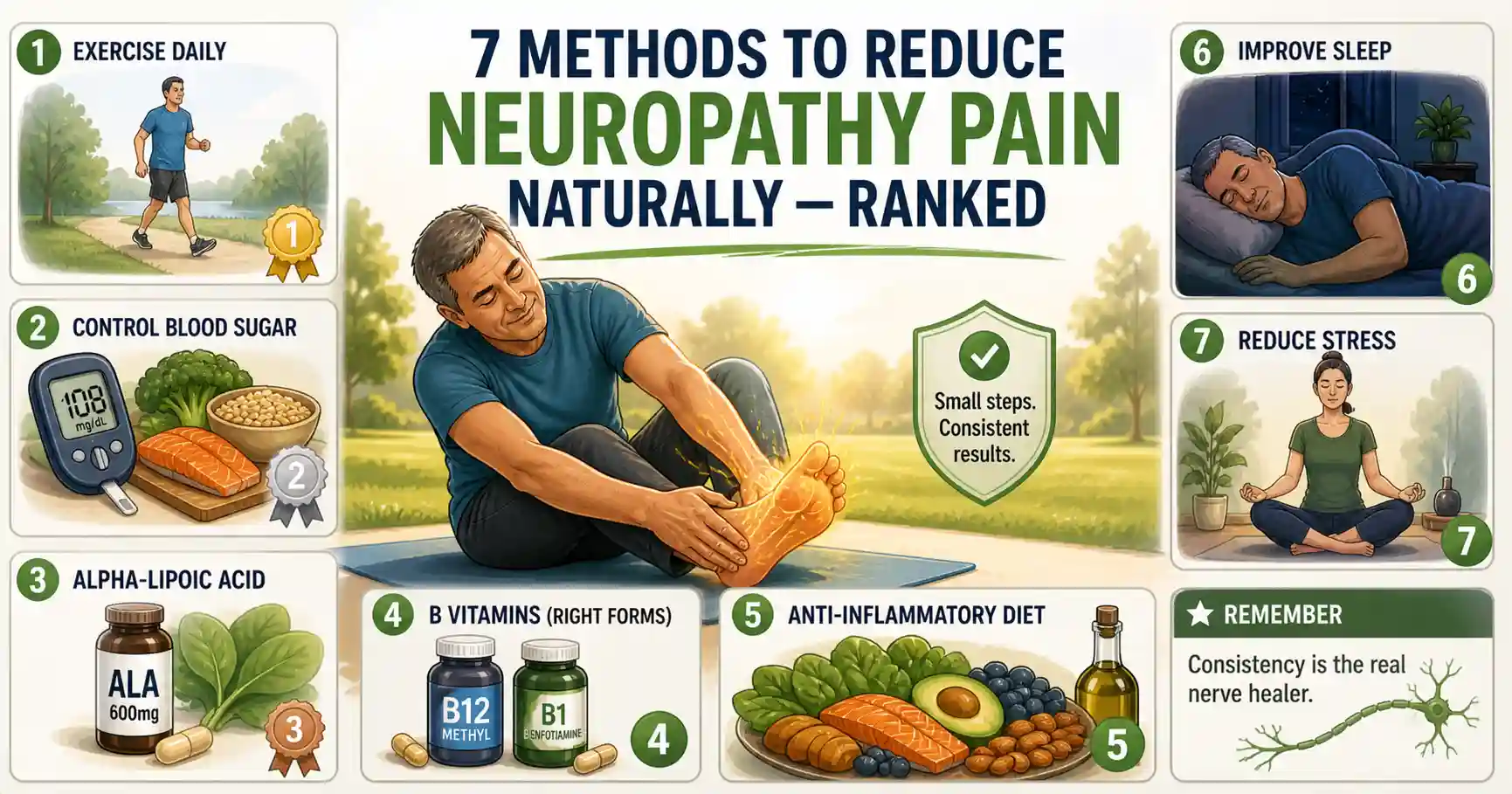
7 Methods to Reduce Neuropathy Pain Naturally — Ranked
| Method | Evidence | Effort | Time to Results |
|---|---|---|---|
| Blood sugar control | Strong | High | Weeks–months |
| Daily movement | Strong | Low–moderate | 4–6 weeks |
| Alpha-lipoic acid (ALA) | Strong | Low | 4–8 weeks |
| Fix B vitamin deficiency | Strong (if deficient) | Low | 8–12 weeks |
| Anti-inflammatory diet | Moderate | Moderate | 2–4 weeks |
| Reduce or stop alcohol | Strong | Moderate | 4–8 weeks |
| Foot care + temperature | Moderate | Low | Days–weeks |
1. Control Blood Sugar — Non-Negotiable for Diabetic Neuropathy
If you have diabetes or prediabetes, this is the first thing to fix. Not the second. The first.
High blood sugar damages the tiny blood vessels that feed your nerves. When nerves lose their blood supply, they lose oxygen. When they lose oxygen, their signals become erratic — and that erratic firing is what you feel as burning, tingling, and shooting pain.
A 2015 study in Diabetes Care confirmed that tight glucose control significantly slowed neuropathy progression in type 1 diabetics.1Glucose Control and Diabetic Neuropathy: Lessons from Recent Large Clinical Trials, PubMed Central. The effect was smaller in type 2, but still real.
What to do:
- Cut refined carbs — white bread, sugary drinks, processed snacks
- Eat balanced meals with protein and fiber to slow glucose spikes
- Walking after meals, even for 10 minutes, lowers post-meal blood sugar
What people get wrong: They take every supplement on this list while ignoring daily blood sugar spikes. That cancels most of the benefit.
2. Daily Movement — Most Underrated Method on This List
You don’t need intense workouts. You need consistency.
Walking 20–30 minutes a day improves circulation to peripheral nerves, reduces inflammation, and triggers the body’s own nerve repair process. A 2014 review in The Journal of Diabetes & Metabolic Disorders found that regular exercise reduced pain sensitivity and improved nerve function over time.2Physical Activity to Reduce Pain Scale in Diabetic Neuropathy Patients: A Scoping Review, PubMed Central.
The reason it works goes beyond “better circulation.” Physical activity activates a protein in the body that directly supports nerve fiber repair. This is why consistent walkers often report less nighttime burning after 4–6 weeks — not because they got fit, but because their nerves started recovering.
What to do:
- 20–30 minutes of walking, cycling, or swimming — daily or near-daily
- Add balance exercises if your stability is affected — neuropathy increases fall risk
- Exercise in the morning or afternoon — evening workouts can raise nerve sensitivity at night
Reality check: This works slowly. Weeks, not days.
3. Alpha-Lipoic Acid — Best-Studied Natural Supplement for Nerve Pain
ALA is an antioxidant your body already makes in small amounts. It’s also the most clinically tested natural compound for neuropathic pain.
A major trial published in Diabetes Care (2006) gave patients 600mg of ALA daily. After five weeks, they reported significantly less burning, tingling, and numbness versus placebo.3Oral Treatment With α-Lipoic Acid Improves Symptomatic Diabetic Polyneuropathy: The SYDNEY 2 trial , Diabetes Journal. The results have been replicated in multiple studies since.
It works by neutralizing the oxidative stress that damages nerve tissue — the same process driven by high blood sugar, inflammation, and poor circulation.
How to take it:
- 600mg daily — on an empty stomach, not with food
- R-ALA absorbs better than standard ALA if you have access to it
- Give it 6–8 weeks minimum before judging whether it’s working
ALA is most effective for burning and tingling. Less effective for numbness alone.
4. Fix B Vitamin Deficiency — But Use the Right Forms
B12 deficiency is a direct cause of peripheral neuropathy. So is B1 deficiency. These aren’t risk factors — they cause it.
The problem most people run into: they take the wrong form.
If you’re a vegetarian, over 50, or take metformin, get your B12 levels tested. Supplementing when you’re not deficient helps less. Supplementing when you can help a lot.
5. Anti-Inflammatory Diet — Specific, Not Vague
“Eat healthy” is not useful advice. Here’s what actually matters for neuropathy.
Add these:
- Fatty fish (salmon, sardines, mackerel) — omega-3s reduce nerve inflammation directly
- Leafy greens (spinach, kale) — provide magnesium, which helps regulate nerve signals
- Eggs and dairy — natural sources of B12 in a form the body uses well
- Turmeric with black pepper — the black pepper is not optional; without it, almost none of the active compound absorbs
Limit these:
- Processed sugar and white carbs — spike blood glucose, stress nerve tissue
- Excess alcohol — toxic to peripheral nerves, depletes B vitamins
- Fried food and processed oils — drive inflammation throughout the body
A 2020 review in Nutrients linked chronic inflammation to worsening nerve damage across multiple neuropathy types.4Update on Biomarkers of Chronic Inflammatory Processes Underlying Diabetic Neuropathy, https://doi.org/10.3390/ijms251910395.
What people misunderstand: Diet doesn’t heal nerves overnight. It removes the environment that keeps damaging them, which is just as important.
6. Reduce Alcohol — One of the Most Ignored Factors
Alcohol is directly toxic to peripheral nerves.
It doesn’t just worsen symptoms. It causes nerve damage through two pathways: direct toxic effects on nerve fibers, and depletion of the B vitamins that nerves need to repair themselves.
Even moderate regular drinking — 2 to 3 times a week — slows nerve recovery when neuropathy is already present. This is the part most people don’t want to hear.
Cutting alcohol for 4–6 weeks is one of the clearest natural tests available. Many people notice a meaningful drop in burning pain within that window.
If your neuropathy has an alcohol component and you’re not addressing this, every other method on this list is fighting an uphill battle.
7. Foot Care and Temperature — Small Changes, Immediate Results
This won’t fix the underlying nerve damage. But it can lower daily pain, especially in the feet.
What helps:
- Warm foot soaks (not hot — damaged nerves are poor at sensing heat)
- Gentle massage to improve local circulation
- Loose, warm socks at night — cold worsens nerve signal misfiring
- Proper footwear — tight shoes compress already-sensitive nerves
What to avoid:
- Walking barefoot on hard floors — numb feet can’t detect injury
- Cold exposure to the feet — damaged nerves conduct poorly in cold, which worsens pain
- Heating pads directly on numb skin — you can burn yourself without feeling it
Quick Takeaway: Foot care gives the fastest symptom relief — usually within days. It doesn’t address root causes, but it makes daily life noticeably more manageable.
How to Reduce Neuropathy Pain Naturally Without Medication — Stop These First
Most articles skip this section. That’s a mistake. You can do everything on this list and still make no progress if you’re doing these at the same time:
- Sitting for hours without moving — prolonged stillness reduces blood flow to peripheral nerves. Get up every 45–60 minutes.
- Ignoring blood sugar spikes — one bad meal doesn’t ruin progress. Consistent high blood sugar does.
- Taking the wrong B12 — if your supplement says cyanocobalamin, switch. This is a five-minute fix that many people never make.
- Smoking — nicotine narrows blood vessels and cuts the blood supply to the peripheral nerves. Exercise and supplements work by improving nerve circulation. Smoking reverses that.
- Expecting results in a week — nerve tissue heals slowly. The minimum honest timeline for any of these methods is four weeks. Most take eight or more.



How Long Does It Take to See Real Improvement?
| Method | Minimum Timeline | What Improvement Looks Like |
|---|---|---|
| Foot care and temperature | Days | Less burning, more comfortable sleep |
| Diet changes | 2–4 weeks | Fewer flares, more stable pain |
| Exercise | 4–6 weeks | Less burning at rest, better balance |
| ALA supplementation | 4–8 weeks | Less tingling, reduced nighttime pain |
| Alcohol reduction | 4–8 weeks | Lower overall burning pain |
| B vitamins (right form) | 8–12 weeks | Less numbness, improved sensation |
| Blood sugar control | 3–6 months | Slower progression, less frequent flares |
If a method hasn’t produced any change after twice its minimum timeline, it may not match your neuropathy type or cause. That’s useful information. Not every approach works for every person.
Frequently Asked Questions
How to reduce neuropathy pain naturally at home?
The most effective at-home steps are daily walking, ALA at 600mg on an empty stomach, warm foot soaks, and cutting refined sugar and alcohol from your diet. None of these works overnight. Consistent effort over 4–8 weeks is where most people notice real change in pain intensity and sleep quality.
How to reduce neuropathy pain naturally without medication?
Exercise, methylcobalamin B12, alpha-lipoic acid, and blood sugar management through diet have all shown real results in clinical studies — no prescription needed. They work best in early to moderate neuropathy. The critical detail is using the right supplement forms and giving each method enough time before deciding whether it works.
How to reduce neuropathy pain naturally in the feet?
Capsaicin cream applied daily to the soles and toes is the most targeted approach for foot pain. Warm socks at night reduce nerve misfiring caused by temperature drops. ALA and methylcobalamin address the underlying nerve environment. Avoid tight shoes and walking barefoot — both worsen pain in nerves that are already hypersensitive.
How to treat neuropathy naturally with diet?
Remove refined sugar and white carbs first — they spike blood glucose and directly stress nerve tissue. Add fatty fish two to three times a week for omega-3s. Use turmeric with black pepper, not turmeric alone. Keep protein intake adequate — nerves need amino acids to repair, and many people with neuropathy don’t eat enough protein.
Can you prevent neuropathy from getting worse naturally?
Yes, in most cases, progression can be slowed. Blood sugar control, stopping alcohol, quitting smoking, and consistent daily movement are the most impactful levers. Supplements like ALA and methylcobalamin support nerve health alongside these changes. No natural method fully stops all progression — but applied consistently, they meaningfully reduce how fast it advances.
Scientific References
- 1Glucose Control and Diabetic Neuropathy: Lessons from Recent Large Clinical Trials, PubMed Central. ↩︎
- 2Physical Activity to Reduce Pain Scale in Diabetic Neuropathy Patients: A Scoping Review, PubMed Central. ↩︎
- 3Oral Treatment With α-Lipoic Acid Improves Symptomatic Diabetic Polyneuropathy: The SYDNEY 2 trial , Diabetes Journal. ↩︎
- 4Update on Biomarkers of Chronic Inflammatory Processes Underlying Diabetic Neuropathy, https://doi.org/10.3390/ijms251910395. ↩︎
