
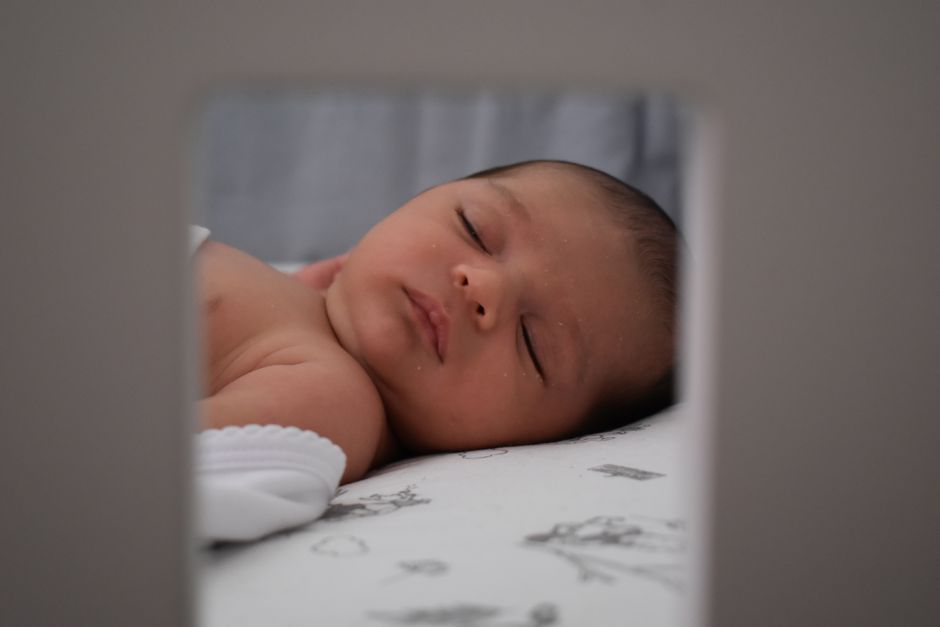
Getting a baby to sleep in a crib comes down to two things: helping them fall asleep drowsy but still awake, and responding to night waking in a way that does not create a new sleep association. Most babies can learn to settle in a crib between 4 and 6 months, once they begin producing melatonin on a more mature schedule. Before that, many infants need more hands-on help, and that is normal.
The crib itself matters less than the routine around it. A dark room, a consistent wind-down sequence, and a safe sleep environment do more for crib sleep than any specific mattress or mobile. What follows is what the evidence supports, what is common practice without strong evidence behind it, and where honest uncertainty remains.
Why Does My Baby Wake Up The Moment I Put Them Down?
Newborns and young infants spend more time in light sleep than adults do, and they cycle through sleep stages faster. When you transfer a sleeping baby to a crib, you are often moving them during a light sleep phase, which makes waking far more likely.
There is also a temperature and sensory shift. Your arms are warm and moving. A crib sheet is cool and still. That contrast can trigger a startle reflex, which peaks in the first few months and usually fades by around 4 to 5 months.
The practical workaround is to wait until the baby has been asleep long enough for their breathing to slow and their limbs to go limp before transferring. Some parents use a version of the “drowsy but awake” approach instead — placing the baby down before they are fully asleep so they learn to complete the transition themselves. That approach is widely recommended by pediatric sleep clinicians, though the quality of controlled trial evidence behind it is limited. It is reasonable, not proven.
How Do I Set Up the Crib for Better Sleep?
Keep the crib bare. A firm mattress with a fitted sheet is the entire setup. No pillows, no bumpers, no loose blankets, no stuffed animals. This is not a style preference — it reflects guidance from the American Academy of Pediatrics on reducing sleep-related infant deaths, and it has been consistent across multiple policy statements.
Room darkness matters more than most parents expect. Melatonin production is suppressed by light, and a dim room does not support the same sleep pressure as a dark one. Blackout curtains help, though you do not need total darkness.
White noise is commonly used and generally considered low risk at moderate volume. Keep the machine at least several feet from the crib and at a volume no louder than a normal conversation. The evidence that white noise improves infant sleep duration is limited; the evidence that very loud or very close noise could affect hearing is a reasonable concern based on general acoustic principles.
Room-sharing without bed-sharing is recommended for at least the first 6 months, and ideally closer to a year, per AAP guidance. That means the crib or bassinet is in your room, not the baby in your bed. Room-sharing is associated with lower risk of sleep-related death, and it also makes night feeds easier, which indirectly helps crib sleep because you are not walking down a hall at 3 a.m.
What Routine Actually Helps a Baby Fall Asleep in a Crib?
A consistent, short wind-down sequence does more than most parents expect. The key word is consistent — same order, same approximate time, every night.
- Feed, then burp and hold upright for a few minutes if reflux is a concern
- Dim the lights and reduce noise
- Change diaper and put on sleep sack
- Read one short book or sing one song
- Place in crib drowsy but awake when possible
Total time: roughly 20 to 30 minutes. Longer routines tend to backfire because the baby becomes overtired, and overtired babies are harder to settle, not easier.
Watch the wake window. A newborn can typically handle only 45 to 60 minutes of awake time before needing sleep again. By 4 to 6 months, most babies can manage roughly 2 to 3 hours between naps. These ranges are general and individual babies vary considerably. Missing the window by even 20 minutes can make crib sleep much harder.





Should I Let My Baby Cry It Out?
There is no single right answer here, and anyone who tells you otherwise is overselling. What the research shows is that several approaches — graduated extinction (checking in at intervals), full extinction (no checks), and gentler fading methods — can improve sleep onset and reduce night waking in many infants. The differences in effectiveness between them are not large in most studies.
What the research does not show is that these methods harm attachment or emotional development. Multiple studies following children after sleep training have not found evidence of negative effects on parent-child bonding or stress markers over time. That said, the studies have limitations, and the topic remains genuinely debated among clinicians.
If crying-based methods do not fit your family, that is a legitimate choice. Responsive settling — going in, offering brief comfort, and leaving again — works for many families, though it often takes longer to see results. Neither approach is guaranteed. Some babies simply take longer to consolidate sleep regardless of method.
What About Night Waking — Is It Normal?
Yes. Night waking is developmentally normal through the first year and beyond. The question is not whether your baby wakes, but whether they can resettle without your help.
Between 4 and 6 months, many babies no longer need a night feed for nutritional reasons, though this varies. Premature babies, babies with growth concerns, and babies with reflux or other medical issues may need feeds longer. Talk to your pediatrician before dropping night feeds.
If your baby wakes and you immediately feed or rock them back to sleep, that becomes the association they need to fall back asleep. This is not a moral failing — it is how sleep associations work. The fix, if you want one, is to gradually shift what happens at the wake-up. Offer comfort without the full feed or the full rocking, and let the baby practice resettling.
Expect this to take one to three weeks of consistency. Progress is rarely linear. Some nights will be worse than the night before.
When Should I Talk to a Pediatrician?
Talk to your doctor if your baby snores loudly, pauses breathing during sleep, seems to struggle to breathe, or wakes gasping. These can signal sleep-disordered breathing and need evaluation.
Also check in if your baby is not gaining weight well, has frequent spit-up that seems painful, or has eczema or allergies that might be disrupting sleep. Sometimes what looks like a sleep problem is a medical one.
And if you are struggling — really struggling — say so. Parental sleep deprivation is a real health issue, and there is no prize for managing it alone.
Frequently Asked Questions
How long should I let my baby cry before going in?
There is no single evidence-based number, and recommendations vary by method and by the baby’s age. Graduated approaches often start with checks at a few minutes and extend from there, but you should follow guidance from your pediatrician rather than a fixed rule.
Can I put my baby in a crib with a blanket?
No. The American Academy of Pediatrics recommends a bare crib with no blankets, pillows, or bumpers to reduce the risk of sleep-related infant death. Use a wearable sleep sack instead if warmth is a concern.
At what age can a baby sleep in a crib in their own room?
The AAP recommends room-sharing without bed-sharing for at least the first 6 months, and ideally up to a year. Moving a baby to their own room earlier is a family decision, not a medical requirement.
Why does my baby sleep fine in my arms but not in the crib?
Your arms provide warmth, motion, and your heartbeat, which are all calming cues a crib does not offer. Babies also wake more easily during light sleep phases, which is when most transfers happen.
