
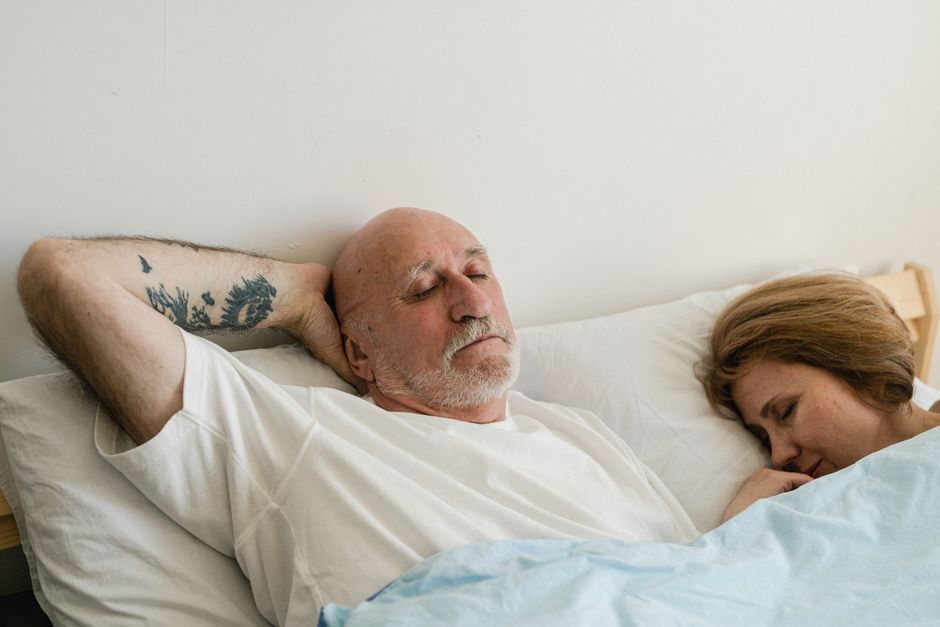
Sleeping next to someone who snores can feel impossible. The noise interrupts your sleep cycle, and frustration builds night after night. The practical answer to sleeping through snoring involves a combination of ear protection, sleep position changes, and addressing the root cause of the snoring itself. Earplugs and white noise machines are the fastest immediate fixes, while side-sleeping and treating nasal congestion address why the snoring happens in the first place.
Why Does Snoring Get Louder at Night?
Snoring happens when air cannot move freely through the nose and throat during sleep. The soft palate, uvula, and throat tissues relax and narrow the airway. As you breathe, these loose tissues vibrate, creating the sound you hear.
Several factors make this worse. Sleeping on your back lets gravity pull the tongue and soft palate backward, narrowing the airway further. Alcohol relaxes throat muscles more than normal sleep does. Nasal congestion from allergies or a cold forces mouth breathing, which increases vibration. Weight around the neck can also compress the airway from the outside.
Understanding these mechanics matters because each cause has a different fix. A person who only snores on their back can often be trained to sleep on their side. Someone with chronic nasal congestion needs a different solution entirely. And if the snoring comes with gasping or pauses in breathing, that points to a more serious condition called obstructive sleep apnea, which requires medical evaluation rather than home remedies alone.
What Are the Best Immediate Fixes for the Listener?
Your first priority is protecting your own sleep while you work on the bigger picture. Earplugs are the most direct solution. Foam earplugs that you roll and insert into the ear canal block the most sound when fitted correctly. Some people prefer silicone putty earplugs that mold to the outer ear without going deep inside. Both work, but foam plugs generally reduce more noise when inserted properly.
White noise machines cover the snoring sound with steady, broadband noise. The goal is not to drown out the snoring completely but to make it less noticeable. Your brain tunes out constant, predictable sound more easily than it tunes out the irregular rhythm of snoring. A fan, a dedicated white noise app, or a noise machine all achieve the same effect.
Combining both strategies works better than either alone. Earplugs reduce the volume reaching your ears, and white noise masks whatever gets through. This combination is the fastest way to get a decent night’s sleep tonight, not weeks from now.
How To Sleep Through Someone Snoring What Works for the Snorer?
Treating the snorer’s habits is the more sustainable solution. The single most effective position change is moving from the back to the side. This prevents the tongue and soft palate from collapsing backward. You can encourage side sleeping with a body pillow, a tennis ball sewn into the back of a pajama shirt, or a specialized anti-snoring pillow that supports the neck in a side-lying position.
Elevating the head of the bed by four to six inches can help people whose snoring comes from nasal congestion or mild airway narrowing. Raising the head reduces swelling in the nasal passages and takes some pressure off the throat. Extra pillows rarely work because they bend the neck at an unnatural angle. A wedge pillow designed for this purpose is more effective.
Nasal breathing matters more than most people realize. If the snorer has a stuffy nose, the body switches to mouth breathing, which increases vibration. Saline nasal sprays, nasal strips, or a neti pot before bed can keep the nasal passages open. For people with allergies, treating the underlying allergy during the day often reduces nighttime congestion.
Alcohol is a major and underappreciated contributor. Even one drink in the evening relaxes throat muscles more deeply than normal sleep does. Studies consistently show that alcohol increases both the intensity and frequency of snoring. Avoiding alcohol for at least three hours before bed can produce a noticeable difference within a few nights.





When Is Snoring a Medical Problem?
Not all snoring is harmless. Obstructive sleep apnea occurs when the airway closes completely during sleep, causing breathing to stop briefly. The brain then wakes you just enough to restart breathing, often with a gasp or snort. This cycle can repeat dozens or hundreds of times per night without the person remembering any of it.
You should take snoring seriously if you notice any of these signs: pauses in breathing during sleep, gasping or choking sounds, excessive daytime sleepiness, morning headaches, or waking up with a dry mouth. A partner who observes these signs is often the first to notice. Sleep apnea is linked to high blood pressure, heart disease, and stroke when left untreated.
If sleep apnea is suspected, a doctor can order a sleep study. At-home sleep tests are now widely available and can be done without spending a night in a clinic. Treatment for sleep apnea typically involves a CPAP machine that keeps the airway open with gentle air pressure. This is a medical condition, not a lifestyle issue, and it requires proper diagnosis and treatment.
Do Anti-Snoring Devices Actually Work?
The market is full of gadgets claiming to stop snoring. Some have evidence behind them and some do not. Mandibular advancement devices, which look like mouthguards and hold the lower jaw slightly forward, have the strongest evidence. They work by pulling the tongue and throat structures forward, opening the airway. Dentists can fit custom versions, which are more comfortable and effective than over-the-counter boil-and-bite models.
Nasal dilators that open the nostrils from the outside have decent evidence for people whose snoring comes from narrow nostrils. These are small adhesive strips or reusable silicone inserts that widen the nasal opening. They help only if the problem is nasal, not if the snoring originates deeper in the throat.
Products that claim to train your tongue to rest in a different position, or devices that vibrate to wake you when you snore, have limited evidence. Some people report success, but no large clinical trials confirm their effectiveness. Treat these as experiments rather than proven solutions.
What About the Relationship Side of Snoring?
Snoring often creates tension between partners. The non-snoring partner resents the lost sleep, and the snoring partner feels blamed for something they cannot control. This dynamic can damage a relationship over time.
Having a direct conversation about it matters. Frame it as a shared problem rather than an accusation. Discuss what you have observed and suggest that both of you work on solutions together. Many couples find that the snorer was unaware of how loud the snoring was or that they stop breathing during sleep.
Sleeping in separate beds is not a failure. Some couples sleep better apart and have stronger relationships because both partners are well rested. The evidence does not support the idea that co-sleeping is necessary for intimacy. If separate bedrooms save your sleep and your relationship, that is a legitimate solution.
Can the Snorer Change Their Sleep Position Permanently?
Positional training works for many people but it takes time. The tennis ball trick, where a ball is sewn into the back of a shirt, works because it makes back sleeping uncomfortable enough to trigger a position change. Over several weeks, some people naturally adapt to side sleeping even without the device.
Body pillows are another effective tool. A full-length pillow hugged against the chest keeps the body from rolling onto the back during the night. Some people find that placing pillows behind the back prevents rolling over. The key is consistency. Positional training requires nightly effort before it becomes automatic.
Weight loss can reduce or eliminate snoring for people who are overweight. Fat around the neck compresses the airway, and losing even a modest amount of weight can decrease snoring intensity. This is not a quick fix, but it is one of the most durable solutions for those who need it.
Are There Any Quick Medical Treatments?
For people with persistent snoring that does not respond to lifestyle changes, medical options exist. Radiofrequency ablation uses heat to tighten the soft palate tissue. This is an in-office procedure with minimal downtime. Results vary, and some people need more than one session.
Surgery to remove excess throat tissue, such as uvulopalatopharyngoplasty, is more invasive and reserved for severe cases. It is not always effective, and it can have significant side effects. This is not a first-line treatment and is only considered after other options have failed.
These procedures should be discussed with an ear, nose, and throat specialist. A proper evaluation will determine whether the snoring originates in the nose, soft palate, or tongue base, because each location requires a different approach.
Frequently Asked Questions
What is the fastest way to sleep through snoring tonight?
Use foam earplugs inserted correctly combined with a white noise machine. This combination reduces the sound reaching your ears and masks whatever gets through.
Does sleeping in separate rooms fix snoring problems?
Separate bedrooms can preserve sleep quality and relationship harmony, and many couples report better rest this way. It is a legitimate solution, not a relationship failure.
Can anti-snoring mouthguards help my partner stop snoring?
Mandibular advancement devices that hold the jaw forward have the strongest evidence for reducing snoring. Custom-fitted versions from a dentist work better than over-the-counter models.
When should snoring be checked by a doctor?
See a doctor if you observe pauses in breathing, gasping sounds, or excessive daytime sleepiness in the snorer. These signs point to obstructive sleep apnea, which requires proper medical evaluation.
