
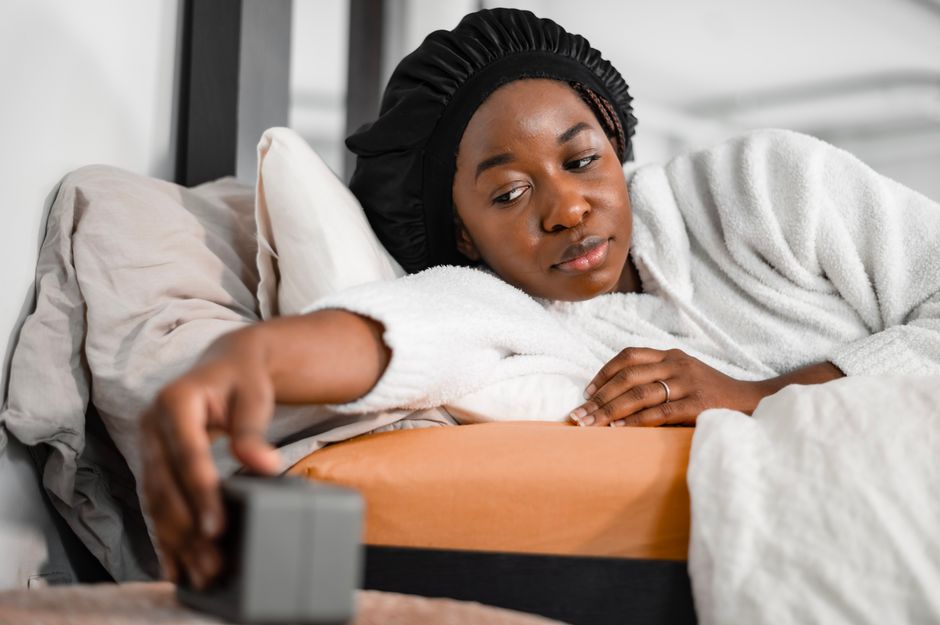
To wake up at 6:00 AM feeling rested, you need to plan your bedtime around your sleep cycles, not just a fixed number of hours. Most adults need between 7 and 9 hours of sleep per night, which puts your ideal bedtime between 9:00 PM and 11:00 PM. The exact time depends on how long your individual sleep cycles last and how much sleep your body actually requires.
How Sleep Cycles Affect Your Wake-Up Time
Sleep does not happen as one long, even state. It happens in cycles that last about 90 minutes each. During each cycle, your brain moves through light sleep, deep sleep, and REM sleep. Waking up in the middle of a cycle leaves you groggy. Waking up at the end of a cycle leaves you feeling alert.
If you wake up at 6:00 AM, you want your alarm to go off at the end of a cycle. Counting backward in 90-minute blocks from 6:00 AM gives you wake-up points at 4:30 AM, 3:00 AM, 1:30 AM, and midnight. That means your bedtime should fall roughly 15 minutes before one of those cycle endpoints, allowing time to fall asleep.
For most people, this works out to a bedtime between 9:00 PM and 10:45 PM. A 9:00 PM bedtime gives you about 9 hours of sleep. A 10:45 PM bedtime gives you about 7 hours. Both are within the healthy range for adults.
What Time Should I Sleep To Wake Up At 6Am: The Simple Answer
If you want to wake up at 6:00 AM, aim to be asleep by 9:00 PM for a full 9 hours, or by 10:45 PM for 7 hours. The most commonly recommended target is a 10:00 PM bedtime, which gives you about 8 hours of sleep. This falls squarely in the middle of the healthy range for most adults.
These times assume you fall asleep within 10 to 15 minutes of getting into bed. If you take longer to fall asleep, move your bedtime earlier by that same amount. If you consistently fall asleep faster than 10 minutes, you may be sleep-deprived and should consider going to bed even earlier.
Sleep needs vary from person to person. Some adults function well on 7 hours. Others need a full 9. The only way to know your personal number is to test different bedtimes for a week each and track how you feel at 6:00 AM.
Why Waking Up Groggy Happens Even With Enough Sleep
You can sleep 8 full hours and still wake up feeling terrible. This usually means your alarm went off during deep sleep. Deep sleep is the hardest stage to wake from. Waking during it causes sleep inertia, which is that heavy, confused feeling that can last 30 minutes or more.
Sleep cycles are not perfectly uniform. Stress, alcohol, caffeine, and exercise all shift cycle lengths. That is why a bedtime that worked last week may not work this week. Your 90-minute cycle can stretch to 110 minutes or shrink to 75 minutes depending on the night.
To reduce the chance of waking in deep sleep, use a smart alarm that tracks your movement and wakes you during light sleep near your target time. If you do not have one, set your alarm for 6:00 AM but give yourself a 30-minute window. Waking slightly before or after 6:00 AM at the end of a cycle is better than waking exactly at 6:00 AM in the middle of one.





How Much Sleep Do Adults Actually Need
The National Sleep Foundation recommends 7 to 9 hours of sleep for adults aged 18 to 64. Adults over 65 may need slightly less, typically 7 to 8 hours. These are population-level guidelines, not individual prescriptions. Your personal need is determined by how you feel during the day.
Signs you are getting enough sleep include waking without an alarm, feeling alert within 15 minutes of waking, and not needing caffeine to function before noon. If you rely on your alarm to wake you and still feel tired at 10:00 AM, you are likely not getting enough sleep.
Sleep quality matters as much as quantity. Seven hours of uninterrupted sleep is more restorative than 9 hours of fragmented sleep. If you wake multiple times per night, you may need more total time in bed to compensate for the disruptions.
Adjusting Your Bedtime for Your Chronotype
Your chronotype is your natural preference for when you sleep and wake. Morning people, often called larks, naturally wake early and feel sleepy early. Evening people, called owls, naturally wake late and feel alert at night. Your chronotype is partly genetic and shifts with age.
If you are a natural night owl, forcing a 9:00 PM bedtime may not work. Your body may not produce enough melatonin that early. You can still wake at 6:00 AM, but you may need to gradually shift your bedtime earlier by 15 minutes every few days. This slow adjustment is more sustainable than suddenly going to bed 2 hours earlier.
Light exposure is the strongest tool for shifting your chronotype. Bright light in the morning, especially within the first hour after waking, signals your body to start its day earlier. Dimming lights in the evening, including screens, helps your body produce melatonin earlier. These two habits together can shift your natural bedtime by an hour or more over several weeks.
Tips for Falling Asleep by Your Target Bedtime
Going to bed at the right time only helps if you actually fall asleep. A consistent wind-down routine signals your body that sleep is coming. Start this routine 30 to 60 minutes before your target bedtime.
- Dim the lights in your home an hour before bed.
- Stop using phones, tablets, and computers 30 minutes before bed. The blue light suppresses melatonin.
- Keep your bedroom cool, around 65 degrees Fahrenheit, and dark.
- Avoid caffeine after 2:00 PM. Caffeine has a half-life of about 5 hours, meaning half of it is still in your system 5 hours after you drink it.
- Skip alcohol in the evening. It helps you fall asleep but fragments sleep in the second half of the night.
If you are not asleep within 20 minutes of going to bed, get up. Sit in dim light and do something quiet until you feel sleepy. Staying in bed while awake trains your brain to associate bed with wakefulness.
What to Do If You Cannot Fall Asleep Early Enough
Some people cannot physically fall asleep before midnight no matter how tired they are. This is called delayed sleep phase syndrome when it is severe, but many people simply have a late chronotype. If this is you, a 9:00 PM bedtime is not realistic.
In this case, prioritize consistency over earliness. Go to bed at the same time every night and wake at the same time every morning, including weekends. A consistent schedule trains your body’s internal clock. Over time, your natural bedtime will drift earlier if you consistently expose yourself to morning light.
If you consistently cannot fall asleep before 1:00 AM and cannot stay awake during the day, talk to a doctor. Chronic insomnia and delayed sleep phase disorder are treatable conditions. Cognitive behavioral therapy for insomnia is the first-line treatment and has strong evidence behind it.
Common Mistakes That Ruin a 6:00 AM Wake-Up
Sleeping in on weekends is the most common mistake. If you sleep until 10:00 AM on Saturday and Sunday, your body shifts its internal clock. By Monday, your 6:00 AM wake-up feels like 4:00 AM to your body. This is called social jetlag.
Using the snooze button is another mistake. Those extra 9-minute fragments of sleep are too short to complete a cycle. They leave you more groggy than if you had simply gotten up at the first alarm. Set your alarm for 6:00 AM and get up when it rings.
Eating a large meal right before bed also disrupts sleep. Digestion raises your core body temperature, which fights your body’s natural cooling that triggers sleep. Finish dinner at least 2 to 3 hours before your target bedtime.
Frequently Asked Questions
What is the best time to go to bed to wake up at 6am?
Most adults should aim for a bedtime between 9:00 PM and 10:45 PM to wake at 6:00 AM. This allows for 7 to 9 hours of sleep, which is the recommended range for adults.
How many hours of sleep do I need before waking at 6am?
Adults need between 7 and 9 hours of sleep per night. Count backward from 6:00 AM by your personal sleep cycle length, usually 90 minutes, to find your ideal bedtime.
Is 5 hours of sleep enough to wake up at 6am?
No, 5 hours is not enough for most adults. Chronic sleep restriction below 7 hours is linked to impaired focus, weakened immunity, and increased health risks.
Why do I wake up tired even after 8 hours of sleep?
You are likely waking up during deep sleep rather than at the end of a sleep cycle. Try shifting your bedtime by 15 to 30 minutes to change where your alarm falls in your cycle.
