
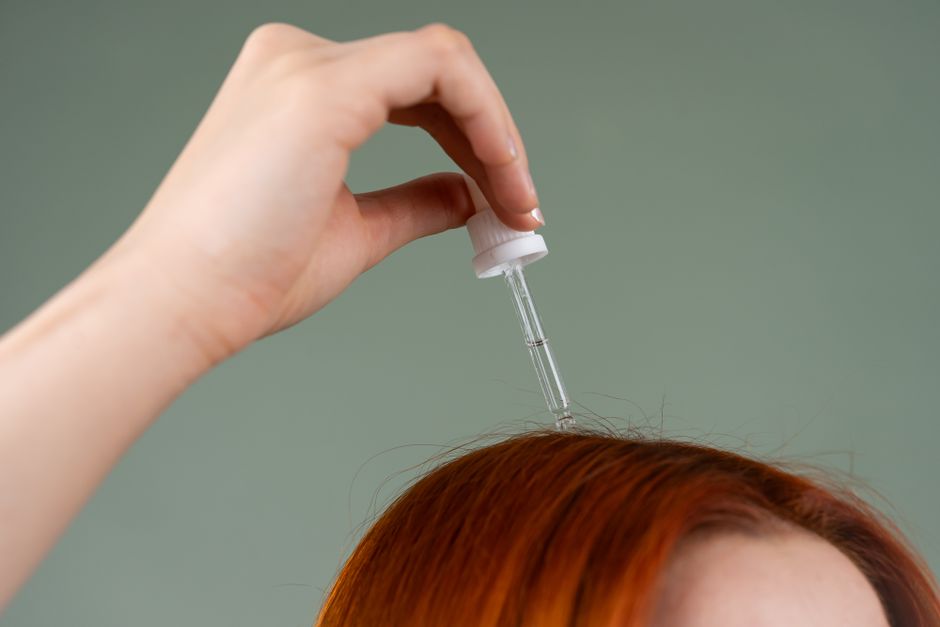
You can protect your scalp from hair dye at home by keeping dye off the skin in the first place, and by treating the skin barrier before, during, and after coloring. The most effective steps are simple: apply a barrier product along the hairline, part hair in clean sections so dye goes on the strands and not the scalp, and follow the developer and timing instructions on the box exactly. If your scalp is already cracked, scabbed, or inflamed, do not dye it — a damaged barrier lets chemicals through faster and reactions are more likely.
What Actually Irritates the Scalp During Hair Dyeing?
Two different things happen to scalps during coloring, and people often confuse them.
The first is irritation. Hair dye — especially permanent dye — contains hydrogen peroxide and an alkaline agent, usually ammonia or a substitute like monoethanolamine. These raise the pH of the product and open the hair cuticle so color can enter. That same alkalinity disrupts the scalp’s acid mantle, the slightly acidic film that keeps skin calm. The result is a stinging, burning, or itchy sensation during processing. This is a direct chemical irritation, not an allergy, and it usually fades within a day or two.
The second is allergic contact dermatitis. This is an immune reaction, most often to paraphenylenediamine (PPD), a dye component used in many permanent and some semi-permanent formulas. PPD allergy can develop after years of trouble-free dyeing. It shows up as redness, swelling, blisters, and intense itching — sometimes spreading beyond the scalp to the face, ears, and neck. It can appear hours to days after coloring and may worsen with each exposure.
These two reactions need different responses. Irritation is managed by technique and timing. Allergy means stopping dye entirely and seeing a clinician. No home method makes a true PPD allergy safe to dye over.
How To Protect Your Scalp From Hair Dye At Home: The Barrier Method
The single most useful habit is creating a physical barrier between the dye and your skin.
Petroleum jelly is the classic choice. Apply a thin layer along your hairline, around your ears, and at the nape of your neck before you start. It is occlusive, meaning it blocks water and chemicals from reaching the skin surface. Some people use a thick silicone-based scalp protector or a barrier cream sold for this purpose. There is no strong head-to-head evidence showing one barrier product beats another, so choose based on what stays in place and does not sting.
A few practical points matter more than the brand:
- Apply the barrier to dry skin, not wet. It adheres better and does not dilute.
- Keep it off the hair itself, or the dye will not take there and you will get patchy color.
- Reapply if it wears off during a long processing time.
- Do not use oil-based barriers if you are also trying to protect a fresh bleach lightening — oils can interfere with lift.
Some people add a split-and-seal step: part the hair into sections and clip them, so you apply dye to mid-lengths and ends first, then the roots last. Roots process fastest because of scalp heat, so applying them last reduces how long the chemicals sit against your skin.
Does a Patch Test Really Matter?
Yes, and it is the one step most people skip.
A patch test checks whether your immune system reacts to the dye. Mix a small amount of the color and developer, apply it to a small area of skin — the instructions usually direct you to the inner elbow or behind the ear — and wait the time the manufacturer specifies, typically 48 hours. If redness, swelling, or itching appears, do not use the product.
The limitation is real: a patch test can miss a reaction that only shows up on the scalp, and it will not predict irritation from alkalinity. But it is the best available screen for allergy, and it is why manufacturers require it. If you switch brands or formulas, patch test again. PPD sensitivity can also cross-react with related compounds, so a reaction to one dye does not guarantee safety with another.





What To Avoid If Your Scalp Is Sensitive or Damaged
If your scalp is already compromised, the calculus changes.
Do not dye over broken skin. Cuts, scratches, scabs, active eczema, psoriasis flares, or a sunburned scalp all mean the barrier is open. Chemicals that would normally sit on the surface can penetrate further, and irritation or allergy is more likely. Wait until the skin is intact.
If you have a known sensitivity, look for dyes labeled PPD-free or use a different coloring approach. Semi-permanent dyes that deposit color without peroxide and ammonia are generally gentler, though they still contain other ingredients that can cause reactions in some people. Henna-based products vary widely — some “black henna” products contain added PPD and have caused severe reactions, so the label matters.
If you have had a reaction before — swelling, blistering, or a rash that spread — do not try again at home. See a dermatologist. Repeated exposure to an allergen can make reactions progressively worse.
Aftercare: What Helps the Scalp Recover
Once the dye is rinsed, your scalp is dealing with a temporary shift in pH and some barrier disruption. Gentle handling helps it settle.
Rinse thoroughly with lukewarm water until the water runs clear. Leftover dye residue can keep irritating the skin. Use a mild, fragrance-free shampoo for the next few washes rather than a harsh clarifying product. Skip exfoliating scrubs, scalp brushes with stiff bristles, and anything with strong acids for a few days.
If you notice mild itching or tightness, a plain, fragrance-free moisturizer or a light application of petroleum jelly along the hairline can reduce dryness. Avoid scratching — it opens the skin and invites infection.
Some people find their scalp feels sensitive for several days after coloring. That is common with irritation and usually resolves on its own. Persistent redness, swelling, oozing, or pain is not normal irritation and warrants medical attention.
When To See a Doctor Instead of Managing It at Home
Most scalp irritation after dyeing is mild and short-lived. Some signs mean stop and get help.
- Swelling of the face, eyelids, lips, or throat — this can signal a serious allergic reaction and needs urgent care.
- Blistering, oozing, or open sores on the scalp.
- A rash that spreads to the face, neck, or beyond.
- Severe burning during application that does not ease after rinsing.
- Symptoms that worsen rather than improve over several days.
These point toward allergic contact dermatitis or another reaction that home care cannot manage. A clinician can confirm what is happening and recommend treatment. Do not dye again until you have an answer.
Does Timing and Technique Reduce Scalp Exposure?
How you apply dye affects how much touches your skin, and this is where small changes add up.
Follow the processing time on the package. Leaving dye on longer than directed does not improve color and does increase chemical exposure to the scalp. Do not apply heat — a blow dryer or heat cap speeds processing but also increases irritation risk.
Work in sections and keep the application close to the roots without pressing dye into the scalp. Using an applicator brush rather than gloved fingers gives more control. If you are only touching up roots, apply to the regrowth and avoid dragging fresh dye down through already-colored lengths, which adds unnecessary skin contact.
Wear gloves. This protects your hands and keeps you from spreading dye to your face and ears as you work.
Frequently Asked Questions
Can I dye my hair if I have a sensitive scalp?
Sometimes, but it depends on why your scalp is sensitive. If it is mild irritation from past coloring, a barrier product, patch test, and shorter processing time may help. If you have had a true allergic reaction, do not dye again without medical guidance.
What can I put on my scalp before hair dye?
Petroleum jelly or a dedicated scalp barrier cream applied to dry skin along the hairline, ears, and neck is the standard approach. Keep it off the hair so the dye still takes evenly.
How long should I wait to dye my hair after a scalp reaction?
Wait until the skin is fully healed and intact, which can take days to weeks depending on severity. If the reaction was allergic rather than simple irritation, see a clinician before coloring again.
Is ammonia-free dye safer for the scalp?
Ammonia-free formulas may feel gentler, but they are not automatically safe. They still contain other chemicals, including PPD in many cases, that can irritate skin or trigger allergy.
